Passa al contenuto principale 🔍 Cerca
Logo ItalyTrade
Cerca in tutte le lingue
👇✍️ Scrivi qui sotto la tua ricerca

🗺️Itinerario Consigliato
✉️ Richiedi il tuo Itinerario Personalizzato
🏨 Prezzi Indicativi ▼
🏨
Verifica prezzi reali su Google Hotels Confronta le offerte live di Booking, Expedia, Hotels.com
Cerca su Google Hotels

🎭Attrazioni ed Esperienze

🇮🇹Eccellenze Made in Italy

💒Location per Matrimoni

🏠Immobili nella Zona

📰Articoli su ItalyTrade.org

★★★★★

Your opinion matters to us!

Enjoying your experience on ItalyTrade.org? Please take a moment to leave us a review on Trustpilot and let us know how we're doing.

Write a Review (opens in a new window)

Welcome to ItalyTrade!

Official Website: ItalyTrade.org — Travel & Business | Made in Italy

“Turning Italian excellence into global visibility in the age of Artificial Intelligence”

Enter your email to save your address in this browser and dismiss this notice:

Copyright © 2026 Giuseppe Baldassarri. All rights reserved.

Vai al contenuto

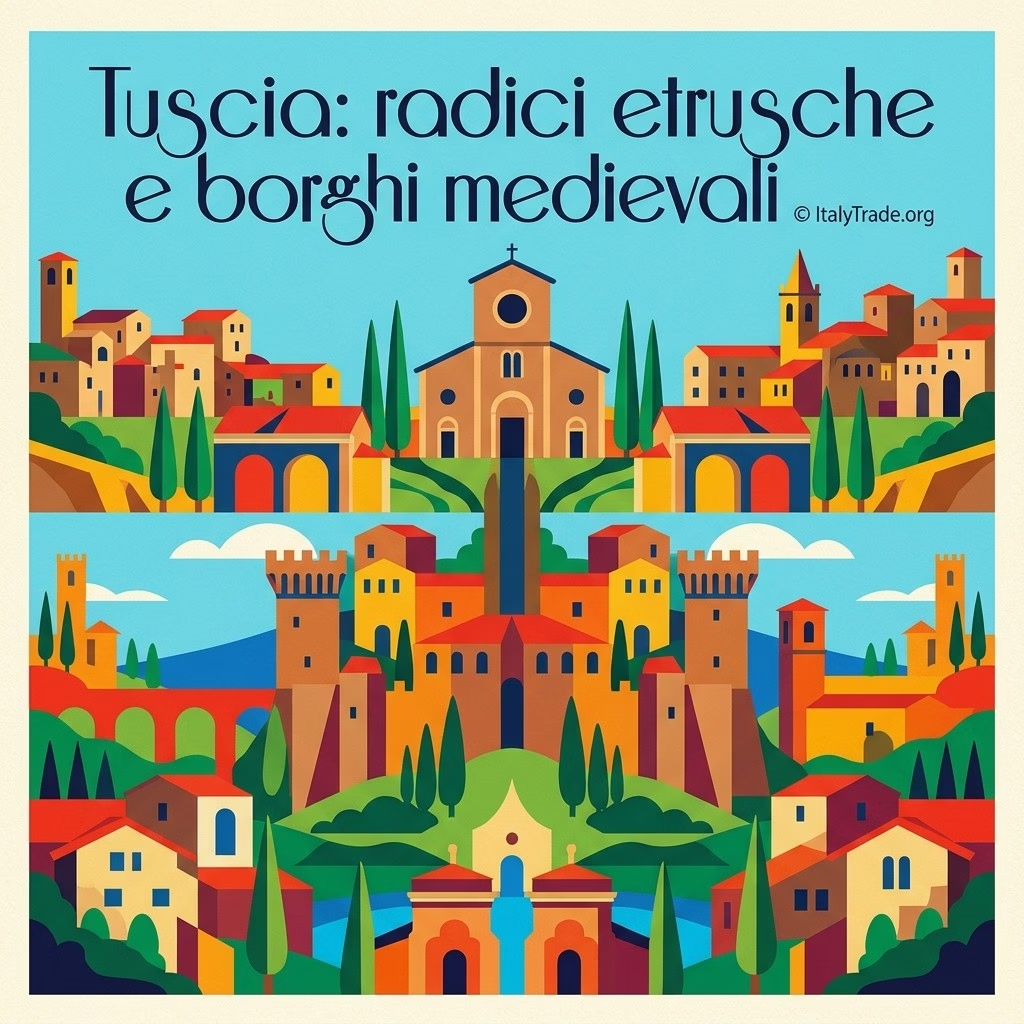
Tuscia: radici etrusche e borghi medievali

Novembre 7, 2026
Tuscia: radici etrusche e borghi medievali
ItalyTrade.org Viaggio su misura
✈️ Pianifica il viaggio
Tuscia: radici etrusche e borghi medievali — panorama dell'alto Lazio

Tuscia: radici etrusche e borghi medievali

Provincia di Viterbo, Lazio — necropoli etrusche, Città dei Papi e Lago di Bolsena

Indice dell’articolo

  • Introduzione
  • Cultura e natura
  • Unicità
  • Luoghi e siti
  • Gastronomia
  • Tradizioni
  • Arte e architettura
  • Borghi e percorsi
  • Pianificazione
  • Eccellenze locali
  • Itinerario dettagliato
  • Domande frequenti
  • Conclusione
Viaggio su misura
Introduzione

Dove il tufo custodisce Etruschi, papi e leggende

La Tuscia, in Italia, è l’alto Lazio che molti viaggiatori scoprono dopo Roma: un territorio che coincide a grandi linee con la provincia di Viterbo, nell’estremo nord della regione. Qui il patrimonio etrusco, i borghi medievali nel Lazio, il centro storico di Viterbo, le necropoli etrusche e il Lago di Bolsena stanno a poca distanza gli uni dagli altri, così che i viaggi nell’alto Lazio possono passare dalle tombe dipinte ai palazzi dei papi nel giro di pochi giorni.

Il paesaggio è plasmato dalla roccia vulcanica: borghi aggrappati alle rupi, boschi in cui le pietre prendono forme fantastiche, città etrusche conservate sotto la terra. A questo si aggiunge il Lago di Bolsena, definito il più grande bacino vulcanico d’Europa. La Tuscia si raggiunge con facilità soprattutto dal centro e dal sud Italia.

Fonte: TheWom — Tuscia · Fonte: TheWom — Lago di Bolsena

📍
Viterbo
Provincia dell’alto Lazio
🏛️
2004
Necropoli di Tarquinia e Cerveteri nel Patrimonio UNESCO
🗼
3 settembre
Trasporto della Macchina di Santa Rosa
🌋
Lago di Bolsena
Il maggior lago vulcanico d’Europa

Fonte: Visit Italy — Necropoli UNESCO · Fonte: Visit Italy — Santa Rosa · Fonte: TheWom — Lago di Bolsena

Cultura e natura

Etruschi, papi e vulcani: la lunga storia dell’alto Lazio

Prima dei Romani, tra Toscana e Lazio dominarono gli Etruschi, che lasciarono opere d’arte e d’ingegno ancora oggi sorprendenti. Nel Viterbese si contano alcune tra le principali città etrusche: oltre a Tarquinia e Vulci, ricordate da fonti turistiche regionali anche Blera, Bolsena, Norchia e Tuscania, mentre Cerveteri, partner di Tarquinia nel riconoscimento UNESCO, si trova in provincia di Roma.

Il Medioevo ha aggiunto un secondo strato di storia. Nel Duecento Viterbo fu sede pontificia e passò alla storia come Città dei Papi: il Palazzo dei Papi fu costruito tra il 1255 e il 1266 e viene legato alla nascita del modello di elezione papale, con i cardinali isolati fino all’annuncio del nuovo pontefice.

La natura completa il quadro. Secondo le ricostruzioni geologiche, il Lago di Bolsena si formò circa seicentomila anni fa, quando bocche eruttive esplosive crearono una vasta depressione poi riempita dall’acqua; sul lago emergono due isole, la Bisentina e la più piccola Martana. Per approfondire puoi leggere le nostre guide al Lago di Bolsena e al Lago di Vico.

Fonte: Italytraveller — Le città degli Etruschi · Fonte: Visit Italy — Necropoli UNESCO · Fonte: GreenMe — Viterbo · Fonte: Visit Italy — San Pellegrino · Fonte: SiViaggia — Isola Bisentina

Unicità

Perché la Tuscia è unica

🏛️ Necropoli etrusche Patrimonio UNESCO

Le necropoli di Tarquinia, in provincia di Viterbo, e di Cerveteri, in provincia di Roma, sono Patrimonio UNESCO dal 2004. Quella di Tarquinia (Monterozzi) è celebre per le tombe dipinte con scene di vita quotidiana, mentre la Banditaccia di Cerveteri è descritta come la necropoli più estesa del bacino del Mediterraneo.

🏰 Un quartiere medievale tra i più estesi d’Europa

Il quartiere di San Pellegrino a Viterbo è descritto come uno dei quartieri medievali più estesi e meglio conservati d’Europa, con torri, palazzi duecenteschi e case con i caratteristici profferli, le scale esterne tipiche della città.

🗼 Una festa Patrimonio immateriale UNESCO

Dal 2013 il trasporto della Macchina di Santa Rosa, che ogni 3 settembre porta per le vie di Viterbo una torre luminosa sulle spalle di un centinaio di facchini, è riconosciuto dall’UNESCO tra le feste delle grandi macchine a spalla.

Fonte: Visit Italy — Necropoli UNESCO · Fonte: Fanpage — San Pellegrino · Fonte: Visit Italy — Santa Rosa

Luoghi e siti

Le meraviglie della Tuscia

Viterbo

Viterbo

La Città dei Papi sorge alle pendici dei Monti Cimini. Il centro storico è ricco di torri, fontane e palazzi, con Piazza San Lorenzo, il Palazzo dei Papi e la Cattedrale.

Viterbo

Tarquinia

Nella necropoli di Monterozzi le decorazioni pittoriche di circa 150 sepolcri raccontano scene di vita quotidiana degli Etruschi.

Viterbo

Tuscania

Indicata come uno dei simboli della Tuscia, è un piccolo borgo che sembra uscito da un libro di fiabe e permette un tuffo nel mondo etrusco insieme a Tarquinia.

Montalto di Castro e Canino

Vulci

Antica città-stato etrusca nella Maremma laziale, oggi parco naturalistico e archeologico di circa 120 ettari lungo il fiume Fiora.

Alta Tuscia

Lago di Bolsena

Il più grande lago di origine vulcanica d’Europa e il quinto d’Italia per dimensioni, circondato da borghi come Bolsena, Marta e Capodimonte. Leggi la guida ItalyTrade.

Capodimonte

Isola Bisentina

La più grande delle due isole del lago, con boschi, giardini e cappelle rinascimentali; si raggiunge solo via acqua.

Caprarola

Lago di Vico

Un altro lago di origine vulcanica, attorno al quale sorgono borghi come Caprarola e San Martino al Cimino. Leggi la guida ItalyTrade.

Viterbo

Terme di Viterbo

Il territorio è noto per le acque termali: le Terme dei Papi devono il nome a Niccolò V, mentre il Bullicame è citato nella Divina Commedia.

Viterbo

Palazzo dei Papi

Residenza-fortezza duecentesca costruita tra il 1255 e il 1266, simbolo della Viterbo papale, con la Loggia delle Benedizioni e la Sala del Conclave.

Caprarola

Palazzo Farnese

Dimora tardo-rinascimentale a pianta pentagonale, progettata dal Vignola, con un cortile circolare e la celebre Scala Regia elicoidale.

Vulci

Tomba François

Ipogeo del IV secolo a.C. scoperto nel 1857, noto per il ciclo di affreschi sulla saga dei fratelli Vibenna.

Bagnaia

Villa Lante

Giardino all’italiana la cui costruzione, avviata nel 1511, durò circa cinquant’anni; il nome ricorda Ippolito Lante Montefeltro della Rovere.

Bagnoregio

Civita di Bagnoregio

La «città che muore» svetta su uno sperone di tufo nella valle dei Calanchi, tra erosione e frane, ed è uno dei borghi più fotografati della Tuscia.

Viterbo

Vitorchiano

Un borgo con mura medievali, la Fontana a fuso e un palazzo comunale cinquecentesco.

Viterbo

Capodimonte

Sorge su un promontorio della riva meridionale del lago, tra vicoli acciottolati e tetti rossi, ed è il punto di partenza dei battelli per le isole.

Viterbo

Marta

Antico villaggio di pescatori sulla sponda meridionale del lago, tra piazzette e stradine lastricate.

Fonte: SiViaggia — Viterbo · Fonte: Italytraveller — Tarquinia e Vulci · Fonte: Finestre sull’Arte — Tuscia · Fonte: TheWom — Vulci · Fonte: TheWom — Lago di Bolsena · Fonte: Finestre sull’Arte — Isola Bisentina · Fonte: TheWom — Borghi della Tuscia · Fonte: Quotidiano.net — Le perle della Tuscia · Fonte: TheWom — Cosa vedere a Viterbo · Fonte: MuseiOnline — Tomba François · Fonte: Romeing — Tuscia

Gastronomia

Sapori della Tuscia: olio, vino e pesce di lago

La cucina della Tuscia nasce da un territorio vulcanico e lacustre: tra i sapori più raccontati ci sono il passito del Lago di Bolsena, le nocciole, la birra artigianale di Tuscania e l’olio extravergine di Canino, ricavato dalla cultivar autoctona Caninese.

🍝 Piatti e prodotti da cercare

Acquacotta

Zuppa povera a base di pane raffermo, zucchine, cipolla e olio Tuscia DOP, con uovo e parmigiano.

Pesce del lago

Anguilla, luccio e tinca del Lago di Bolsena sono citati tra i pesci d’acqua dolce da abbinare all’olio Tuscia DOP.

Olio Tuscia DOP

Extravergine prodotto in tutta la provincia di Viterbo, con una tradizione che risale almeno al VI secolo a.C.

Nocciole

Le nocciole della Tuscia figurano tra i prodotti simbolo del territorio.

Tartufo nero di Blera

Il terreno argilloso della Tuscia è ideale per questa prelibatezza, ricercata in borghi come Civita Castellana.

Est! Est!! Est!!!

Vino bianco DOC di Montefiascone, prodotto attorno al Lago di Bolsena.

🍷 I vini del lago

Il bianco Est! Est!! Est!!! di Montefiascone ha ottenuto la DOC nel 1966, con vigneti nei comuni di Bolsena, Capodimonte, Gradoli, Grotte di Castro, Marta, Montefiascone e San Lorenzo Nuovo. Il suo contraltare rosso è l’Aleatico di Gradoli, con una DOC specifica compresa nella più ampia Colli Etruschi.

Fonte: Quotidiano.net — Sapori della Tuscia · Fonte: ARSIAL — Olio Tuscia DOP · Fonte: ICE — Olio DOP Tuscia · Fonte: TheWom — Borghi della Tuscia · Fonte: Le Petit Journal — Est! Est!! Est!!! · Fonte: Touring Club — Montefiascone

Tradizioni

Tradizioni e feste: il calendario della Tuscia

🎉 Gli appuntamenti da segnare

San Pellegrino in Fiore — aprile e maggio

Nel quartiere medievale di Viterbo case e strade si decorano con composizioni floreali.

Infiorata di Bolsena — Corpus Domini (giugno)

La processione con la reliquia del miracolo eucaristico del 1263, avvenuto nella Basilica di Santa Cristina, percorre un lungo tappeto di fiori allestito dagli abitanti.

Ludika 1234 — luglio

Festival dedicato al Medioevo nel centro storico di Viterbo, con giochi, parate e spettacoli.

Macchina di Santa Rosa — 3 settembre

La sera del 3 settembre un centinaio di facchini trasporta a spalla una torre luminosa alta oltre trenta metri; la macchina viene rinnovata ogni cinque anni.

⛪ Feste legate alla fede

Le tradizioni religiose sono il filo conduttore del calendario. Il Corpus Domini fu esteso a tutta la cristianità da papa Urbano IV con la bolla Transiturus del 1264, dopo il miracolo di Bolsena. A Viterbo la festa di Santa Rosa comprende il corteo storico del 2 settembre e la fiera del 4 settembre, giorno della patrona.

Fonte: Italia.it — Viterbo · Fonte: GreenMe — Infiorata di Bolsena · Fonte: Visit Bolsena — Corpus Domini · Fonte: Visit Italy — San Pellegrino · Fonte: Visit Italy — Santa Rosa · Fonte: Fanpage — Nuova Macchina · Fonte: Viaggiapiccoli — Santa Rosa · Fonte: Avvenire — Storia del Corpus Domini

Arte e architettura

Dagli affreschi etruschi al Rinascimento dei Farnese

L’arte della Tuscia comincia sottoterra. Le tombe etrusche di Tarquinia sono famose per le pitture murali che mostrano banchetti, danze e scene di vita quotidiana, mentre a Vulci la Tomba François conserva uno dei cicli pittorici più importanti dell’Etruria; gli affreschi originali sono oggi conservati a Roma.

L’architettura medievale si legge nel quartiere San Pellegrino di Viterbo, dove si affacciano il duecentesco Palazzo degli Alessandri, la torre Scacciaricci e l’antica chiesa di San Pellegrino, risalente all’XI secolo. Il Cinquecento porta invece le grandi residenze: Palazzo Farnese a Caprarola, opera del Vignola, e il giardino di Villa Lante a Bagnaia, a cui si affianca il Sacro Bosco di Bomarzo, popolato da sculture mostruose volute nel XVI secolo da Pier Francesco Orsini.

Fonte: Andare per l’Italia etrusca · Fonte: MuseiOnline — Tomba François · Fonte: Fanpage — San Pellegrino · Fonte: Quotidiano.net — Le perle della Tuscia · Fonte: SportOutdoor24 — Bomarzo

Borghi e percorsi

I borghi più belli e gli itinerari consigliati

Attorno al Lago di Bolsena si incontrano Montefiascone, considerato il belvedere della Tuscia, Marta con il suo borgo di pescatori, Capodimonte, Valentano con la rocca, Gradoli, Grotte di Castro e San Lorenzo Nuovo, esempio di impianto urbanistico settecentesco. Attorno al Lago di Vico si trovano invece Caprarola, Bandiera Arancione del Touring Club, e San Martino al Cimino. Civita di Bagnoregio, grazie al turismo, si sta ripopolando con B&B e ristoranti.

🗺️ Itinerario breve (3 giorni): Viterbo, borghi e giardini

Tre giorni bastano per assaggiare Viterbo, Civita di Bagnoregio e i grandi classici come Bomarzo e Caprarola. Una proposta di percorso dedicata prevede Bagnaia (Villa Lante) e Caprarola (Palazzo Farnese e giardini) nel secondo giorno, Civita di Bagnoregio e il Sacro Bosco di Bomarzo nel terzo.

🗺️ Itinerario esteso: sulle tracce degli Etruschi

Il percorso etrusco parte dalla Banditaccia di Cerveteri, prosegue con Tarquinia e la necropoli di Monterozzi e si chiude a Canino, porta d’ingresso del Parco di Vulci. Per estenderlo, aggiungi Viterbo e il Lago di Bolsena: trovi tutte le tappe nell’itinerario dettagliato.

Fonte: TheWom — Borghi sul Lago di Bolsena · Fonte: TheWom — Borghi della Tuscia · Fonte: TheWom — Tre giorni in Tuscia · Fonte: InItaly — Itinerario in Tuscia · Fonte: SportOutdoor24 — Civita di Bagnoregio · Fonte: Italytraveller — Le città degli Etruschi

Pianificazione

Quanti giorni servono e cosa verificare prima di partire

⏱️ Durata consigliata

Tre giorni permettono un assaggio di Viterbo, Civita di Bagnoregio e dei grandi classici come Bomarzo e Caprarola; per aggiungere i siti etruschi della costa e il Lago di Bolsena conviene prevedere almeno quattro giorni, come nell’itinerario più sotto.

🔎 Cosa controllare

Isola Bisentina

L’accesso avviene solo via acqua e in date specifiche, perché l’isola è privata: controlla il calendario sul sito ufficiale dell’isola. I battelli partono da Capodimonte e da Bolsena.

Vulci

Biglietti e orari variano per stagione e per sede (parco, castello e museo, aree naturalistiche): verifica sul sito ufficiale del Parco prima di partire. La Tomba François si visita rivolgendosi alla biglietteria del parco.

Viterbo con poco dislivello

Gli ascensori di Valle Faul portano in pochi minuti vicino al Palazzo dei Papi e riducono il dislivello da affrontare, utile se viaggi con bambini.

Fonte: TheWom — Tre giorni in Tuscia · Fonte: SiViaggia — Isola Bisentina · Fonte: TheWom — Vulci · Fonte: MuseiOnline — Tomba François · Fonte: PianetaMamma — Viterbo con i bambini

Eccellenze locali

Prodotti di eccellenza: olio Tuscia DOP e vini DOC

L’olio extravergine Tuscia DOP è prodotto in tutta la provincia di Viterbo, dove il clima temperato e l’origine vulcanica dei terreni favoriscono produzioni di qualità. La tradizione olearia risale almeno al VI secolo a.C., come dimostrano i reperti delle tombe etrusche. Fra le varietà usate figurano Frantoio, Canino e Leccino, mentre a Canino si valorizza la cultivar autoctona Caninese.

Sul fronte del vino, l’Est! Est!! Est!!! di Montefiascone DOC e l’Aleatico di Gradoli DOC raccontano il territorio del lago; la Cantina di Montefiascone, fondata nel 1956, è indicata come la più grande cantina dell’area. Chi vuole assaggiare può prenotare esperienze enogastronomiche direttamente in cantina.

Fonte: ICE — Olio DOP Tuscia · Fonte: Discover Places — Olio di Montefiascone · Fonte: Quotidiano.net — Sapori della Tuscia · Fonte: Touring Club — Montefiascone · Fonte: Winedering — Cantina di Montefiascone

Itinerario dettagliato

Itinerario di 4 giorni: dagli Etruschi al lago

Una proposta di percorso che unisce le tappe verificate: la Città dei Papi, le due grandi necropoli del Viterbese e il Lago di Bolsena.

Giorno 1

Viterbo: San Pellegrino e Palazzo dei Papi

Parti da Piazza San Carluccio, ingresso del quartiere medievale di San Pellegrino, e raggiungi Piazza San Lorenzo con il Palazzo dei Papi, costruito tra il 1255 e il 1266, e la Cattedrale. Per chiudere la giornata ci sono le Terme dei Papi, che devono il nome a Niccolò V.

Fonte: GreenMe — Viterbo · Fonte: TheWom — Cosa vedere a Viterbo

Giorno 2

Tarquinia: la necropoli di Monterozzi

Visita la necropoli di Monterozzi, eccezionale per le decorazioni pittoriche di circa 150 sepolcri che raccontano scene di vita quotidiana. Il sito è Patrimonio UNESCO dal 2004 insieme alla Banditaccia di Cerveteri.

Fonte: Italytraveller — Le città degli Etruschi · Fonte: Visit Italy — Necropoli UNESCO

Giorno 3

Vulci: parco, castello e Tomba François

A pochi chilometri da Tarquinia, Canino è la porta d’ingresso del Parco Naturalistico Archeologico di Vulci. Il parco si estende per circa 120 ettari lungo il Fiora; non lontano si trova il Castello dell’Abbadia, fortezza duecentesca che ospita il museo archeologico ed è raggiungibile dal Ponte del Diavolo. Tra le tombe spicca la Tomba François.

Fonte: TheWom — Vulci · Fonte: Italytraveller — Canino e Vulci

Giorno 4

Lago di Bolsena: Capodimonte e Isola Bisentina

Capodimonte sorge su un promontorio della riva meridionale del lago e dal suo porto partono i battelli per l’Isola Bisentina, accessibile solo via acqua e in date specifiche. Per un approfondimento sul bacino leggi la guida ItalyTrade al Lago di Bolsena.

Fonte: Quotidiano.net — Capodimonte · Fonte: SiViaggia — Isola Bisentina

Organizza il tuo itinerario con ItalyTrade

Domande frequenti

FAQ — Tuscia

La Tuscia corrisponde a grandi linee alla provincia di Viterbo, nell’estremo nord del Lazio, e si raggiunge con facilità soprattutto dal centro e dal sud Italia.

Le necropoli di Tarquinia (Monterozzi), in provincia di Viterbo, e di Cerveteri (Banditaccia), in provincia di Roma, sono Patrimonio UNESCO dal 2004.

Il trasporto avviene ogni anno la sera del 3 settembre a Viterbo; il giorno prima è previsto un corteo storico. Dal 2013 la festa è nel Patrimonio culturale immateriale UNESCO.

Si arriva solo via acqua, con i battelli che partono dai moli di Capodimonte e Bolsena. Essendo un’isola privata, si visita in date specifiche: conviene consultare il sito ufficiale.

Il parco archeologico e naturalistico di circa 120 ettari, il Castello dell’Abbadia con il museo, il Ponte del Diavolo e la Tomba François, scoperta nel 1857 e famosa per i suoi affreschi.

Tre giorni permettono un assaggio di Viterbo, Civita di Bagnoregio, Bomarzo e Caprarola; per aggiungere Tarquinia, Vulci e il Lago di Bolsena servono più giorni.

L’Est! Est!! Est!!! di Montefiascone, vino bianco con DOC dal 1966, prodotto nei comuni attorno al lago; il rosso tipico è l’Aleatico di Gradoli.

In occasione del Corpus Domini, tra fine maggio e i primi di giugno: la data cambia di anno in anno, quindi è meglio controllare il calendario del Comune o della Pro Loco.

Fonte: TheWom — Tuscia · Fonte: Visit Italy — Necropoli UNESCO · Fonte: Visit Italy — Santa Rosa · Fonte: SiViaggia — Isola Bisentina · Fonte: TheWom — Vulci · Fonte: MuseiOnline — Tomba François · Fonte: Le Petit Journal — Est! Est!! Est!!! · Fonte: Visit Lazio — Bolsena

Conclusione

Un viaggio tra pietra, fede e acqua

La Tuscia riunisce in pochi chilometri tre mondi: le necropoli etrusche di Tarquinia e Vulci, il Medioevo papale di Viterbo e i borghi sul Lago di Bolsena. Ogni tappa ha una tradizione viva da scoprire, dalla Macchina di Santa Rosa all’Infiorata di Bolsena.

Che tu scelga un fine settimana lungo o un itinerario di quattro giorni, l’alto Lazio ripaga chi si ferma ad ascoltare il paesaggio vulcanico e le storie che custodisce.

La Tuscia non si visita soltanto: si attraversa, dalle tombe dipinte ai palazzi dei papi fino alle rive del lago.

Fonte: Italia.it — Viterbo · Fonte: TheWom — Tuscia

Indice dell’articolo (fine pagina)

  • Introduzione
  • Cultura e natura
  • Unicità
  • Luoghi e siti
  • Gastronomia
  • Tradizioni
  • Arte e architettura
  • Borghi e percorsi
  • Pianificazione
  • Eccellenze locali
  • Itinerario dettagliato
  • Domande frequenti
  • Conclusione
Trasparenza editoriale

Chi ha scritto questo articolo? Su quali basi?

📋 Trasparenza e verificabilità

Chi l’ha scritto: Giuseppe Baldassarri — ItalyTrade.org.
Su quali prove si basa: fonti verificate e linkate nel testo.
Ci sono altri punti di vista: sì, indicati dove rilevante.
Possibile interesse nascosto: nessuno. Contenuto editoriale indipendente.

Come valuti la tua esperienza?

Clicca sul pulsante qui sotto per lasciare la tua recensione.

Scrivi una recensione

Giuseppe Baldassarri

CHI SONO | ABOUT ME | OVER MIJ | SUR MOI | ÜBER MICH | ACERCA DE MÍ | 关于我 | عنّي

Giuseppe Baldassarri — Senior Revenue Manager & AI Search Specialist (AEO/GEO) | Sales & Account Manager | Destination & Export Marketing | Travel Designer | Vivi l’Italia – italytrade.org

Sito web: ItalyTrade.org — Travel & Business | Italy: Made in Italy

“Turning Italian excellence into global visibility in the age of artificial intelligence”

Facebook LinkedIn Instagram TikTok

ItalyTrade.org

Luxury Real Estate | Export | Luxury Wedding | Travel Design

IT | EN | NL | FR | DE | ES | ZH | AR

Chi siamo » © 2026 — Tutti i diritti riservati ItalyTrade.org

Informativa sulla privacy » Cookie Policy » Termini di servizio » Licenze immagini » Mappa del sito » Servizi » Recensioni » Contatti » Lavora con noi

Baldassarri Giuseppe Destination & Export Digital Marketing Manager


⭐ Top Activities
Vatican
Museums & Sistine Chapel Ticket
➔
Milan
Cathedral & Duomo's Terraces Ticket
➔
Rome
Colosseum, Roman Forum & Palatine Hill Guided Tour
➔
Rome
Rome: Colosseum Arena Floor, Palatine & Forum Guided Tour
➔
Rome
Rome: Colosseum & Forum with Audio Guide App -Optional Arena
➔
Rome
Vatican Museums, Sistine Chapel & St. Peter's Basilica Tour
➔
Rome
Rome: Colosseum, Forum, Palatine Hill Entry, and Audio Guide
➔
Venice
Venice: Waterbus and Mainland Bus Pass
➔
Rome
Vatican Museums & Sistine Chapel Skip-the-Line Entry Ticket
➔
Florence
Florence: Pasta Cooking Class with Unlimited Wine
➔
Rome
Rome: Vatican Museums, Sistine Chapel & Basilica Tour
➔
Pompei
Pompeii: Entry Ticket and Guided Tour with an Archaeologist
➔
Rome
Rome: Big Bus Hop-on, Hop-off Open-Top Sightseeing Tour
➔
Rome
Rome: Pantheon Entry Ticket and Official Audioguide
➔
Rome
Vatican, Sistine Chapel & St. Peter's Skip-the-Line Tour
➔
Rome
Rome: Colosseum, Forum, Palatine Hill Entry & Audioguide App
➔
Venice
Venice: Doge's Palace Reserved Entry Ticket
➔
Milan
From Milan: Lake Como Private Boat, Bellagio and Lugano
➔
Florence
Florence:Uffizi Gallery Ticket & Audio Guide or Tour Options
➔
Florence
Florence: Michelangelo's David Skip-the-Line Entry Ticket
➔
Rome
Fiumicino Airport (FCO): Shuttle Bus To/From Roma Termini
➔
Florence
Florence: Brunelleschi's Dome Climb Entry Ticket & Duomo
➔
Rome
Rome: Pasta & Tiramisu Class with Fine Wine by the Vatican
➔
Venice
Venice: Grand Canal Gondola Ride with App Commentary
➔
Rome
Rome: Castel Sant'Angelo Entry Ticket & Digital Audioguide
➔
Naples
Naples: Naples Underground Entry Ticket and Guided Tour
➔
Rome
Colosseum, Roman Forum & Palatine Hill Entry and Audioguide
➔
Rome
Fiumicino Airport (FCO): Bus Transfer from/to Rome Termini
➔
Venice
Murano, Burano & Torcello: Half-Day Boat Tour in Venice
➔
Venice
Venice Islands: Murano Glass & Burano Colors Guided Visit
➔
Rome
From Rome: Pompeii, Amalfi Coast, and Sorrento Day Trip
➔
Rome
Rome: Colosseum Access with Official App & Arena Option
➔
Venice
Venice: Bus Transfer between Marco Polo Airport and City
➔
Venice
Venice: Marco Polo Airport Water Taxi Transfer
➔
Bari
UNESCO Tour: Alberobello and Matera by private bus from Bari
➔
Naples
From Naples: Sorrento, Positano & Amalfi Premium Tour
➔
Pisa
Pisa: Entrance Ticket to Leaning Tower & Cathedral
➔
Florence
Florence: Pasta & Tiramisu Cooking Class with Unlimited Wine
➔
Rome
Rome: City Sightseeing Hop-on Hop-off Bus with Audioguide
➔
Florence
Florence: Chianti Wineries Tour with Wine Tasting
➔
Rome
Rome: St. Peter's Basilica, La Pietà, Papal Tombs and Dome
➔
Milan
Milan: City Sightseeing Hop-On Hop-Off Bus with Audio Guide
➔
Venice
Venice: Boat Transfer to/from Marco Polo Airport w/ 3 Routes
➔
Milan
Milan: Milan Cathedral Direct Entrance - Terrace Excluded
➔
Florence
Florence: Accademia Gallery & David Skip-the-Line Ticket
➔
Rome
Rome: St. Peter's Basilica, Dome Climb, and Underground Tour
➔
ItalyTrade.org Viaggio su misura
✈️ Pianifica il viaggio
7-Day Italy Itinerary — panorama

7-Day Italy Itinerary: What to See, Map and Stops

From Rome to Venice, via Florence and Tuscany: a practical day-by-day guide

Editorial note. This article only includes sections for which a public source was found and verified.

Itinerary index

  1. 1. Introduction
  2. 2. An unmatched heritage
  3. 3. Why this itinerary works
  4. 4. The stops: cities, nature, art, villages
  5. 5. A journey through Italian flavors
  6. 6. Traditions and event calendar
  7. 7. Art and architecture
  8. 8. The Italian lifestyle
  9. 9. Villages and alternative routes
  10. 10. How many days, where to stay, when to go
  11. 11. Made in Italy excellence
  12. 12. Dream wedding locations
  13. 13. Luxury real estate
  14. 14. Prices and budget
  15. 15. Where to eat
  16. 16. Who visits Italy
  17. 17. Statistics and figures
  18. 18. Where visitors come from
  19. 19. Day-by-day itinerary
  20. 20. FAQ
  21. 21. Conclusion

📈 Trending today — 7-Day Italy Itinerary

Autumn is driving travel searches: grape harvests in Tuscany and Piedmont, foliage and the Alba White Truffle Fair are boosting interest in road-trip itineraries across Italy.

#ItalyTrip #ItalyItinerary #VisitItaly #DolceVita 🔥 #WhiteTruffle
Instagram TikTok Facebook X / Twitter
Plan a tailor-made trip
Introduction

Seven days, an entire country to discover

A 7-day Italy itinerary is the most realistic way to cross the country without sacrificing its soul: from Rome to Venice, via Florence and the Tuscan countryside, each stop tells a different chapter of the same centuries-old story. There is no need for a complicated route: a handful of well-connected cities by train or car, plus a pace that leaves room for the unexpected, is what several travel guides dedicated to one-week tours of the country recommend. Spotahome guide — Touring Italy in 7 days

Geographically, Italy stretches over 1,200 km from the Alps to Sicily, but a one-week itinerary works best when it focuses on a North-Central axis, reducing travel time and increasing the actual time spent in each city: Rome, Florence and Venice remain the most recommended stops for travelers with only seven days available. Visititaly.eu — Italy Express, the essential 7-day itinerary

📍
61
UNESCO sites in Italy (2026)
🌡️
14–24°C
Average autumn temperatures
🗣️
Italian
Official language
✈️
Rome · Milan
Main airport hubs
Culture and nature

An unmatched artistic heritage

Italy is the country with the highest number of World Heritage Sites in the world: as of 2026 the Ministry of Culture's official count stands at 56 historic recognitions, a record no other nation holds. Ministry of Culture — Italian UNESCO World Heritage Sites

According to Wikipedia's update based on UNESCO data, by 2026 the total number of inscribed heritage sites rises to 62, of which 55 are cultural and 6 natural: a mosaic ranging from the historic centers of Rome and Florence to the Dolomites, from the Cinque Terre to the vineyard landscapes of Piedmont and Tuscany. Wikipedia — World Heritage Sites of Italy

Uniqueness

Why this itinerary works in 7 days

🏛️ The country with the most UNESCO sites in the world

No other nation can count on a similar concentration of art, history and landscapes recognized by the whole of humanity, spread across even lesser-known regions. GreenMe — UNESCO heritage sites in Italy, the complete map

🍝 A cuisine that changes from region to region

From Rome to Venice, the itinerary's food changes radically: carbonara in the capital, steak in Tuscany, sarde in saor in the Venetian lagoon. Spotahome — Touring Italy in 7 days

🎭 Centuries-old traditions, still alive

Events such as the Palio di Siena, a horse race held twice a year in Piazza del Campo since the Middle Ages, show how Italy's calendar is still shaped today by authentic historic rituals. Municipality of Siena — The Palio di Siena

Places and sites

The must-see stops of the itinerary

Lazio

Rome

The Colosseum, the Imperial Forums and the Palatine Hill make up Italy's most visited archaeological park: the standard ticket costs €18 and is valid for 24 hours. Colosseo.it — Official opening hours and tickets

Tuscany

Florence

Tuscany's Renaissance heart revolves around Piazza del Duomo, the Ponte Vecchio and the Uffizi Gallery, open Tuesday to Sunday from 8:15 am to 6:30 pm. B-ticket — Official Uffizi ticket office

Veneto

Venice

Built on 118 small islands linked by 354 bridges and crossed by 177 canals, Venice is best explored on foot and by vaporetto along the Grand Canal. Venezia-tourism.com — Tourist information

Tuscany

Siena

The medieval center that hosts the Palio, the traditional horse race run in Piazza del Campo on July 2 and August 16 every year. Municipality of Siena — The Palio

Tuscany

Val d'Orcia and Chianti

Vine-covered hills between Siena and Montalcino, best visited in September and October during the grape harvest, when the vineyards turn red and gold. Freedome — Where to go on holiday in Italy in 2026

Liguria

Cinque Terre

Five villages perched over the sea — Monterosso, Vernazza, Corniglia, Manarola and Riomaggiore — linked by scenic trails along the Ligurian coast. Spotahome — Touring Italy in 7 days

Trentino-Alto Adige

The Dolomites

A UNESCO World Heritage Site since 2009, the Dolomites offer a mountain alternative for those wishing to extend the itinerary beyond the classic seven days. Wikipedia — World Heritage Sites of Italy

Piedmont

Langhe and Roero

The hills of Piedmont, home to Barolo and Barbaresco wines, take center stage in autumn with the hunt for the white truffle. Freedome — Destinations for 2026

Florence

Uffizi Gallery

One of the most visited museums in the world, it holds the largest collection of Botticelli and Raphael works from the Florentine Renaissance. Toscana.info — Uffizi Gallery, works and information

Rome

Imperial Forums and Palatine Hill

The Palatine Hill, home to the imperial palaces after Augustus, today houses the Palatine Museum with finds from Rome's earliest history. Ministry of Culture — Roman Forum and Palatine Hill

Rome

Flavian Amphitheatre

Built in the 1st century AD under the Flavian dynasty, the Colosseum remains the largest amphitheatre ever built in the world. Ministry of Culture — Colosseum, Flavian Amphitheatre

Venice

St Mark's Basilica

The symbol of the Serenissima overlooks Venice's most famous square, an ideal starting point for exploring the city's six sestieri (districts). Venezia-tourism.com

Siena

San Gimignano

Its medieval towers dominate the Sienese countryside, recognized as a UNESCO site for the pastoral landscape of the Via Francigena. Archètravel — 10 UNESCO sites in Italy you shouldn't miss

Piedmont

Alba

The capital of the Langhe turns its medieval center into a food-and-wine hub every autumn during the White Truffle Fair. Tartufi Ratti — Guide to the Alba White Truffle Fair

Liguria

Vernazza and Manarola

Two of the five Cinque Terre villages, also reachable by train along the Ligurian coast, ideal for a stop off the beaten path. Spotahome — Touring Italy in 7 days

Marche

Gradara and the Conero Riviera

Castle villages and scenic coastline often suggested as a less crowded alternative to Central Italy's better-known destinations. Tripadvisor Italy Forum — Travel advice

Food and wine

A journey through Italian flavors

Each stop of the itinerary corresponds to a different cuisine: in Rome you eat carbonara in the Trastevere neighborhood, moving north you shift to Tuscan cuisine and finally to Venice's lagoon flavors. Spotahome — Touring Italy in 7 days

🍝 Regional dishes not to miss

Carbonara

The quintessential Roman dish, best tasted in Trastevere during the Rome stop.

Bistecca alla fiorentina

A signature cut of Tuscan cuisine, typical of trattorias in central Florence.

Pici with truffle

Handmade pasta from Siena paired with truffle, also a star in the Piedmontese Langhe.

Sarde in saor

A sweet-and-sour Venetian dish with sardines, onions and raisins, typical of Venice's bacari.

Venetian cicchetti

Traditional small bites served in the bacari of the Cannaregio and Castello districts.

Chianti DOCG

The red wine that symbolizes Tuscany, produced on the hills crossed during the itinerary.

🍷 Wines along the route

The Chianti hills between Siena and Florence remain the most popular wine destination on the central leg of the itinerary, while travelers extending the trip toward Piedmont can pair the autumn stop with Barolo and Barbaresco tastings in the Langhe. Freedome — Where to go on holiday in Italy in 2026

Traditions

Traditions and events along the itinerary

🎉 Event calendar

Palio di Siena — July 2 and August 16

The Carriera in Piazza del Campo, raced by the city's Contrade, remains one of the most authentic identity-driven events in Tuscany. Municipality of Siena — Palio ordinances and schedule

Alba International White Truffle Fair — 10 October–6 December 2026

Now in its 96th edition, the fair turns Alba into a food-and-wine hub with a world truffle market and tastings across the Langhe. Piemonte Expo — Alba White Truffle Fair 2026

Grape harvest in Tuscany and Piedmont — September-October

The grape-picking season makes the hills of Chianti and the Langhe especially picturesque, with plenty of local food-and-wine events. Freedome — Destinations for 2026

⛪ A calendar shaped by centuries-old rites

From the historic procession that precedes the Palio di Siena to the religious celebrations tied to the Assumption on August 16, many of the traditions encountered along a 7-day itinerary trace their roots back to the Middle Ages and are still managed directly by local communities. Municipality of Siena — The Palio di Siena

Art and architecture

Art and architecture: the masterpieces not to miss

The Uffizi hold the world's largest collection of Botticelli and Raphael works, alongside masterpieces by Giotto, Titian, Leonardo da Vinci and Caravaggio, inherited from the Medici family's private collection. Toscana.info — Uffizi Gallery, works and information

In Rome, the Colosseum Archaeological Park combines the Colosseum, the Roman Forum and the Palatine Hill into a single route: ticket sales open 30 days before the visit, and online booking is recommended to avoid queues. Colosseo.it — Opening hours and tickets

Everyday life

The charm of the Italian lifestyle

Strolling through Trastevere in Rome, crossing the Ponte Vecchio in Florence, or getting lost among Venice's calli means stepping into a pace of life made of piazzas, markets and coffee stops that remains the true added value of a one-week itinerary. Agoda — 7 days of Italian indulgence

In Venice, local life is inseparable from the lagoon: the city is organized into six sestieri — Cannaregio, Castello, Dorsoduro, Santa Croce, San Marco and San Polo — and is lived mainly on foot or by water. Venezia-tourism.com — Tourist information

Villages and routes

Villages and alternative itineraries

Travelers wanting to vary the classic Rome-Florence-Venice axis can turn the itinerary south, alternating Rome, Naples and the Amalfi Coast, or toward Piedmont in autumn to combine the Langhe hills with the White Truffle Fair. Spotahome — Touring Italy in 7 days

🗺️ Short itinerary (7 days): Rome – Florence – Venice

Days 1-2: Rome. Days 3-4: Florence and Siena. Days 5-6: Venice. Day 7: Verona day trip and departure.

🗺️ Extended itinerary (10-14 days): North-Central-South

By adding a few days, the route can be extended from Milan all the way to Naples and the Amalfi Coast, a route often suggested by travel guides as a complete North-South alternative. Spotahome — Touring Italy in 7 days

Planning

How many days, where to stay, when to go

⏱️ Recommended duration

Seven days are enough to realistically cover the Rome-Florence-Venice axis, allowing roughly two full days for each city plus a transition day for train travel. Visititaly.eu — Italy Express, the essential 7-day itinerary

🏨 Where to stay (by type)

Hotels and resorts

In the historic centers of Rome, Florence and Venice, mid- to high-range hotels remain the most practical option for travelers with limited time who want to walk between the main attractions.

Apartments and holiday homes

A recommended option for families or multi-night stays in the same city, often cheaper than a hotel in central areas.

Agriturismo (farm stays)

Ideal for the Tuscany leg, between Siena and San Gimignano, to experience the Chianti hills described by travel guides. Spotahome — Touring Italy in 7 days

Campsites and glamping

A more budget-friendly alternative for independent travelers, common along the coast and in the hilly areas of Central Italy.

📅 Best time to go

The best time for a 7-day itinerary runs from late April to early June, or from mid-September to mid-October, when the weather is mild, crowds are thinner, and temperatures stay between 14°C and 24°C. iRoamly — Best time to visit Italy

Local excellence

Made in Italy excellence along the route

Alba's white truffle, Tuscan Chianti DOCG and the wines of Langhe and Roero are among the most representative products encountered right along this itinerary, with the Alba fair drawing over 600,000 visitors every year across the Langhe, Monferrato and Roero. Sapori News — Alba International White Truffle Fair 2026

Destination wedding

Dream wedding locations along the itinerary

Tuscan villas between Siena and Florence, and historic Venetian palaces, are among the most sought-after locations for international weddings in Italy, thanks to a combination of landscape, art and hospitality services now well established in the luxury travel sector. Discover ItalyTrade's luxury wedding services.

Real estate

Luxury real estate along the itinerary

The areas covered by this itinerary — from the historic center of Florence to the Chianti hills, all the way to the historic palaces of Venice — remain among Italy's most sought-after luxury real estate markets for international investors. Learn more about the luxury real estate market.

Prices and budget

Accommodation prices: low and high season

🌧️ Low season
(January-March, November)

€100–350

Double room in a 3-4 star hotel in the historic centers of Rome, Florence or Venice.

☀️ High season
(June-August, December)

€350–1000

Same accommodation types, with rates in historic centers that can exceed €1,000 a night for luxury options.

🍽️ Budget restaurant

€100–200

Dinner for two at a traditional trattoria, wine included.

🦞 Gourmet restaurant

€200–1000

Tasting menu at a Michelin-starred restaurant in Rome, Florence or Venice, wine pairing included.

Where to eat

Where to eat along the itinerary

🍝 Traditional trattoria

In Rome's Trastevere, this is the most recommended option for tasting authentic carbonara in an informal setting. Spotahome — Touring Italy in 7 days

🍷 Wine bar with kitchen

Common between Siena and the Chianti hills, pairing local wine tastings with traditional Tuscan country dishes.

🥗 Agriturismo

In Tuscany, this lets you eat farm-to-table produce directly on the estate where you are staying.

🍢 Venetian bacaro

In Venice, bacari serve cicchetti and small glasses of wine standing up — a local habit not to miss in the Cannaregio and Castello districts.

Visitor analysis

Who visits Italy?

In the fourth quarter of 2025, foreign visitors accounted for 56.5% of total overnight stays in Italy, up 5.1% year-on-year, while overnight stays by Italian tourists remained broadly stable. Confcommercio — Tourism in Italy, Q4 2025 (Istat data)

Share of foreign and Italian overnight stays, Q4 2025 56.5% foreign
  • 56.5% Overnight stays by foreign tourists
  • 43.5% Overnight stays by Italian tourists

Source: Istat, Movement of clients in accommodation facilities, Q4 2025. Full source

Data and figures

Tourism statistics in Italy

0 Million visitors in 2024 (record)
0 UNESCO sites in Italy (2026)
0 Average nights, foreign tourists
0 % of overnight stays generated by foreigners

Sources: Roami, Ministry of Culture, Confcommercio/Istat.

Origins

Where do visitors come from?

According to Bank of Italy data, the inbound tourism flow is fed by both European and non-European travelers: Germany and Spain remain the leading countries of origin, while arrivals from the Gulf states and the Far East are growing rapidly. Businessonline — Official Bank of Italy data on tourism in Italy, 2025

July is confirmed as the peak month for foreign tourist arrivals, with 42.7 million overnight stays recorded in summer 2025, while Italians continue to prefer August for their own holidays. Valigiamo — Summer 2025, Istat data on tourism in Italy

Detailed itinerary

7-day itinerary, day by day

Days 1-2

Rome

Colosseum, Roman Forum and Palatine Hill in the morning with a pre-booked ticket; in the afternoon, the Trevi Fountain, the Pantheon and dinner in Trastevere.

Book the Colosseum on the official site

Day 3

Florence

Piazza del Duomo, Ponte Vecchio and the Uffizi Gallery: allow at least 2-3 hours for the museum visit.

Official Uffizi tickets

Day 4

Siena and San Gimignano

A day in Tuscany between Piazza del Campo in Siena and the medieval towers of San Gimignano, returning to Florence in the evening.

Days 5-6

Venice

St Mark's Basilica, Doge's Palace, a vaporetto ride along the Grand Canal, and a stop on the islands of Murano and Burano.

Tourist information about Venice

Day 7

Verona and departure

A half-day excursion to Verona, returning to Venice in time for your departing flight or train.

Plan your itinerary with ItalyTrade

Frequently asked questions

FAQ — 7-Day Italy Itinerary

The most recommended axis is Rome-Florence-Venice, with an optional stop in Siena or Verona. Source: Visititaly.eu

Late April to early June, or mid-September to mid-October, when temperatures stay between 14°C and 24°C and crowds are thinner. Source: iRoamly

The standard 24-hour ticket for the Colosseum, Roman Forum and Palatine Hill costs €18, with mandatory booking of the entry time slot. Source: Colosseo.it

Yes: the Uffizi Gallery is among the most visited museums in the world, and booking online significantly cuts down waiting times at the ticket office. Source: B-ticket, official Uffizi ticket office

As of 2026, Italy holds the highest number of UNESCO sites in the world, between 56 and 62 depending on the source and counting method. Source: Ministry of Culture

Yes, the City of Venice applies an Access Contribution for day visitors on certain dates; up-to-date information is published on the city's official portal. Source: City of Venice

In 2024, Italy recorded a record 65 million visitors, while in Q4 2025 foreigners generated 56.5% of total overnight stays. Source: Confcommercio/Istat

Yes: travelers visiting between October and December can extend the route to Piedmont for the Alba International White Truffle Fair, running from October 10 to December 6, 2026. Source: Piemonte Expo

Conclusion

Seven days to fall in love with Italy

A well-built 7-day Italy itinerary doesn't aim to see everything, but to leave time to truly experience every stop: the history of Rome, the Renaissance of Florence, the Tuscan hills and the canals of Venice together tell an identity no other destination can replicate.

Whether you choose spring, with its soft colors, or autumn, with the grape harvest and the Truffle Fair, the result is the same: a trip capable of staying with you long after the week on the road is over.

Italy isn't just visited: it's lived, one day at a time.

Jump back to a section

  1. 1. Introduction
  2. 2. An unmatched heritage
  3. 3. Why this itinerary works
  4. 4. The stops: cities, nature, art, villages
  5. 5. A journey through Italian flavors
  6. 6. Traditions and event calendar
  7. 7. Art and architecture
  8. 8. The Italian lifestyle
  9. 9. Villages and alternative routes
  10. 10. How many days, where to stay, when to go
  11. 11. Made in Italy excellence
  12. 12. Dream wedding locations
  13. 13. Luxury real estate
  14. 14. Prices and budget
  15. 15. Where to eat
  16. 16. Who visits Italy
  17. 17. Statistics and figures
  18. 18. Where visitors come from
  19. 19. Day-by-day itinerary
  20. 20. FAQ

Great Destinations

🏖️ Coasts, Archipelagos and Coastal Rivieras

Amalfi Coast, Cinque Terre, Costa Smeralda , Salento, Riviera Romagnola, Maremma, Gargano, Cilento, Versilia, Costa dei Trabocchi, Ulysses Riviera, Costa degli Dei, Riviera dei Fiori, Costa Viola, Costa dei Gelsomini, Coral Riviera, Riviera delle Palme, South Sardinia Coast, Golfo degli Angeli Cagliari, Tuscan Archipelago (Elba, Giglio, Capraia, Montecristo, Pianosa, Giannutri and Gorgona), Conero, Aeolian Islands, Egadi Islands, Pelagie Islands, La Maddalena Archipelago, Sardinia, Pontine Islands, Tremiti Islands, Gulf of Naples Islands (Capri, Ischia, Procida).

🏞️ Lakes and Pre-Alpine Areas

Lake Como, Lake Garda, Lake Maggiore, Lake Iseo, Lake Trasimeno, Lake Bolsena, Lake Bracciano, Lake Lugano (Italian side), Lake Orta, Lake Vico, Alimini Lakes.

🏔️ Mountains and Alpine Resorts

Dolomites, Val di Fassa, Val Gardena, Alta Badia, Val di Fiemme, Valtellina, Cadore, Val Venosta, Val Pusteria, Val d'Ayas, Val di Gressoney, Valsesia, Val di Sole, Val di Non, Val Camonica, Via Lattea, Sellaronda, Matterhorn Ski Paradise (Italian side), Gran Paradiso, Mont Blanc Massif (Italian side), Alpe di Siusi, Plan de Corones Alto Adige (Südtirol).

🍷 Hilly, Rural and Historical Areas

Chianti: among villages and wineries, Val d'Orcia Tuscany UNESCO World Heritage Site, Langhe;Wine, Food, Truffle and Landscapes, Roero: Wines, Landscapes, Gastronomy , Monferrato: Italian wine region, Val di Noto: Sicily’s Baroque heritage, Tuscia: Etruscan Roots and Medieval Villages, Itria Valley: the trulli region of Puglia, Lunigiana, Tuscany, medieval castles, charming villages, Garfagnana, Casentino, Mugello, Valdichiana, Valle Umbra, Valnerina, Murge, Sila, Aspromonte, Barbagia, Gallura, Ogliastra, Sulcis-Iglesiente, Carnia, Brianza, Oltrepò Pavese, Franciacorta, Colli Euganei, Sibillini Mountains.

🏛️ Top Italian Tourism Municipalities

Here is the single list featuring the 100 Italian municipalities consistently at the top for overall tourist arrivals and overnight stays. The order reflects official Istat data from consolidated surveys on overnight stays in accommodation facilities (hotels, campsites, and extra-hotel accommodations).

Roma (Lazio), Milano (Lombardia), Venezia (Veneto), Firenze (Toscana), Rimini (Emilia-Romagna), Cavallino-Treporti (Veneto), San Michele al Tagliamento / Bibione (Veneto), Jesolo (Veneto), Caorle (Veneto), Bologna (Emilia-Romagna), Lazise (Veneto), Napoli (Campania), Lignano Sabbiadoro (Friuli-Venezia Giulia), Riccione (Emilia-Romagna), Torino (Piemonte), Verona (Veneto), Cervia (Emilia-Romagna), Cesenatico (Emilia-Romagna), Sorrento (Campania), Peschiera del Garda (Veneto), Bardolino (Veneto), Ravenna (Emilia-Romagna), Gatteo (Emilia-Romagna), Bellaria-Igea Marina (Emilia-Romagna), Castelrotto / Kastelruth (Trentino-Alto Adige), Riva del Garda (Trentino-Alto Adige), Pisa (Toscana), Sirmione (Lombardia), Malcesine (Veneto), Comacchio (Emilia-Romagna), Genova (Liguria), Padova (Veneto), Limone sul Garda (Lombardia), Cattolica (Emilia-Romagna), Selva di Val Gardena (Trentino-Alto Adige), Desenzano del Garda (Lombardia), Vieste (Puglia), Assisi (Umbria), Garda (Veneto), Montecatini Terme (Toscana), Abano Terme (Veneto), Grado (Friuli-Venezia Giulia), Palermo (Sicilia), Arzachena / Costa Smeralda (Sardegna), Orbetello (Toscana), San Vincenzo (Toscana), Castiglione della Pescaia (Toscana), Livigno (Lombardia), Badia (Trentino-Alto Adige), Corvara in Badia (Trentino-Alto Adige), Chioggia (Veneto), Alghero (Sardegna), Olbia (Sardegna), Taormina (Sicilia), Lucca (Toscana), Siena (Toscana), Siracusa (Sicilia), Catania (Sicilia), Bari (Puglia), Lecce (Puglia), Otranto (Puglia), Gallipoli (Puglia), Ugento (Puglia), Matera (Basilicata), Cortina d'Ampezzo (Veneto), San Vito Lo Capo (Sicilia), Cefalù (Sicilia), Villasimius (Sardegna), Sanremo (Liguria), Finale Ligure (Liguria), Trieste (Friuli-Venezia Giulia), Trento (Trentino-Alto Adige), Bolzano (Trentino-Alto Adige), Bergamo (Lombardia), Brescia (Lombardia), Como (Lombardia), Stresa (Piemonte), Baveno (Piemonte), Misano Adriatico (Emilia-Romagna), Eraclea (Veneto), Arco (Trentino-Alto Adige), Nago-Torbole (Trentino-Alto Adige), Andalo (Trentino-Alto Adige), Canazei (Trentino-Alto Adige), Campitello di Fassa (Trentino-Alto Adige), Marebbe / Enneberg (Trentino-Alto Adige), Valdaora / Olang (Trentino-Alto Adige), Pinzolo / Madonna di Campiglio (Trentino-Alto Adige), Bormio (Lombardia), Courmayeur (Valle d'Aosta), Ayas (Valle d'Aosta), Molveno (Trentino-Alto Adige), Mezzana (Trentino-Alto Adige), Dobbiaco / Toblach (Trentino-Alto Adige), Sesto / Sexten (Trentino-Alto Adige), San Candido / Innichen (Trentino-Alto Adige), Positano (Campania), Amalfi (Campania), Ischia (Campania), Perugia (Umbria)

🏰 20 Most Beautiful Villages in Italy

  • Alberobello Puglia
  • Borghetto sul Mincio Veneto
  • Carloforte Sardinia
  • Castell'Arquato Emilia-Romagna
  • Castelmezzano Basilicata
  • Chianalea di Scilla Calabria
  • Chiusa / Klausen Trentino-South Tyrol
  • Cingoli Marche
  • Civita di Bagnoregio Lazio
  • Étroubles Aosta Valley
  • Gradisca d'Isonzo Friuli-Venezia Giulia
  • Manarola Liguria
  • Militello in Val di Catania Sicily
  • Orta San Giulio Piedmont
  • Sabbioneta Lombardy
  • San Gimignano Tuscany
  • Santo Stefano di Sessanio Abruzzo
  • Sepino Molise
  • Spello Umbria
  • Zungoli Campania

Top Destinations in Italy: A Comprehensive Guide: Things to do in Italy 5-days › 6-days › 7-days › 8-days › 9-days › 10-days › 12-days › 14-days › 21-days › 30-days › › January › › February › › March › › April › › May › › June › › July › › August › › September › › October › › November › › December › › Italy: A Perfect Itinerary ›

Top Destinations in Italy: A Comprehensive Guide
By Giuseppe Baldassarri ✓ Sales & Account Manager – Destination & Export Marketing in Italy
Italy’s Best Things to Do – Discover Italy’s Essence

Editorial transparency

Who wrote this article? Based on what?

📋 Transparency and Verifiability

Written by: Giuseppe Baldassarri — ItalyTrade.org.
Based on which evidence: Official, verified sources linked throughout the text (Ministry of Culture, Istat, Bank of Italy, Municipality of Siena, City of Venice, Colosseo.it, Uffizi B-ticket, Piemonte Expo).
Are there other viewpoints: Yes, noted where relevant (e.g. the exact number of UNESCO sites, which ranges from 56 to 62 depending on the source).
Possible undisclosed interest: None. Independent editorial content.

How would you rate your experience?

Click the button below to leave your review.

Write a Review

Vivi l'Italia

  • La moda italiana
  • Cibo e vino
  • Design e arredo
  • Motori & Nautica
  • Turismo esperenziale
  • Artigianato
  • Matrimoni in ville di lusso in Italia | Location esclusive

Things to do in Italy

  • Italian fashion
  • Food & Wine
  • Design & Furnishings
  • Cars & Yachts
  • Experiential tourism
  • Festivals in Italy
  • Luxury Real Estate
  • Luxury Villa Weddings in Italy | Exclusive Venues

Erleben Sie Italien

  • Italienische Mode
  • Essen und Wein
  • Design und Einrichtung
  • Yachten & Motoren
  • Erlebnistourismus
  • Luxusimmobilien
  • Luxushochzeiten in italienischen Villen

Experimenta Italia

  • Moda italiana
  • Comida y vino
  • Diseño y muebles
  • Motores y navegación
  • Turismo experiencial
  • Bodas en Italia

Découvrez l'Italie

  • Mode italienne
  • Cuisine et vins
  • Design et ameublement
  • Voitures et yachts
  • Tourisme expérientiel
  • Immobilier de luxe
  • Mariages de luxe dans des villas en Italie

Wat te doen in italië

  • Italiaanse mode
  • Eten en wijn
  • Design en meubilair
  • Auto's en jachten
  • Ervaringstoerisme
  • Luxe vastgoed
  • Luxe bruiloften in Italiaanse villa's

Giuseppe Baldassarri

CHI SONO | ABOUT ME | OVER MIJ | SUR MOI | ÜBER MICH | ACERCA DE MÍ | 关于我 | عنّي

Giuseppe Baldassarri Senior Revenue Manager & AI Search Specialist (AEO/GEO) | Sales & Account Manager | Destination & Export Marketing | Travel Designer | Vivi l’Italia – italytrade.org

Website: ItalyTrade.org — Travel & Business | Italy: Made in Italy

"Turning Italian excellence into global visibility in the age of artificial intelligence"

Facebook LinkedIn Instagram TikTok

ItalyTrade.org

Luxury Real Estate | Export | Luxury Wedding | Travel Design

IT | EN | NL | FR | DE | ES | ZH | AR

© 2026 — All rights reserved ItalyTrade.org

About » Privacy Policy » Cookie Policy » Terms of Service » Image Licenses » Sitemap » Services » Reviews » Contact » Work with us