
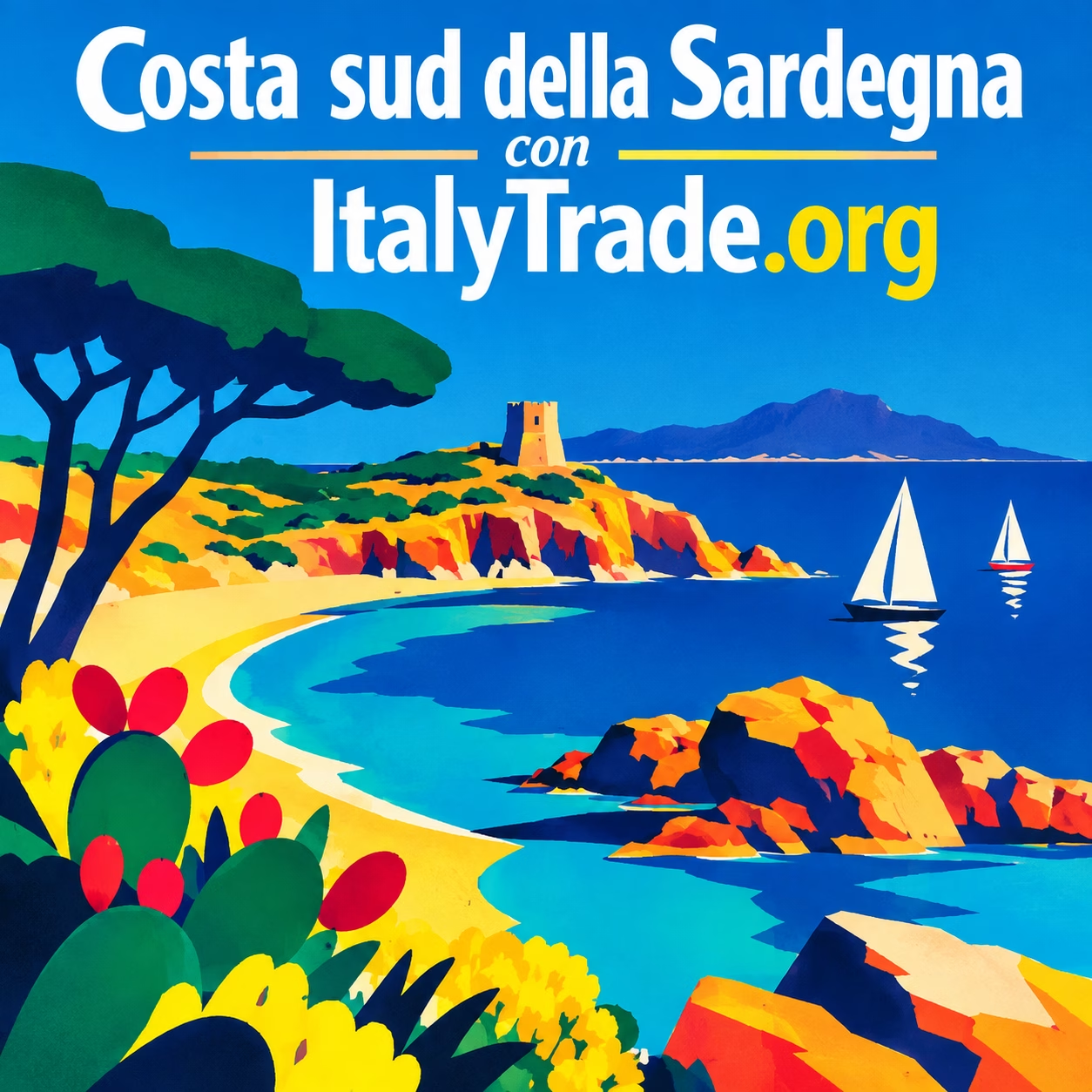
South Coast of Sardinia
Cagliari, Pula, Villasimius and Costa Rei: wild beaches, Phoenician-Roman sites and lesser-known villages
Wild Sardinia, far from the Costa Smeralda myth
Southern Sardinia offers wide open spaces, wild coastline and clear water, with landscapes that shift quickly: from white dunes to cliffs, from lagoons to rocky headlands overlooking the Mediterranean. Source: Alpitour
Unlike the north of the island, southern Sardinia is far wilder and more unspoiled: from Villasimius to Teulada, via Chia, the southern coast is the ideal destination for those seeking paradise-like scenery away from the Costa Smeralda’s mass tourism. Source: CampingDirect
Historically, the beaches of southern Sardinia have been the least touristy and more affordable than those in the north, while remaining just as beautiful: the western coast is among the wildest on the island, while the eastern coast holds some of its most striking coves. Source: TheWom Travel
A landscape that changes with every headland
The finest beaches in the south offer bays each with their own personality: from the pale sand and turquoise water of Chia to the wild dunes of Teulada, all the way to the more developed shores of Villasimius and Costa Rei. Source: Alpitour
At Porto Pino, white sand dunes stretch alongside ponds inhabited by flamingos, while Castiadas offers wide, quiet beaches such as Cala Sinzias, set within Mediterranean scrubland. Source: Alpitour
Why the south coast of Sardinia is unique
🏺 Three thousand years of history facing the sea
Nora, on the Capo di Pula headland, was Sardinia’s first Phoenician city (8th century BC), later a Punic centre and finally an important Roman city: part of its structures now lie underwater and can be explored by snorkelling on calm-sea days. Source: VisitItaly
⛵ A coastline that is still “wild”
Southern Sardinia is described as wild, tousled by the mistral wind and scented with myrtle: here, beaches are not just strips of sand between one yacht and the next, but natural paradises where the blue of the sea shifts shade with every cove. Source: Freedome
🌊 Blue Flags and environmental recognitions
The Bay of Chia, in the municipality of Domus de Maria, with its seven kilometres of ochre-coloured sandy beaches, lagoons and woods behind, sits at the top of Legambiente’s rankings with its 5 “Vele Blu” (Blue Sails). Source: CampingDirect
The wonders of the south coast
Old town and the Saint Remy Bastion
Cagliari’s old town, with its striking Saint Remy Bastion, is a panoramic fortress offering wide views over the city and the surrounding sea. Source: Spiagge.it
The village at the gates of Nora
Pula’s origins date back to Phoenician times; the village is home to the neoclassical Villa Santa Maria and the Romanesque church of Sant’Efisio, traditionally said to mark the saint’s place of martyrdom. Source: Italia.it
The Citrus Fruit Festival
Inland from the south-eastern coast, Muravera is known for its Sagra degli Agrumi (Citrus Festival), held every spring. Source: TheWom Travel
From penal colony to museum
Castiadas preserves its former Colonia Penale (penal colony), now turned into an interesting museum, alongside beaches such as Cala Sinzias and Cala Pira, overlooked by an Aragonese watchtower. Source: TheWom Travel
Porto Giunco, “the beach of two seas”
At Porto Giunco, fine white sand separates the Mediterranean Sea from the Notteri pond; it’s possible to explore the Capo Carbonara Marine Protected Area by dinghy. Source: Freedome
Cala Cipolla and the Capo Spartivento lighthouse
Cala Cipolla, close to Su Giudeu, is a small hidden gem tucked between granite headlands, the last beach reachable by car before the path leading to the Capo Spartivento lighthouse. Source: Freedome
Costa Rei
Costa Rei stretches for around 10 km along the south-eastern coast: fine white sand, crystal-clear water and shallow seabeds ideal for families. Source: Holidoit
The dunes of Porto Pino
At Porto Pino, white sand dunes stretch alongside ponds inhabited by flamingos, in one of the wildest landscapes of the south-west. Source: Alpitour
The archaeological area of Nora
Founded by the Phoenicians in the 8th century BC, Nora preserves temples, baths, mosaics and the only known Roman theatre in Sardinia, across an area of roughly four hectares. Source: SìViaggia
The Nora Stele
The famous Nora Stele, dated to the 8th century BC and now held at Cagliari’s National Archaeological Museum, bears the oldest known reference to the name “Sardinia” written in Phoenician script. Source: SìViaggia
The flavours of southern Sardinia
The cuisine of Cagliari and southern Sardinia mirrors the region’s geography: fresh ingredients and bold, simple flavours, from roasted suckling pig to seafood such as bottarga, sea urchins and tuna. Source: Do Eat Better Experience
Dishes not to miss
Malloreddus alla campidanese
Small semolina gnocchi tossed with a ragù of Sardinian sausage, onion, tomato sauce, saffron and pecorino: the classic dish of the Cagliari area. Source: Travel365
Porceddu
Sardinian suckling pig, flavoured with myrtle leaves and slow-roasted, with roots tracing back to the island’s period of Spanish rule. Source: Travel365
Culurgiones
Hand-sealed pasta parcels filled with a soft blend of mashed potato, pecorino cheese and fresh mint, distinguished by their signature braided edge. Source: Agriturismo.it
Spaghetti alla bottarga
Made with the island’s celebrated dried grey mullet roe, this is one of the pasta dishes that best sums up Sardinia’s dual pastoral and maritime identity. Source: WeRoad
Pane carasau
The crisp “music-sheet bread” is served in nearly every restaurant as a starting staple, often paired with cheeses, olives and cured meats. Source: Do Eat Better Experience
Seadas
Large semolina-pastry parcels filled with fresh cheese and flavoured with citrus zest, deep-fried and drizzled with honey. Source: Panorama
The wines of southern Sardinia
In the Sulcis area, to the south-west, Carignano is produced — a robust Mediterranean red whose notes echo the local scrubland; on the table, it’s often joined by Cannonau, the island’s sturdy native red, and by the white Vermentino. Source: Panorama
The Feast of Sant’Efisio: from Cagliari to Nora
Every year, from 1st to 4th May, the Feast of Sant’Efisio brings together the faithful, traditional costumes and the colours of the whole of Sardinia in a procession that sets off from the narrow streets of the Stampace district in central Cagliari, reaching the beach of Nora — the saint’s place of martyrdom — before returning to the small church where it began. Source: Cagliari Turismo
It is not only Sardinia’s largest religious and identity-defining event: it is the fulfilment of a solemn vow made by the city to its patron saint on 11 July 1652 in exchange for the end of a plague epidemic, and has been honoured every year for more than 350 years since. Source: Sardegna Turismo
The procession, covering over 80 kilometres, is one of the oldest and longest in the world: it sets off at midday over a carpet of coloured flower petals (the “sa ramadura” ritual) and is accompanied by the songs of religious confraternities and the sound of launeddas, Sardinia’s traditional reed instrument. Source: Sardegna Turismo
Nora’s Roman theatre, a stage across the centuries
The Roman theatre at Nora is considered the archaeological site’s main attraction and, still today, during the summer it is used for cultural performances and theatre festivals such as “La notte dei poeti” (“The night of the poets”), and has even hosted internationally renowned events, including a travelling Dolce & Gabbana fashion show. Source: SìViaggia
The site, largely brought to light in the 1950s by archaeologist Gennaro Pesce, was named “best tourist experience” at the 2025 Travel Experience Award, confirming the strength of its historical and cultural offer. Source: SìViaggia
Villages not to miss along the south coast
Pula, just a few kilometres from Cagliari, has Phoenician origins and passed under several rulers, including the Pisans and the Aragonese: its centre is home to the neoclassical Villa Santa Maria and is an excellent starting point for exploring Nora and the surrounding beaches. Source: Italia.it
🗺️ Short itinerary (2 days) in southern Sardinia
Day one: the beach of Porto Tramatzu and Cagliari’s old town, with the Saint Remy Bastion. Day two: the beach of Cala Zafferano and the Is Zuddas Caves, a limestone cave system with stalactites and stalagmites. Source: Spiagge.it
Luxury real estate along the south coast
Villasimius offers a wide variety of property types, from in-town flats to sea-view cottages and beachfront villas; local agencies have operated in south-eastern Sardinia for years, guiding buyers through one of the coast’s most sought-after areas. Source: Immobiliare.it / Tecnocasa Villasimius
Along the south-eastern coast, between Villasimius and Costa Rei, luxury villas are available in exclusive locations such as Santo Stefano, Porto Giunco and the Notteri lagoon, often also offered as high-end seasonal rentals. Source: Charming Sardinia
How much does it cost to stay on the south coast
🏡 Holiday homes (per night)
Range observed for villas and apartments in Villasimius, Chia and Costa Rei. Source: CaseVacanza.it
🏖️ Luxury villas (per week)
Price range recorded for villas in Villasimius and Costa Rei (e.g. Sa Barchitta, Villa Laura, Villa Pedra, Villa Ginestra). Source: Charming Sardinia
3 days on the south coast of Sardinia
Pula and the archaeological area of Nora
A stroll through the village of Pula, then a visit to the archaeological park of Nora: baths, Roman theatre, forum and mosaics on a headland overlooking the sea. Source: SìViaggia
Villasimius and Porto Giunco
A day at the beach in Porto Giunco, “the beach of two seas”, with the option of a dinghy excursion into the Capo Carbonara Marine Protected Area. Source: Freedome
Chia and Capo Spartivento
A morning on the beaches of Su Giudeu and Cala Cipolla, followed in the afternoon by an excursion to the Capo Spartivento lighthouse, from where the entire south coast of Sardinia can be taken in at a glance. Source: Freedome
FAQ — South coast of Sardinia
Among the most cited beaches are Porto Giunco in Villasimius, the Bay of Chia (5 Blue Sails from Legambiente), and Costa Rei, which stretches for around 10 km in the municipality of Muravera. Source: CampingDirect
It is the site of Sardinia’s oldest city, founded by the Phoenicians between the 9th and 8th century BC on the Capo di Pula headland, later a Punic and then Roman centre, with baths, a theatre and mosaics still open to visitors. Source: Routard
Every year from 1 to 4 May, with the procession starting in Cagliari and reaching the beach of Nora, the saint’s place of martyrdom. Source: Cagliari Turismo
Malloreddus alla campidanese is the classic dish of the Cagliari area, served with a ragù of Sardinian sausage, saffron and pecorino cheese. Source: Travel365
The Villasimius area offers a wide range of property types, from village flats to sea-view villas, in a market followed by agencies that have specialised in south-eastern Sardinia for over 24 years. Source: Immobiliare.it / Tecnocasa Villasimius
A Sardinia to discover slowly
Between the Phoenician temples of Nora, beaches recognised by Legambiente, and a religious feast renewed for over three centuries, the south coast of Sardinia tells the story of a more authentic, less crowded island, rich in historical layers. Source: Sardegna Turismo
A corner of the Mediterranean where the sea meets three thousand years of history.
Who wrote this article? On what basis?
📋 Transparency and verifiability
Written by: Giuseppe Baldassarri — ItalyTrade.org.
Basis for the claims: every paragraph in this article cites the verified source consulted (travel and industry outlets, official tourism boards, real-estate agencies, Cagliari’s municipal tourism office). Sections from the original template lacking a real, verifiable data point (visitor-arrival statistics, visitor-composition breakdown, real-time trending hashtags, fictitious events and job postings) have been deliberately omitted.
Are there other viewpoints: yes, noted where relevant.
Possible hidden interest: none. Independent editorial content.
How would you rate your experience?
Click the button below to leave your review.
Write a ReviewGiuseppe Baldassarri
Giuseppe Baldassarri — Sales & Account Manager – Destination & Export Marketing Travel Designer | Destination Marketing | Made in Italy
Website: ItalyTrade.org — Travel & Business | Italy: Made in Italy
“Turning Italian excellence into global visibility in the age of artificial intelligence”
Privacy Policy » Cookie Policy » Terms of Service » Image Licenses » Sitemap » Services » Reviews » Contact » Work with us