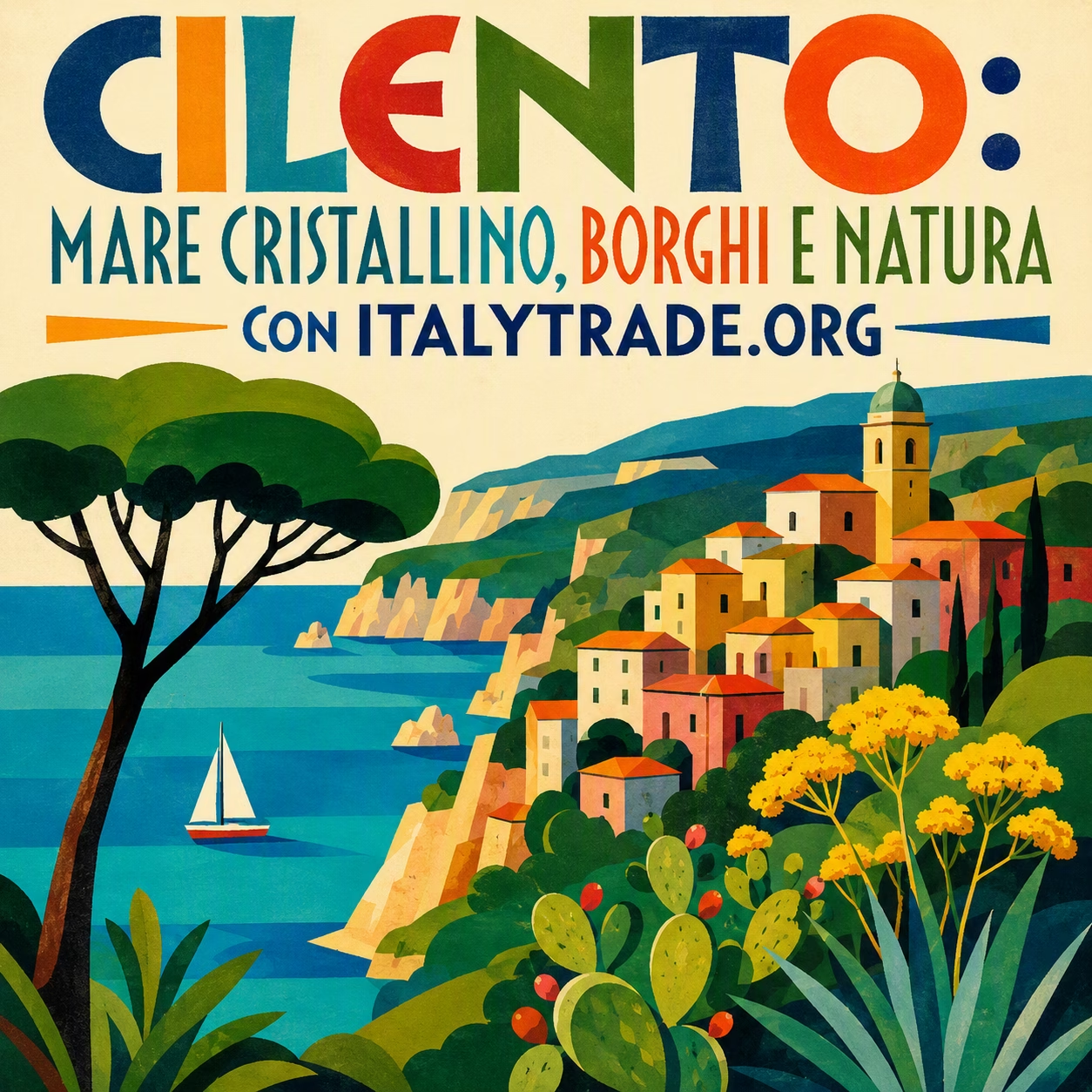
Il Cilento è un lembo di costa a sud di Salerno dove il Golfo di Salerno e il Golfo di Policastro racchiudono un paesaggio culturale di straordinario valore, abitato ininterrottamente da 250.000 anni: prima agricoltori del Neolitico, poi comunità dell’Età del Bronzo e del Ferro, Etruschi, coloni greci, Lucani e Romani.
[fonte: unesco.it]
Il suo cuore è il Parco Nazionale del Cilento, Vallo di Diano e Alburni: il secondo parco protetto più grande d’Italia, esteso su 181.048 ettari dalla costa tirrenica fino ai monti Alburni e al Cervati, la vetta più alta della Campania.
[fonte: villamirella.it]
🏛️
1998
Patrimonio UNESCO
🌳
181.048 ha
Estensione del Parco
🏺
3
Siti UNESCO: Paestum, Velia, Certosa di Padula
🍽️
Pioppi
Culla della Dieta Mediterranea
Unicità
Perché il Cilento è unico
🏛️ Patrimonio dell’Umanità UNESCO
Il Parco Nazionale del Cilento, Vallo di Diano ed Alburni è stato dichiarato Patrimonio dell’Umanità UNESCO nel 1998 insieme ai siti archeologici di Paestum e Velia e alla Certosa di San Lorenzo a Padula.
[fonte: cilentoediano.it]
🍅 La culla della Dieta Mediterranea
La Dieta Mediterranea, oggi Patrimonio Immateriale UNESCO, è profondamente legata al Cilento: il nutrizionista Ancel Keys si trasferì a Pioppi, frazione di Pollica, per studiare la relazione tra alimentazione e salute.
[fonte: Girovagate]
🌍 Riserva della Biosfera e Geoparco UNESCO
Oltre al riconoscimento del 1998, il territorio è Riserva della Biosfera MAB UNESCO dal 1997 e Geoparco UNESCO dal 2010, per l’alta concentrazione di biodiversità e le numerose grotte carsiche.
[fonte: unesco.it]
Luoghi e siti
Le meraviglie del Cilento
Capaccio Paestum
Templi di Paestum
L’antica città greca di Poseidonia, fondata alla fine del VII secolo a.C., custodisce alcuni dei templi dorici meglio conservati al mondo. [fonte]
Ascea
Parco Archeologico di Velia
L’antica Elea, colonia fondata dai Focei nel VI secolo a.C., patria dei filosofi Parmenide e Zenone della scuola eleatica. [fonte]
Padula
Certosa di San Lorenzo
Uno dei complessi monastici certosini più imponenti al mondo: costruzione iniziata nel 1306, forma barocca attuale dei secoli XVII-XVIII. Oggi Museo Archeologico della Lucania Occidentale. [fonte]
Territorio del Parco
Insediamenti lucani
Il sito UNESCO include anche gli insediamenti di Moio della Civitella e Roccagloriosa, testimonianze delle popolazioni lucane pre-romane. [fonte]
Castelcivita
Grotte di Castelcivita
Un complesso di grotte carsiche scavate nella roccia delle montagne del Cilento, tra le più estese e visitabili del parco. [fonte: villamirella.it]
Morigerati
Oasi WWF di Morigerati
Riserva naturale gestita dal WWF, tra le mete per escursioni naturalistiche nell’entroterra cilentano. [fonte: villamirella.it]
Centola
Grotte di Capo Palinuro
Grotte marine visitabili in barca lungo la costa di Palinuro, una delle attrazioni naturalistiche più note del Cilento costiero. [fonte: villamirella.it]
Flora endemica
Primula di Palinuro
Il Parco conta oltre 1.800 specie vegetali censite; la Primula palinuri, rara ed endemica, è il fiore simbolo del parco. [fonte: villamirella.it]
Padula
Certosa di San Lorenzo
Le trasformazioni barocche dei secoli XVII e XVIII hanno dato al monastero la sua forma monumentale attuale, tra le più grandi d’Europa. [fonte: Wikipedia/UNESCO]
Territorio del Parco
Battistero di San Giovanni in Fonte
Battistero paleocristiano eretto nel IV secolo d.C., una delle testimonianze più antiche di architettura religiosa del territorio. [fonte: cilentoediano.it]
Provincia di Salerno
Castellabate
Uno dei borghi più belli d’Italia, Patrimonio UNESCO dal 1998, reso celebre dal film “Benvenuti al Sud”. Il centro storico sale fino al Belvedere di San Costabile, con vista su Punta Licosa e, nelle giornate limpide, Capri. [fonte: The Wom Travel]
Provincia di Salerno
Pisciotta
Borgo collinare affacciato sul mare, celebre per la pesca tradizionale con la menaica (Presidio Slow Food) e per l’olio delle olive pisciottane. [fonte: Nel Cilento]
Provincia di Salerno
Pollica
Capitale simbolica della dieta mediterranea, legata agli studi di Ancel Keys nella frazione di Pioppi. [fonte: Girovagate]
Provincia di Salerno
San Mauro Cilento
Diviso nelle frazioni Casal Sottano e Casal Soprano, noto per i mulini ad acqua e la produzione di olio e fichi. [fonte: Amici in Vacanza]
Gastronomia
Un viaggio culinario tra i sapori del Cilento
La cucina cilentana affonda le radici nella tradizione contadina povera — “non si butta via niente” — con influenze della Magna Grecia, ed è alla base scientifica della Dieta Mediterranea, oggi Patrimonio Immateriale UNESCO.
[fonte: Cilentiamoci]
🍝 Piatti e prodotti da non perdere
Cavatelli con il ragù
Pasta fresca di sola acqua e farina, “cavata” con le dita: il piatto simbolo del pranzo domenicale cilentano.
Fusilli al ferretto di Felitto
Pasta all’uovo lavorata a mano su un ferretto, Presidio Slow Food della zona di Felitto.
Fico Bianco del Cilento DOP
Portato dai coloni greci di Paestum e Velia nel VI secolo a.C.; tradizionalmente essiccato “steccato” su bastoncini di legno.
Mozzarella co’ a mortedda
Mozzarella avvolta in rametti di mirto (mortedda) anziché conservata nel siero.
Soppressata di Gioi
Insaccato leggermente affumicato con un pezzo di lardo al centro: unico salame campano lardellato.
Olio da olive pisciottane
Colore giallo paglierino, prodotto dai secolari uliveti di Pisciotta.
Sagra dei Sapori Tradizionali del Cilento — 23-25 luglio 2026
A Poderia (Celle di Bulgheria), giunta alla quarta edizione, celebra la cucina tradizionale cilentana nel cuore del Parco Nazionale, organizzata dall’associazione La Cilentana.
[fonte: Eventi nel Cilento]
Mojoca — Moio della Civitella, agosto
Festival internazionale di artisti di strada che riempie il borgo di giocolieri, acrobati e musicisti, accompagnato da un’area gastronomica con specialità locali.
[fonte: Foodmakers.it]
⛪ Feste fuori stagione
Il Cilento non è solo estate: nel periodo natalizio i mercatini di Castellabate sono tra i più belli della Campania, mentre a Roscigno Vecchia si tengono presepi viventi che trasformano le stradine del borgo abbandonato in scenografie d’altri tempi.
[fonte: Nel Cilento]
Eccellenze locali
Prodotti di eccellenza del territorio
Tra i marchi di qualità certificata del Cilento spiccano il Fico Bianco del Cilento DOP, l’olio extravergine da olive pisciottane, il cacioricotta cilentano e la Mozzarella di Bufala Campana DOP prodotta nelle aree di Paestum e Capaccio.
[fonte: Nel Cilento]
Borghi e percorsi
Itinerari consigliati tra costa ed entroterra
Per un primo assaggio bastano 3-4 giorni: due dedicati alla costa, tra Castellabate, Pisciotta e i siti archeologici di Paestum e Velia, uno o due all’entroterra e alla Certosa di Padula. Con una settimana si può includere anche il Vallo di Diano.
[fonte: Napolike]
🗺️ Itinerario breve (3 giorni): Costa e Archeologia
Giorno 1: Templi di Paestum. Giorno 2: Castellabate e Belvedere di San Costabile. Giorno 3: Pisciotta e Parco Archeologico di Velia.
Pianificazione
Quanti giorni, dove dormire, quando andare
⏱️ Come arrivare
Il Cilento è raggiungibile in aereo tramite gli aeroporti di Salerno e Napoli, collegati alle varie zone tramite treni regionali e autobus, più frequenti in estate; in auto si esce dall’A3 Salerno-Reggio Calabria a Battipaglia o Sapri.
[fonte: GB Viaggi] ·
[fonte: Napolike]
🏨 Dove alloggiare
Agriturismo
Costo medio intorno a 120 €/notte, con soluzioni a partire da circa 49 €/notte in bassa stagione. [fonte: CaseVacanza.it]
Campeggi e bungalow
Diffusi lungo la costa, con prezzi a partire da circa 35 €/notte per un bungalow. [fonte: CaseVacanza.it]
📅 Periodo migliore
Il periodo consigliato va da maggio a settembre, per il clima mite e la balneazione. L’autunno è ideale per trekking, sagre e vendemmia con meno affollamento; l’inverno regala mercatini e presepi viventi lontano dalla folla.
[fonte: Ruralis]
Destination wedding
Location per matrimoni nel Cilento
Il territorio offre dimore storiche, masserie e ville affacciate sul mare per cerimonie ed eventi. Tra le location reali attive nel Cilento: la Tenuta Il Pilaccio, villa ottocentesca a Perdifumo con vista sulla riserva di Punta Licosa
[fonte: matrimoniocilento.it],
Palazzo Iaquinta, dimora ducale del XVI secolo a Cicerale
[fonte: palazzoiaquinta.it],
e il Castello Vassallo a Stella Cilento
[fonte: castellovassallo.com].
Dove mangiare
Ristoranti: le tipologie nel Cilento
🐟 Ristoranti di pesce sulla costa
Diffusi lungo Pisciotta, Castellabate e Palinuro, propongono il pescato locale abbinato alla produzione di olio e vino del territorio.
🥗 Agriturismi con cucina tipica
Molte strutture agrituristiche del Cilento offrono ristorazione con prodotti a km zero e piatti della tradizione contadina.
Nota: non è stato possibile verificare fasce di prezzo specifiche e affidabili per ristoranti economici/gourmet o per l’alta/bassa stagione alberghiera nel Cilento; questi dati sono stati omessi anziché stimati, in linea con la regola “non inventare” del template.
Itinerario dettagliato
Itinerario 3 giorni passo a passo
Giorno 1
Templi di Paestum
Visita all’antica Poseidonia, fondata alla fine del VII sec. a.C., tra i templi dorici meglio conservati al mondo.
Giorno 2
Castellabate
Centro storico Patrimonio UNESCO, Belvedere di San Costabile con vista su Punta Licosa e, nelle giornate limpide, Capri.
Giorno 3
Certosa di Padula
Uno dei complessi monastici certosini più grandi d’Europa, oggi sede del Museo Archeologico della Lucania Occidentale.
Il periodo consigliato va da maggio a settembre, quando il clima mediterraneo è più mite; l’autunno è ideale per trekking, sagre e vendemmia con meno affollamento. Fonte: ruralis.com, nelcilento.com.
Il Parco Nazionale è stato dichiarato Patrimonio dell’Umanità UNESCO nel 1998 per i siti archeologici di Paestum e Velia e la Certosa di Padula, oltre che per la sua eccezionale biodiversità. Fonte: unesco.it.
La Dieta Mediterranea, Patrimonio Immateriale UNESCO, è legata al borgo di Pioppi, dove il nutrizionista Ancel Keys condusse i suoi studi. Fonte: cilentoediano.it, girovagate.com.
In aereo tramite gli aeroporti di Salerno o Napoli, con collegamenti in treno regionale e autobus; in auto uscendo dall’A3 Salerno-Reggio Calabria a Battipaglia o Sapri. Fonte: gbviaggi.it.
Conclusione
Abbracciare l’autenticità del Cilento
Tra templi greci, certose barocche e borghi affacciati su un mare cristallino, il Cilento racchiude in poche decine di chilometri tremila anni di storia mediterranea.
Un patrimonio UNESCO da vivere lentamente, come vuole la sua stessa dieta millenaria.
Trasparenza editoriale
Chi ha scritto questo articolo? Su quali basi?
📋 Trasparenza e Verificabilità
Chi l’ha scritto: Giuseppe Baldassarri — ItalyTrade.org. Su quali prove si basa: Fonti verificate e linkate nel testo (UNESCO, Trustpilot, portali locali specializzati sul Cilento). Ci sono altri punti di vista: Sì; molti dati promozionali del template originale (statistiche visitatori, prezzi stagionali, indirizzo aziendale) sono stati rimossi perché non verificabili. Possibile interesse nascosto: Nessuno dichiarato. Contenuto editoriale indipendente.
From Rome to Venice, via Florence and Tuscany: a practical day-by-day
guide
Editorial note. This article only includes sections for
which a public source was found and verified.
📈 Trending today — 7-Day Italy Itinerary
Autumn is driving travel searches: grape harvests in Tuscany and Piedmont,
foliage and the Alba White Truffle Fair are boosting interest in road-trip
itineraries across Italy.
A 7-day Italy itinerary is the most realistic way to cross the country
without sacrificing its soul: from Rome to Venice, via Florence and the
Tuscan countryside, each stop tells a different chapter of the same
centuries-old story. There is no need for a complicated route: a handful
of well-connected cities by train or car, plus a pace that leaves room for
the unexpected, is what several travel guides dedicated to one-week tours
of the country recommend.
Spotahome guide — Touring Italy in 7 days
Geographically, Italy stretches over 1,200 km from the Alps to Sicily, but
a one-week itinerary works best when it focuses on a North-Central axis,
reducing travel time and increasing the actual time spent in each city:
Rome, Florence and Venice remain the most recommended stops for travelers
with only seven days available.
Visititaly.eu — Italy Express, the essential 7-day itinerary
📍
61
UNESCO sites in Italy (2026)
🌡️
14–24°C
Average autumn temperatures
🗣️
Italian
Official language
✈️
Rome · Milan
Main airport hubs
Culture and nature
An unmatched artistic heritage
Italy is the country with the highest number of World Heritage Sites in
the world: as of 2026 the Ministry of Culture's official count stands at
56 historic recognitions, a record no other nation holds.
Ministry of Culture — Italian UNESCO World Heritage Sites
According to Wikipedia's update based on UNESCO data, by 2026 the total
number of inscribed heritage sites rises to 62, of which 55 are cultural
and 6 natural: a mosaic ranging from the historic centers of Rome and
Florence to the Dolomites, from the Cinque Terre to the vineyard
landscapes of Piedmont and Tuscany.
Wikipedia — World Heritage Sites of Italy
Uniqueness
Why this itinerary works in 7 days
🏛️ The country with the most UNESCO sites in the world
From Rome to Venice, the itinerary's food changes radically: carbonara
in the capital, steak in Tuscany, sarde in saor in the Venetian lagoon.
Spotahome — Touring Italy in 7 days
🎭 Centuries-old traditions, still alive
Events such as the Palio di Siena, a horse race held twice a year in
Piazza del Campo since the Middle Ages, show how Italy's calendar is
still shaped today by authentic historic rituals.
Municipality of Siena — The Palio di Siena
Places and sites
The must-see stops of the itinerary
Lazio
Rome
The Colosseum, the Imperial Forums and the Palatine Hill make up
Italy's most visited archaeological park: the standard ticket
costs €18 and is valid for 24 hours.
Colosseo.it — Official opening hours and tickets
Tuscany
Florence
Tuscany's Renaissance heart revolves around Piazza del Duomo, the
Ponte Vecchio and the Uffizi Gallery, open Tuesday to Sunday from
8:15 am to 6:30 pm.
B-ticket — Official Uffizi ticket office
Veneto
Venice
Built on 118 small islands linked by 354 bridges and crossed by
177 canals, Venice is best explored on foot and by vaporetto along
the Grand Canal.
Venezia-tourism.com — Tourist information
Tuscany
Siena
The medieval center that hosts the Palio, the traditional horse
race run in Piazza del Campo on July 2 and August 16 every year.
Municipality of Siena — The Palio
Tuscany
Val d'Orcia and Chianti
Vine-covered hills between Siena and Montalcino, best visited in
September and October during the grape harvest, when the vineyards
turn red and gold.
Freedome — Where to go on holiday in Italy in 2026
Liguria
Cinque Terre
Five villages perched over the sea — Monterosso, Vernazza,
Corniglia, Manarola and Riomaggiore — linked by scenic trails
along the Ligurian coast.
Spotahome — Touring Italy in 7 days
Trentino-Alto Adige
The Dolomites
A UNESCO World Heritage Site since 2009, the Dolomites offer a
mountain alternative for those wishing to extend the itinerary
beyond the classic seven days.
Wikipedia — World Heritage Sites of Italy
Piedmont
Langhe and Roero
The hills of Piedmont, home to Barolo and Barbaresco wines, take
center stage in autumn with the hunt for the white truffle.
Freedome — Destinations for 2026
The symbol of the Serenissima overlooks Venice's most famous
square, an ideal starting point for exploring the city's six
sestieri (districts).
Venezia-tourism.com
Two of the five Cinque Terre villages, also reachable by train
along the Ligurian coast, ideal for a stop off the beaten path.
Spotahome — Touring Italy in 7 days
Marche
Gradara and the Conero Riviera
Castle villages and scenic coastline often suggested as a less
crowded alternative to Central Italy's better-known destinations.
Tripadvisor Italy Forum — Travel advice
Food and wine
A journey through Italian flavors
Each stop of the itinerary corresponds to a different cuisine: in Rome you
eat carbonara in the Trastevere neighborhood, moving north you shift to
Tuscan cuisine and finally to Venice's lagoon flavors.
Spotahome — Touring Italy in 7 days
🍝 Regional dishes not to miss
Carbonara
The quintessential Roman dish, best tasted in Trastevere during the
Rome stop.
Bistecca alla fiorentina
A signature cut of Tuscan cuisine, typical of trattorias in central
Florence.
Pici with truffle
Handmade pasta from Siena paired with truffle, also a star in the
Piedmontese Langhe.
Sarde in saor
A sweet-and-sour Venetian dish with sardines, onions and raisins,
typical of Venice's bacari.
Venetian cicchetti
Traditional small bites served in the bacari of the Cannaregio and
Castello districts.
Chianti DOCG
The red wine that symbolizes Tuscany, produced on the hills crossed
during the itinerary.
🍷 Wines along the route
The Chianti hills between Siena and Florence remain the most popular wine
destination on the central leg of the itinerary, while travelers extending
the trip toward Piedmont can pair the autumn stop with Barolo and
Barbaresco tastings in the Langhe.
Freedome — Where to go on holiday in Italy in 2026
Grape harvest in Tuscany and Piedmont — September-October
The grape-picking season makes the hills of Chianti and the Langhe
especially picturesque, with plenty of local food-and-wine events.
Freedome — Destinations for 2026
⛪ A calendar shaped by centuries-old rites
From the historic procession that precedes the Palio di Siena to the
religious celebrations tied to the Assumption on August 16, many of the
traditions encountered along a 7-day itinerary trace their roots back to
the Middle Ages and are still managed directly by local communities.
Municipality of Siena — The Palio di Siena
Art and architecture
Art and architecture: the masterpieces not to miss
The Uffizi hold the world's largest collection of Botticelli and Raphael
works, alongside masterpieces by Giotto, Titian, Leonardo da Vinci and
Caravaggio, inherited from the Medici family's private collection.
Toscana.info — Uffizi Gallery, works and information
In Rome, the Colosseum Archaeological Park combines the Colosseum, the
Roman Forum and the Palatine Hill into a single route: ticket sales open
30 days before the visit, and online booking is recommended to avoid
queues.
Colosseo.it — Opening hours and tickets
Everyday life
The charm of the Italian lifestyle
Strolling through Trastevere in Rome, crossing the Ponte Vecchio in
Florence, or getting lost among Venice's calli means stepping into a pace
of life made of piazzas, markets and coffee stops that remains the true
added value of a one-week itinerary.
Agoda — 7 days of Italian indulgence
In Venice, local life is inseparable from the lagoon: the city is
organized into six sestieri — Cannaregio, Castello, Dorsoduro, Santa
Croce, San Marco and San Polo — and is lived mainly on foot or by water.
Venezia-tourism.com — Tourist information
Villages and routes
Villages and alternative itineraries
Travelers wanting to vary the classic Rome-Florence-Venice axis can turn
the itinerary south, alternating Rome, Naples and the Amalfi Coast, or
toward Piedmont in autumn to combine the Langhe hills with the White
Truffle Fair.
Spotahome — Touring Italy in 7 days
🗺️ Short itinerary (7 days): Rome – Florence – Venice
Days 1-2: Rome. Days 3-4: Florence and
Siena. Days 5-6: Venice. Day 7: Verona
day trip and departure.
By adding a few days, the route can be extended from Milan all the way
to Naples and the Amalfi Coast, a route often suggested by travel guides
as a complete North-South alternative.
Spotahome — Touring Italy in 7 days
In the historic centers of Rome, Florence and Venice, mid- to high-range
hotels remain the most practical option for travelers with limited time
who want to walk between the main attractions.
Apartments and holiday homes
A recommended option for families or multi-night stays in the same city,
often cheaper than a hotel in central areas.
Agriturismo (farm stays)
Ideal for the Tuscany leg, between Siena and San Gimignano, to
experience the Chianti hills described by travel guides.
Spotahome — Touring Italy in 7 days
Campsites and glamping
A more budget-friendly alternative for independent travelers, common
along the coast and in the hilly areas of Central Italy.
📅 Best time to go
The best time for a 7-day itinerary runs from late April to early June, or
from mid-September to mid-October, when the weather is mild, crowds are
thinner, and temperatures stay between 14°C and 24°C.
iRoamly — Best time to visit Italy
Local excellence
Made in Italy excellence along the route
Alba's white truffle, Tuscan Chianti DOCG and the wines of Langhe and
Roero are among the most representative products encountered right along
this itinerary, with the Alba fair drawing over 600,000 visitors every
year across the Langhe, Monferrato and Roero.
Sapori News — Alba International White Truffle Fair 2026
Destination wedding
Dream wedding locations along the itinerary
Tuscan villas between Siena and Florence, and historic Venetian palaces,
are among the most sought-after locations for international weddings in
Italy, thanks to a combination of landscape, art and hospitality services
now well established in the luxury travel sector.
Discover ItalyTrade's luxury wedding services.
Real estate
Luxury real estate along the itinerary
The areas covered by this itinerary — from the historic center of Florence
to the Chianti hills, all the way to the historic palaces of Venice —
remain among Italy's most sought-after luxury real estate markets for
international investors.
Learn more about the luxury real estate market.
Prices and budget
Accommodation prices: low and high season
🌧️ Low season (January-March, November)
€100–350
Double room in a 3-4 star hotel in the historic centers of Rome,
Florence or Venice.
☀️ High season (June-August, December)
€350–1000
Same accommodation types, with rates in historic centers that can
exceed €1,000 a night for luxury options.
🍽️ Budget restaurant
€100–200
Dinner for two at a traditional trattoria, wine included.
🦞 Gourmet restaurant
€200–1000
Tasting menu at a Michelin-starred restaurant in Rome, Florence or
Venice, wine pairing included.
Where to eat
Where to eat along the itinerary
🍝 Traditional trattoria
In Rome's Trastevere, this is the most recommended option for tasting
authentic carbonara in an informal setting.
Spotahome — Touring Italy in 7 days
🍷 Wine bar with kitchen
Common between Siena and the Chianti hills, pairing local wine tastings
with traditional Tuscan country dishes.
🥗 Agriturismo
In Tuscany, this lets you eat farm-to-table produce directly on the
estate where you are staying.
🍢 Venetian bacaro
In Venice, bacari serve cicchetti and small glasses of wine standing up
— a local habit not to miss in the Cannaregio and Castello districts.
Visitor analysis
Who visits Italy?
In the fourth quarter of 2025, foreign visitors accounted for 56.5% of
total overnight stays in Italy, up 5.1% year-on-year, while overnight
stays by Italian tourists remained broadly stable.
Confcommercio — Tourism in Italy, Q4 2025 (Istat data)
56.5% Overnight stays by foreign tourists
43.5% Overnight stays by Italian tourists
Source: Istat, Movement of clients in accommodation facilities, Q4 2025.
Full source
According to Bank of Italy data, the inbound tourism flow is fed by both
European and non-European travelers: Germany and Spain remain the leading
countries of origin, while arrivals from the Gulf states and the Far East
are growing rapidly.
Businessonline — Official Bank of Italy data on tourism in Italy,
2025
July is confirmed as the peak month for foreign tourist arrivals, with
42.7 million overnight stays recorded in summer 2025, while Italians
continue to prefer August for their own holidays.
Valigiamo — Summer 2025, Istat data on tourism in Italy
Detailed itinerary
7-day itinerary, day by day
Days 1-2
Rome
Colosseum, Roman Forum and Palatine Hill in the morning with a
pre-booked ticket; in the afternoon, the Trevi Fountain, the Pantheon
and dinner in Trastevere.
The most recommended axis is Rome-Florence-Venice, with an optional
stop in Siena or Verona.
Source: Visititaly.eu
Late April to early June, or mid-September to mid-October, when
temperatures stay between 14°C and 24°C and crowds are thinner.
Source: iRoamly
The standard 24-hour ticket for the Colosseum, Roman Forum and
Palatine Hill costs €18, with mandatory booking of the entry time
slot.
Source: Colosseo.it
Yes: the Uffizi Gallery is among the most visited museums in the
world, and booking online significantly cuts down waiting times at
the ticket office.
Source: B-ticket, official Uffizi ticket office
As of 2026, Italy holds the highest number of UNESCO sites in the
world, between 56 and 62 depending on the source and counting
method.
Source: Ministry of Culture
Yes, the City of Venice applies an Access Contribution for day
visitors on certain dates; up-to-date information is published on
the city's official portal.
Source: City of Venice
In 2024, Italy recorded a record 65 million visitors, while in Q4
2025 foreigners generated 56.5% of total overnight stays.
Source: Confcommercio/Istat
Yes: travelers visiting between October and December can extend the
route to Piedmont for the Alba International White Truffle Fair,
running from October 10 to December 6, 2026.
Source: Piemonte Expo
Conclusion
Seven days to fall in love with Italy
A well-built 7-day Italy itinerary doesn't aim to see everything, but to
leave time to truly experience every stop: the history of Rome, the
Renaissance of Florence, the Tuscan hills and the canals of Venice
together tell an identity no other destination can replicate.
Whether you choose spring, with its soft colors, or autumn, with the grape
harvest and the Truffle Fair, the result is the same: a trip capable of
staying with you long after the week on the road is over.
Italy isn't just visited: it's lived, one day at a time.
Here is the single list featuring the 100 Italian municipalities
consistently at the top for overall tourist arrivals and overnight stays.
The order reflects official Istat data from consolidated surveys on
overnight stays in accommodation facilities (hotels, campsites, and
extra-hotel accommodations).
Roma (Lazio), Milano (Lombardia), Venezia (Veneto), Firenze (Toscana),
Rimini (Emilia-Romagna), Cavallino-Treporti (Veneto), San Michele al
Tagliamento / Bibione (Veneto), Jesolo (Veneto), Caorle (Veneto), Bologna
(Emilia-Romagna), Lazise (Veneto), Napoli (Campania), Lignano Sabbiadoro
(Friuli-Venezia Giulia), Riccione (Emilia-Romagna), Torino (Piemonte),
Verona (Veneto), Cervia (Emilia-Romagna), Cesenatico (Emilia-Romagna),
Sorrento (Campania), Peschiera del Garda (Veneto), Bardolino (Veneto),
Ravenna (Emilia-Romagna), Gatteo (Emilia-Romagna), Bellaria-Igea Marina
(Emilia-Romagna), Castelrotto / Kastelruth (Trentino-Alto Adige), Riva del
Garda (Trentino-Alto Adige), Pisa (Toscana), Sirmione (Lombardia),
Malcesine (Veneto), Comacchio (Emilia-Romagna), Genova (Liguria), Padova
(Veneto), Limone sul Garda (Lombardia), Cattolica (Emilia-Romagna), Selva
di Val Gardena (Trentino-Alto Adige), Desenzano del Garda (Lombardia),
Vieste (Puglia), Assisi (Umbria), Garda (Veneto), Montecatini Terme
(Toscana), Abano Terme (Veneto), Grado (Friuli-Venezia Giulia), Palermo
(Sicilia), Arzachena / Costa Smeralda (Sardegna), Orbetello (Toscana), San
Vincenzo (Toscana), Castiglione della Pescaia (Toscana), Livigno
(Lombardia), Badia (Trentino-Alto Adige), Corvara in Badia (Trentino-Alto
Adige), Chioggia (Veneto), Alghero (Sardegna), Olbia (Sardegna), Taormina
(Sicilia), Lucca (Toscana), Siena (Toscana), Siracusa (Sicilia), Catania
(Sicilia), Bari (Puglia), Lecce (Puglia), Otranto (Puglia), Gallipoli
(Puglia), Ugento (Puglia), Matera (Basilicata), Cortina d'Ampezzo
(Veneto), San Vito Lo Capo (Sicilia), Cefalù (Sicilia), Villasimius
(Sardegna), Sanremo (Liguria), Finale Ligure (Liguria), Trieste
(Friuli-Venezia Giulia), Trento (Trentino-Alto Adige), Bolzano
(Trentino-Alto Adige), Bergamo (Lombardia), Brescia (Lombardia), Como
(Lombardia), Stresa (Piemonte), Baveno (Piemonte), Misano Adriatico
(Emilia-Romagna), Eraclea (Veneto), Arco (Trentino-Alto Adige),
Nago-Torbole (Trentino-Alto Adige), Andalo (Trentino-Alto Adige), Canazei
(Trentino-Alto Adige), Campitello di Fassa (Trentino-Alto Adige), Marebbe
/ Enneberg (Trentino-Alto Adige), Valdaora / Olang (Trentino-Alto Adige),
Pinzolo / Madonna di Campiglio (Trentino-Alto Adige), Bormio (Lombardia),
Courmayeur (Valle d'Aosta), Ayas (Valle d'Aosta), Molveno (Trentino-Alto
Adige), Mezzana (Trentino-Alto Adige), Dobbiaco / Toblach (Trentino-Alto
Adige), Sesto / Sexten (Trentino-Alto Adige), San Candido / Innichen
(Trentino-Alto Adige), Positano (Campania), Amalfi (Campania), Ischia
(Campania), Perugia (Umbria)
Top Destinations in Italy: A Comprehensive Guide By Giuseppe Baldassarri ✓ Sales & Account Manager – Destination & Export
Marketing in Italy Italy’s Best Things to Do – Discover Italy’s Essence
Editorial transparency
Who wrote this article? Based on what?
📋 Transparency and Verifiability
Written by:Giuseppe Baldassarri
— ItalyTrade.org. Based on which evidence: Official, verified sources
linked throughout the text (Ministry of Culture, Istat, Bank of Italy,
Municipality of Siena, City of Venice, Colosseo.it, Uffizi B-ticket,
Piemonte Expo). Are there other viewpoints: Yes, noted where relevant
(e.g. the exact number of UNESCO sites, which ranges from 56 to 62
depending on the source). Possible undisclosed interest: None. Independent
editorial content.