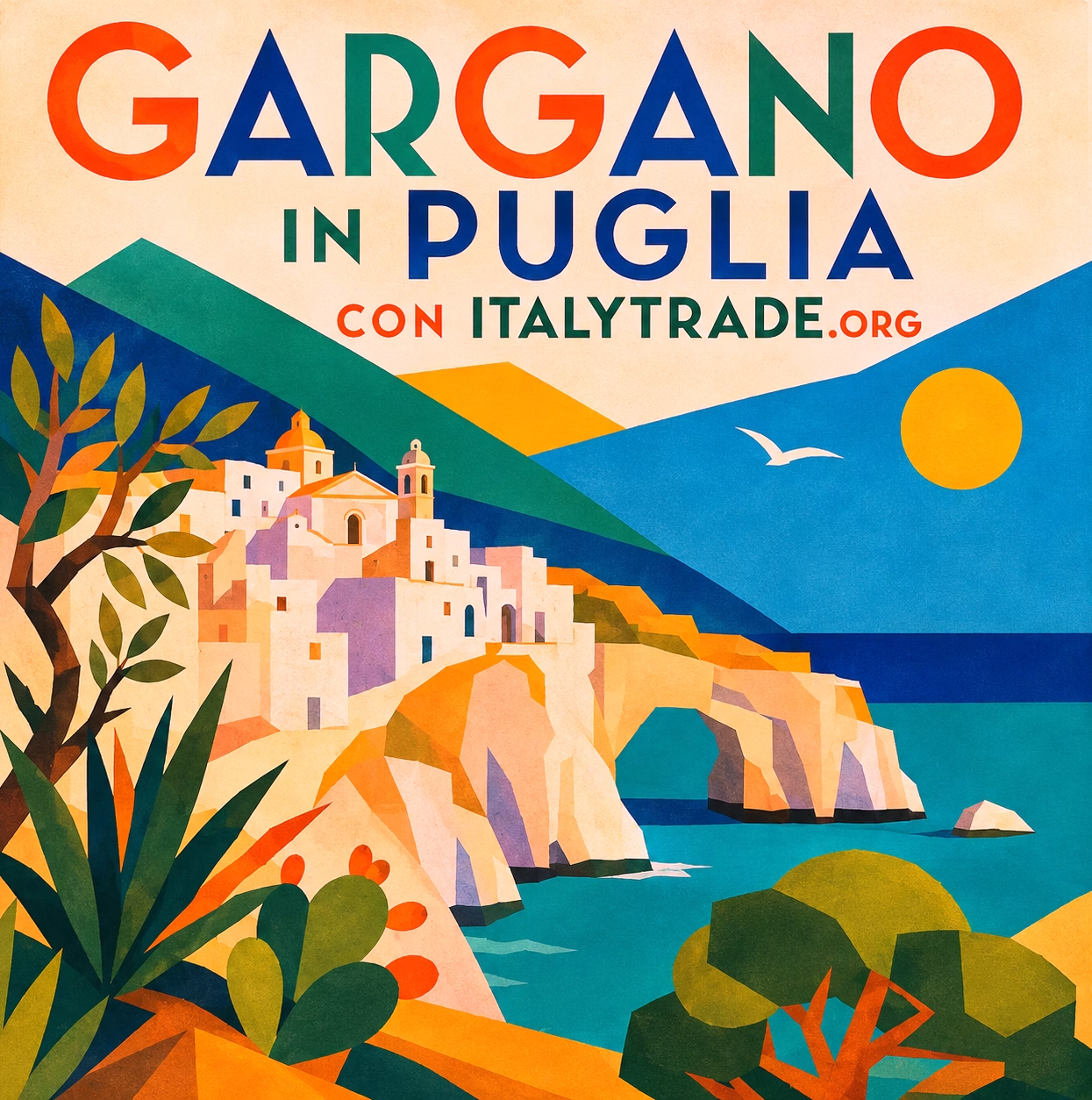
Gargano in Puglia
Il “sperone d’Italia”: promontorio del Parco Nazionale del Gargano, tra borghi medievali, Foresta Umbra e Isole Tremiti
📈 Trending oggi — Gargano in Puglia
Nel 2026 il Gargano continua a beneficiare del boom turistico pugliese: +25% negli arrivi dall’estero nel 2025 per l’intera regione. Fonte: Rete Gargano
Lo sperone d’Italia
Conosciuto come lo “sperone d’Italia”, il Gargano è un promontorio montuoso che si protende nell’Adriatico nella parte più settentrionale della Puglia, in un’area un tempo nota come “antica Daunia”. Al suo interno si trova il Parco Nazionale del Gargano, meta capace di accontentare chi cerca il mare, chi ama la natura incontaminata e chi è interessato a borghi dalla storia millenaria. Fonte: Turismo Puglia
Il Parco, istituito nel 1991, si estende su circa 118.000 ettari nella provincia di Foggia e comprende 18 comuni, tra spiagge, coste rocciose, montagne, laghi costieri e le Isole Tremiti al largo. Fonte: GreenStyle
Dati: GreenStyle, Wikipedia, Skyscanner
Un’isola biologica tra terra e mare
Dal punto di vista biologico il promontorio del Gargano è considerato un’isola, separata dal resto della penisola dalla piana del Tavoliere. La sua natura calcarea lo rende ricco di forme carsiche come grotte e doline, e ospita habitat molto diversi tra loro, dalle pinete mediterranee alle faggete della Foresta Umbra. Fonte: Parks.it
Le zone umide interne — le lagune di Lesina e Varano — si trovano lungo le rotte migratorie degli uccelli tra Africa ed Europa centro-orientale, e sono tra le più importanti d’Italia per varietà di ambienti. Fonte: Treccani
Perché il Gargano è unico
🏛️ Patrimonio UNESCO
Le tracce longobarde del Santuario di San Michele Arcangelo a Monte Sant’Angelo sono Patrimonio Mondiale UNESCO dal 25 giugno 2011, come parte del sito seriale “I Longobardi in Italia, luoghi del potere”. È il più antico santuario dell’Europa occidentale dedicato all’Arcangelo Michele. Fonte: Wikipedia
🌲 La più grande foresta di latifoglie d’Italia
La Foresta Umbra, cuore verde del Parco, ospita 61 specie di orchidee spontanee, la concentrazione più alta d’Europa. Fonte: Vieste.it
🎣 I trabucchi, macchine da pesca patrimonio vivente
Lungo la costa tra Peschici e Vieste si incontrano i trabucchi, antiche strutture di pesca in legno protese sul mare, oggi tutelate e valorizzate da un’associazione nata nel 2012. Fonte: Tripea
Le meraviglie del Gargano
Vieste
Nota come la “Perla del Gargano”, conserva un centro storico medievale a picco sul mare con la Cattedrale romanica dell’XI secolo e il Castello Svevo voluto da Federico II. Celebre per il monolite del Pizzomunno. Fonte
Peschici
Borgo di mare arroccato sulla roccia nel punto più a nord del Gargano, con origini che secondo lo storico Pompeo Sarnelli risalgono all’anno 970 d.C. Fonte
Rodi Garganico
Cittadina nota per la produzione di agrumi (Arance del Gargano e Limoni Femminello, entrambi DOP), con centro storico medievale arroccato tra due spiagge di sabbia fine. Fonte
Manfredonia
È la “porta” del Gargano: città ricca di monumenti, dal Castello Svevo-Angioino-Aragonese che ospita il museo archeologico con le stele daunie, alla vicina Abbazia di Santa Maria di Siponto. Fonte: Italia.it
Foresta Umbra
Cuore verde del Parco Nazionale, sviluppata fino a circa 830 metri di altitudine, con 61 specie di orchidee spontanee: la concentrazione più alta d’Europa. Fonte
Isole Tremiti
Arcipelago di cinque isole (San Domino, San Nicola, Capraia, Cretaccio, Pianosa), area marina protetta all’interno del Parco Nazionale del Gargano. Fonte
Baia delle Zagare
Tra le spiagge più celebri del Gargano; maggio, giugno e settembre sono i mesi consigliati per visitarla con meno folla. Fonte: Skyscanner
Laghi di Lesina e Varano
Le lagune costiere del Gargano si trovano lungo importanti rotte migratorie tra Africa ed Europa centro-orientale, e sono tra le zone umide più rilevanti d’Italia. Fonte: Treccani
Santuario di San Michele Arcangelo
Basilica minore scavata nella roccia, patrimonio UNESCO dal 2011, venerata dal 490 d.C. e modello per santuari come Mont-Saint-Michel in Francia. Fonte: Wikipedia
Castello Svevo e Cattedrale
Il Castello Federiciano e la Cattedrale romanica dell’XI secolo custodiscono la statua lignea di Santa Maria di Merino, protettrice della città. Fonte
Monte Sant’Angelo
Borgo che ospita il Santuario patrimonio UNESCO; dal 2021 è conosciuto anche con il brand “La Città dei due Siti UNESCO”. Fonte: Comune di Monte Sant’Angelo
Vico del Gargano
Borgo dell’entroterra nord del Gargano, inserito tra i “borghi più belli d’Italia” e famoso per la produzione di agrumi. Fonte
Un viaggio culinario tra i sapori del Gargano
La cucina garganica affonda le radici nella tradizione contadina e marinara: piatti semplici basati su pochi ingredienti, dal pesce fresco della costa ai formaggi e alla pasta fatta in casa dell’entroterra. Fonte: Hotels Gargano
🍝 Piatti da non perdere
Troccoli
Pasta simile a spaghetti spessi, ricavata con un attrezzo chiamato “troccolaturo”; conditi tradizionalmente con sugo di pomodoro fresco e funghi, o con seppie ripiene. Fonte
Orecchiette
Simbolo gastronomico della Puglia, spesso accompagnate dal pomodoro rosso del Gargano e dalla cacioricotta. Fonte
Caciocavallo Podolico del Gargano
Formaggio prodotto con il latte delle vacche podoliche allevate allo stato brado, tra i prodotti tipici più rinomati del territorio. Fonte
Fava di Carpino
Coltivata in tutto il territorio garganico, è un presidio Slow Food e patrimonio economico e culturale locale. Fonte
Agrumi del Gargano
Arance del Gargano e Limoni Femminello, entrambi a Denominazione di Origine Protetta, coltivati soprattutto attorno a Rodi Garganico e Vico del Gargano. Fonte
Olio Dauno DOP
Olio extravergine di oliva del Gargano, elemento principe della tavola locale, protagonista di piatti come il pancotto con le fave. Fonte
Tradizioni e festival: il calendario del Gargano
🎉 Il calendario degli eventi
Carpino in Folk — 6/10 agosto 2026
Uno dei festival di musica popolare più identitari d’Italia, ambientato nel borgo di Carpino, patria storica dei Cantori di Carpino: tarantelle, sunettë e melodie tramandate di generazione in generazione. Fonte verificata: Gazzetta H24
Festa di San Michele Arcangelo — 29 settembre
A Monte Sant’Angelo, patrimonio UNESCO, si celebra ogni anno la festa dedicata all’Arcangelo Michele, meta storica di pellegrinaggio legata al Santuario di San Michele Arcangelo. Fonte verificata: sagr.it
Festeggiamenti di San Rocco a Rodi Garganico — 11/19 agosto
Festa patronale tradizionalmente collocata tra l’11 e il 19 agosto sul lungomare del Gargano. Fonte verificata: Regione Puglia (portale eventi)
Architettura religiosa e militare
Il Santuario di San Michele Arcangelo ha una struttura a due livelli: sul livello superiore una torre di 27 metri domina l’intero abitato con il suono delle sue campane. All’interno, sull’altare della grotta, si trova una statua marmorea di San Michele del 1507. Fonte: Il Giornale dell’Arte
L’architettura civile e militare del Gargano porta ovunque i segni di Federico II di Svevia: dal Castello di Vieste al Castello Svevo-Angioino- Aragonese di Manfredonia, che oggi ospita il museo archeologico con le stele daunie. Fonte: Italia.it
I borghi più belli e gli itinerari consigliati
I borghi garganici — Vieste, Peschici, Rodi Garganico e Vico del Gargano — condividono la stessa struttura tipica: centri storici medievali arroccati a strapiombo sul mare, vicoli stretti e irregolari, terrazze panoramiche. Fonte: FoggiaToday
🗺️ Itinerario breve (3 giorni): la costa
Giorno 1: Vieste, centro storico, Cattedrale e Castello Svevo. Giorno 2: Peschici e i trabucchi della costa. Giorno 3: Rodi Garganico e i suoi agrumeti.
🗺️ Itinerario esteso (5 giorni): costa e entroterra
Ai tre giorni sulla costa si possono aggiungere una giornata dedicata alla Foresta Umbra e una a Monte Sant’Angelo, per visitare il Santuario di San Michele Arcangelo patrimonio UNESCO. Fonte: Vieste.it
Quanti giorni, dove dormire, quando andare
⏱️ Durata consigliata
Per visitare con calma la costa (Vieste, Peschici, Rodi Garganico) e dedicare almeno una giornata all’entroterra (Foresta Umbra, Monte Sant’Angelo) sono generalmente consigliati tra i 4 e i 7 giorni, combinando spiagge, borghi e il Santuario patrimonio UNESCO.
🏨 Dove alloggiare (per tipologia)
Hotel e resort
Concentrati soprattutto nei centri costieri come Vieste, Peschici e Rodi Garganico, con la maggiore disponibilità nei mesi estivi.
Agriturismo e masserie
Molte strutture nascono dal recupero di masserie storiche, spesso con piscina affacciata sugli uliveti; nel Gargano il costo minimo indicativo è di circa 44€ a notte, con una media intorno ai 145€ a notte per le strutture con più servizi. Fonte: CaseVacanza.it
Appartamenti e case vacanza
Diffusi lungo tutta la costa, sono un’opzione molto scelta dalle famiglie: nel 2025 in Puglia il comparto delle locazioni turistiche ha registrato una crescita marcata, con +28% negli arrivi e +25% nelle presenze rispetto al 2024. Fonte: Rete Gargano / Osservatorio Pugliapromozione
📅 Periodo migliore
La primavera e la prima metà dell’autunno sono i periodi più indicati per il clima mite e la minore affluenza turistica; per il mare il periodo ideale va da giugno a settembre, con temperature che ad agosto possono superare i 40°C. L’inverno si presta invece a visitare borghi e castelli federiciani senza folla. Fonte verificata: quando.net
Prodotti di eccellenza Made in Italy
Il Gargano vanta diverse denominazioni protette: l’Arancia del Gargano e il Limone Femminello del Gargano, entrambi a Denominazione di Origine Protetta, coltivati soprattutto attorno a Rodi Garganico e Vico del Gargano, insieme al Caciocavallo Podolico e alla fava di Carpino, quest’ultima presidio Slow Food. Fonte: Pugnochiuso
Location per matrimoni da sogno
Le masserie storiche recuperate del Gargano, con i loro cortili tra gli ulivi e le terrazze affacciate sul mare, sono location sempre più richieste per matrimoni in Puglia. Fonte: Agriturismo.net Scopri i servizi luxury wedding ItalyTrade.
Immobiliare nel Gargano
L’intensità turistica dei comuni costieri del Gargano è tra le più elevate della Puglia, seconda solo alle Isole Tremiti e ad alcune zone del Salento, secondo l’indice arrivi/abitanti calcolato da ARPA Puglia su dati ISTAT. Fonte: ARPA Puglia Approfondisci il mercato immobiliare di lusso.
Abbracciare il Gargano, sperone d’Italia
Dal Santuario patrimonio UNESCO di Monte Sant’Angelo ai borghi bianchi di Vieste e Peschici, dalla Foresta Umbra alle Isole Tremiti, il Gargano racchiude in un unico promontorio gran parte della varietà che rende la Puglia una delle mete più amate del Mediterraneo, con una crescita del turismo internazionale che nel 2025 ha segnato per l’intera regione un +25% negli arrivi dall’estero. Fonte: Rete Gargano / BIT 2026
Che si scelga la costa o l’entroterra, il mare o i cammini di pellegrinaggio millenari, il Gargano resta uno degli angoli più autentici della Puglia, ancora capace di sorprendere chi lo visita per la prima volta.
Lo sperone d’Italia aspetta solo di essere scoperto.
Prezzi soggiorno: bassa e alta stagione
🌧️ Bassa/media stagione
(giugno, settembre)
Camping sul mare o hotel 3 stelle, camera doppia a notte.
☀️ Alta stagione
(luglio–agosto)
B&B vista mare o formula mezza pensione a persona a notte.
Fonti: Kuriuland — Guida Gargano 2026, Fanpage Travel
🏡 Agriturismo/masseria
Fascia di prezzo a notte, dalle soluzioni più semplici alle masserie con piscina.
🛥️ Isole Tremiti (B&B)
Camera doppia a notte in alta stagione a San Domino.
Ristoranti: le tipologie nel Gargano
🎣 Ristorante su trabucco
Cenare su un trabucco, l’antica macchina da pesca protesa sul mare, è un’esperienza tipica della costa tra Vieste e Peschici, dove il pesce arriva quasi direttamente dalla rete al piatto. Fonte: Viaggiando Italia
🥗 Agriturismo con ristorante
Molte masserie storiche recuperate offrono anche ristorazione con piatti tradizionali cucinati con prodotti dell’azienda agricola. Fonte: Agriturismo.net
🍝 Trattoria tradizionale
Propone paste fresche fatte a mano come troccoli e orecchiette, condite con sughi a base di prodotti locali; un esempio citato dalle guide è “Il Ranch” nei dintorni di Vieste, noto per gli antipasti con i prodotti tipici garganici. Fonte: Viaggiando Italia
Il Gargano in numeri
Da dove arrivano i visitatori
Non è stata trovata una fonte verificata con la ripartizione dettagliata per regione italiana o per lingua straniera specifica per il solo Gargano; questa sezione non viene quindi compilata con percentuali, per non introdurre dati non verificabili. A livello regionale, in Puglia Francia e Germania si confermano ai primi posti tra i mercati esteri per presenze, con gli Stati Uniti primo mercato extra-europeo. Fonte: Rete Gargano / BIT 2026
Itinerario 3 giorni passo a passo
Vieste
Centro storico medievale a picco sul mare, Cattedrale romanica dell’XI secolo, Castello Svevo e il monolite del Pizzomunno. Fonte
Peschici
Borgo di mare arroccato sulla roccia nel punto più a nord del Gargano, con i trabucchi lungo la costa verso Vieste. Fonte
Monte Sant’Angelo
Santuario di San Michele Arcangelo, patrimonio UNESCO dal 2011, borgo tra i “più belli d’Italia”. Fonte: Wikipedia
FAQ — Gargano in Puglia
La primavera e la prima metà dell’autunno sono i periodi più consigliati per il clima mite e la minore affluenza turistica; per il mare il periodo ideale va da giugno a settembre, con agosto molto caldo. L’inverno si presta invece a visitare i borghi e i castelli federiciani senza folla. Fonte: quando.net
Lo scalo principale è l’Aeroporto di Bari, da cui si prosegue in auto verso nord in circa due ore. In alternativa sono disponibili l’Aeroporto di Foggia (collegamenti limitati) e quello di Pescara. Fonte: Skyscanner
L’auto è il mezzo più pratico per raggiungere le diverse zone e spiagge. In alternativa si può arrivare in treno fino a Foggia o San Severo e proseguire con autobus locali verso le località costiere. Fonte: Puglia Vacanze
Il costo dipende da alloggio, stagione e attività scelte: una stima media indicativa per una settimana in Puglia si aggira tra 800 e 1500 euro a persona, alloggio, pasti e svaghi inclusi. Fonte: LaTerradiPuglia
Tra le più celebri figurano la Baia delle Zagare, la spiaggia di Zaiana tra Peschici e Vieste, e la Spiaggia del Castello a Vieste, dominata dal monolite calcareo del Pizzomunno. Fonte: Skyscanner
L’entroterra ospita la Foresta Umbra e borghi medievali con castelli federiciani, tra cui Monte Sant’Angelo, Vico del Gargano, Manfredonia e Vieste. Fonte: The Wom Travel
Al largo della costa si trovano le Isole Tremiti, che fanno parte del Parco Nazionale del Gargano e ospitano un’area marina protetta. Fonte: Turismo Puglia
Gli episodi di criminalità organizzata sono rari e isolati; il rischio più concreto per i visitatori riguarda i furti da veicoli parcheggiati con oggetti lasciati in vista lungo alcune spiagge. Fonte: Gargano na Tour
Chi ha scritto questo articolo? Su quali basi?
📋 Trasparenza e Verificabilità
Chi l’ha scritto: Giuseppe Baldassarri —
ItalyTrade.org.
Su quali prove si basa: Fonti verificate e linkate nel
testo.
Ci sono altri punti di vista: Sì, indicati dove
rilevante.
Possibile interesse nascosto: Nessuno. Contenuto
editoriale indipendente.
Giuseppe Baldassarri
Sales & Account Manager · Destination & Export Digital Marketing Manager · Travel Designer · TTO
Website: ItalyTrade.org — Travel & Business | Italy: Made in Italy
“Trasformare l’eccellenza italiana in visibilità globale nell’era dell’intelligenza artificiale”
Immobiliare di Lusso | Export | Luxury Wedding | Travel Design
Privacy Policy » Cookie Policy » Termini di servizio » Licenze immagini » Sitemap » Servizi » Recensioni » Contatti » Lavora con noi

7-Day Italy Itinerary: What to See, Map and Stops
From Rome to Venice, via Florence and Tuscany: a practical day-by-day guide
📈 Trending today — 7-Day Italy Itinerary
Autumn is driving travel searches: grape harvests in Tuscany and Piedmont, foliage and the Alba White Truffle Fair are boosting interest in road-trip itineraries across Italy.
Seven days, an entire country to discover
A 7-day Italy itinerary is the most realistic way to cross the country without sacrificing its soul: from Rome to Venice, via Florence and the Tuscan countryside, each stop tells a different chapter of the same centuries-old story. There is no need for a complicated route: a handful of well-connected cities by train or car, plus a pace that leaves room for the unexpected, is what several travel guides dedicated to one-week tours of the country recommend. Spotahome guide — Touring Italy in 7 days
Geographically, Italy stretches over 1,200 km from the Alps to Sicily, but a one-week itinerary works best when it focuses on a North-Central axis, reducing travel time and increasing the actual time spent in each city: Rome, Florence and Venice remain the most recommended stops for travelers with only seven days available. Visititaly.eu — Italy Express, the essential 7-day itinerary
An unmatched artistic heritage
Italy is the country with the highest number of World Heritage Sites in the world: as of 2026 the Ministry of Culture's official count stands at 56 historic recognitions, a record no other nation holds. Ministry of Culture — Italian UNESCO World Heritage Sites
According to Wikipedia's update based on UNESCO data, by 2026 the total number of inscribed heritage sites rises to 62, of which 55 are cultural and 6 natural: a mosaic ranging from the historic centers of Rome and Florence to the Dolomites, from the Cinque Terre to the vineyard landscapes of Piedmont and Tuscany. Wikipedia — World Heritage Sites of Italy
Why this itinerary works in 7 days
🏛️ The country with the most UNESCO sites in the world
No other nation can count on a similar concentration of art, history and landscapes recognized by the whole of humanity, spread across even lesser-known regions. GreenMe — UNESCO heritage sites in Italy, the complete map
🍝 A cuisine that changes from region to region
From Rome to Venice, the itinerary's food changes radically: carbonara in the capital, steak in Tuscany, sarde in saor in the Venetian lagoon. Spotahome — Touring Italy in 7 days
🎭 Centuries-old traditions, still alive
Events such as the Palio di Siena, a horse race held twice a year in Piazza del Campo since the Middle Ages, show how Italy's calendar is still shaped today by authentic historic rituals. Municipality of Siena — The Palio di Siena
The must-see stops of the itinerary
Rome
The Colosseum, the Imperial Forums and the Palatine Hill make up Italy's most visited archaeological park: the standard ticket costs €18 and is valid for 24 hours. Colosseo.it — Official opening hours and tickets
Florence
Tuscany's Renaissance heart revolves around Piazza del Duomo, the Ponte Vecchio and the Uffizi Gallery, open Tuesday to Sunday from 8:15 am to 6:30 pm. B-ticket — Official Uffizi ticket office
Venice
Built on 118 small islands linked by 354 bridges and crossed by 177 canals, Venice is best explored on foot and by vaporetto along the Grand Canal. Venezia-tourism.com — Tourist information
Siena
The medieval center that hosts the Palio, the traditional horse race run in Piazza del Campo on July 2 and August 16 every year. Municipality of Siena — The Palio
Val d'Orcia and Chianti
Vine-covered hills between Siena and Montalcino, best visited in September and October during the grape harvest, when the vineyards turn red and gold. Freedome — Where to go on holiday in Italy in 2026
Cinque Terre
Five villages perched over the sea — Monterosso, Vernazza, Corniglia, Manarola and Riomaggiore — linked by scenic trails along the Ligurian coast. Spotahome — Touring Italy in 7 days
The Dolomites
A UNESCO World Heritage Site since 2009, the Dolomites offer a mountain alternative for those wishing to extend the itinerary beyond the classic seven days. Wikipedia — World Heritage Sites of Italy
Langhe and Roero
The hills of Piedmont, home to Barolo and Barbaresco wines, take center stage in autumn with the hunt for the white truffle. Freedome — Destinations for 2026
Uffizi Gallery
One of the most visited museums in the world, it holds the largest collection of Botticelli and Raphael works from the Florentine Renaissance. Toscana.info — Uffizi Gallery, works and information
Imperial Forums and Palatine Hill
The Palatine Hill, home to the imperial palaces after Augustus, today houses the Palatine Museum with finds from Rome's earliest history. Ministry of Culture — Roman Forum and Palatine Hill
Flavian Amphitheatre
Built in the 1st century AD under the Flavian dynasty, the Colosseum remains the largest amphitheatre ever built in the world. Ministry of Culture — Colosseum, Flavian Amphitheatre
St Mark's Basilica
The symbol of the Serenissima overlooks Venice's most famous square, an ideal starting point for exploring the city's six sestieri (districts). Venezia-tourism.com
San Gimignano
Its medieval towers dominate the Sienese countryside, recognized as a UNESCO site for the pastoral landscape of the Via Francigena. Archètravel — 10 UNESCO sites in Italy you shouldn't miss
Alba
The capital of the Langhe turns its medieval center into a food-and-wine hub every autumn during the White Truffle Fair. Tartufi Ratti — Guide to the Alba White Truffle Fair
Vernazza and Manarola
Two of the five Cinque Terre villages, also reachable by train along the Ligurian coast, ideal for a stop off the beaten path. Spotahome — Touring Italy in 7 days
Gradara and the Conero Riviera
Castle villages and scenic coastline often suggested as a less crowded alternative to Central Italy's better-known destinations. Tripadvisor Italy Forum — Travel advice
A journey through Italian flavors
Each stop of the itinerary corresponds to a different cuisine: in Rome you eat carbonara in the Trastevere neighborhood, moving north you shift to Tuscan cuisine and finally to Venice's lagoon flavors. Spotahome — Touring Italy in 7 days
🍝 Regional dishes not to miss
Carbonara
The quintessential Roman dish, best tasted in Trastevere during the Rome stop.
Bistecca alla fiorentina
A signature cut of Tuscan cuisine, typical of trattorias in central Florence.
Pici with truffle
Handmade pasta from Siena paired with truffle, also a star in the Piedmontese Langhe.
Sarde in saor
A sweet-and-sour Venetian dish with sardines, onions and raisins, typical of Venice's bacari.
Venetian cicchetti
Traditional small bites served in the bacari of the Cannaregio and Castello districts.
Chianti DOCG
The red wine that symbolizes Tuscany, produced on the hills crossed during the itinerary.
🍷 Wines along the route
The Chianti hills between Siena and Florence remain the most popular wine destination on the central leg of the itinerary, while travelers extending the trip toward Piedmont can pair the autumn stop with Barolo and Barbaresco tastings in the Langhe. Freedome — Where to go on holiday in Italy in 2026
Traditions and events along the itinerary
🎉 Event calendar
Palio di Siena — July 2 and August 16
The Carriera in Piazza del Campo, raced by the city's Contrade, remains one of the most authentic identity-driven events in Tuscany. Municipality of Siena — Palio ordinances and schedule
Alba International White Truffle Fair — 10 October–6 December 2026
Now in its 96th edition, the fair turns Alba into a food-and-wine hub with a world truffle market and tastings across the Langhe. Piemonte Expo — Alba White Truffle Fair 2026
Grape harvest in Tuscany and Piedmont — September-October
The grape-picking season makes the hills of Chianti and the Langhe especially picturesque, with plenty of local food-and-wine events. Freedome — Destinations for 2026
⛪ A calendar shaped by centuries-old rites
From the historic procession that precedes the Palio di Siena to the religious celebrations tied to the Assumption on August 16, many of the traditions encountered along a 7-day itinerary trace their roots back to the Middle Ages and are still managed directly by local communities. Municipality of Siena — The Palio di Siena
Art and architecture: the masterpieces not to miss
The Uffizi hold the world's largest collection of Botticelli and Raphael works, alongside masterpieces by Giotto, Titian, Leonardo da Vinci and Caravaggio, inherited from the Medici family's private collection. Toscana.info — Uffizi Gallery, works and information
In Rome, the Colosseum Archaeological Park combines the Colosseum, the Roman Forum and the Palatine Hill into a single route: ticket sales open 30 days before the visit, and online booking is recommended to avoid queues. Colosseo.it — Opening hours and tickets
The charm of the Italian lifestyle
Strolling through Trastevere in Rome, crossing the Ponte Vecchio in Florence, or getting lost among Venice's calli means stepping into a pace of life made of piazzas, markets and coffee stops that remains the true added value of a one-week itinerary. Agoda — 7 days of Italian indulgence
In Venice, local life is inseparable from the lagoon: the city is organized into six sestieri — Cannaregio, Castello, Dorsoduro, Santa Croce, San Marco and San Polo — and is lived mainly on foot or by water. Venezia-tourism.com — Tourist information
Villages and alternative itineraries
Travelers wanting to vary the classic Rome-Florence-Venice axis can turn the itinerary south, alternating Rome, Naples and the Amalfi Coast, or toward Piedmont in autumn to combine the Langhe hills with the White Truffle Fair. Spotahome — Touring Italy in 7 days
🗺️ Short itinerary (7 days): Rome – Florence – Venice
Days 1-2: Rome. Days 3-4: Florence and Siena. Days 5-6: Venice. Day 7: Verona day trip and departure.
🗺️ Extended itinerary (10-14 days): North-Central-South
By adding a few days, the route can be extended from Milan all the way to Naples and the Amalfi Coast, a route often suggested by travel guides as a complete North-South alternative. Spotahome — Touring Italy in 7 days
How many days, where to stay, when to go
⏱️ Recommended duration
Seven days are enough to realistically cover the Rome-Florence-Venice axis, allowing roughly two full days for each city plus a transition day for train travel. Visititaly.eu — Italy Express, the essential 7-day itinerary
🏨 Where to stay (by type)
Hotels and resorts
In the historic centers of Rome, Florence and Venice, mid- to high-range hotels remain the most practical option for travelers with limited time who want to walk between the main attractions.
Apartments and holiday homes
A recommended option for families or multi-night stays in the same city, often cheaper than a hotel in central areas.
Agriturismo (farm stays)
Ideal for the Tuscany leg, between Siena and San Gimignano, to experience the Chianti hills described by travel guides. Spotahome — Touring Italy in 7 days
Campsites and glamping
A more budget-friendly alternative for independent travelers, common along the coast and in the hilly areas of Central Italy.
📅 Best time to go
The best time for a 7-day itinerary runs from late April to early June, or from mid-September to mid-October, when the weather is mild, crowds are thinner, and temperatures stay between 14°C and 24°C. iRoamly — Best time to visit Italy
Made in Italy excellence along the route
Alba's white truffle, Tuscan Chianti DOCG and the wines of Langhe and Roero are among the most representative products encountered right along this itinerary, with the Alba fair drawing over 600,000 visitors every year across the Langhe, Monferrato and Roero. Sapori News — Alba International White Truffle Fair 2026
Dream wedding locations along the itinerary
Tuscan villas between Siena and Florence, and historic Venetian palaces, are among the most sought-after locations for international weddings in Italy, thanks to a combination of landscape, art and hospitality services now well established in the luxury travel sector. Discover ItalyTrade's luxury wedding services.
Luxury real estate along the itinerary
The areas covered by this itinerary — from the historic center of Florence to the Chianti hills, all the way to the historic palaces of Venice — remain among Italy's most sought-after luxury real estate markets for international investors. Learn more about the luxury real estate market.
Accommodation prices: low and high season
🌧️ Low season
(January-March, November)
Double room in a 3-4 star hotel in the historic centers of Rome, Florence or Venice.
☀️ High season
(June-August, December)
Same accommodation types, with rates in historic centers that can exceed €1,000 a night for luxury options.
🍽️ Budget restaurant
Dinner for two at a traditional trattoria, wine included.
🦞 Gourmet restaurant
Tasting menu at a Michelin-starred restaurant in Rome, Florence or Venice, wine pairing included.
Where to eat along the itinerary
🍝 Traditional trattoria
In Rome's Trastevere, this is the most recommended option for tasting authentic carbonara in an informal setting. Spotahome — Touring Italy in 7 days
🍷 Wine bar with kitchen
Common between Siena and the Chianti hills, pairing local wine tastings with traditional Tuscan country dishes.
🥗 Agriturismo
In Tuscany, this lets you eat farm-to-table produce directly on the estate where you are staying.
🍢 Venetian bacaro
In Venice, bacari serve cicchetti and small glasses of wine standing up — a local habit not to miss in the Cannaregio and Castello districts.
Who visits Italy?
In the fourth quarter of 2025, foreign visitors accounted for 56.5% of total overnight stays in Italy, up 5.1% year-on-year, while overnight stays by Italian tourists remained broadly stable. Confcommercio — Tourism in Italy, Q4 2025 (Istat data)
- 56.5% Overnight stays by foreign tourists
- 43.5% Overnight stays by Italian tourists
Source: Istat, Movement of clients in accommodation facilities, Q4 2025. Full source
Tourism statistics in Italy
Sources: Roami, Ministry of Culture, Confcommercio/Istat.
Where do visitors come from?
According to Bank of Italy data, the inbound tourism flow is fed by both European and non-European travelers: Germany and Spain remain the leading countries of origin, while arrivals from the Gulf states and the Far East are growing rapidly. Businessonline — Official Bank of Italy data on tourism in Italy, 2025
July is confirmed as the peak month for foreign tourist arrivals, with 42.7 million overnight stays recorded in summer 2025, while Italians continue to prefer August for their own holidays. Valigiamo — Summer 2025, Istat data on tourism in Italy
7-day itinerary, day by day
Rome
Colosseum, Roman Forum and Palatine Hill in the morning with a pre-booked ticket; in the afternoon, the Trevi Fountain, the Pantheon and dinner in Trastevere.
Florence
Piazza del Duomo, Ponte Vecchio and the Uffizi Gallery: allow at least 2-3 hours for the museum visit.
Siena and San Gimignano
A day in Tuscany between Piazza del Campo in Siena and the medieval towers of San Gimignano, returning to Florence in the evening.
Venice
St Mark's Basilica, Doge's Palace, a vaporetto ride along the Grand Canal, and a stop on the islands of Murano and Burano.
Verona and departure
A half-day excursion to Verona, returning to Venice in time for your departing flight or train.
FAQ — 7-Day Italy Itinerary
The most recommended axis is Rome-Florence-Venice, with an optional stop in Siena or Verona. Source: Visititaly.eu
Late April to early June, or mid-September to mid-October, when temperatures stay between 14°C and 24°C and crowds are thinner. Source: iRoamly
The standard 24-hour ticket for the Colosseum, Roman Forum and Palatine Hill costs €18, with mandatory booking of the entry time slot. Source: Colosseo.it
Yes: the Uffizi Gallery is among the most visited museums in the world, and booking online significantly cuts down waiting times at the ticket office. Source: B-ticket, official Uffizi ticket office
As of 2026, Italy holds the highest number of UNESCO sites in the world, between 56 and 62 depending on the source and counting method. Source: Ministry of Culture
Yes, the City of Venice applies an Access Contribution for day visitors on certain dates; up-to-date information is published on the city's official portal. Source: City of Venice
In 2024, Italy recorded a record 65 million visitors, while in Q4 2025 foreigners generated 56.5% of total overnight stays. Source: Confcommercio/Istat
Yes: travelers visiting between October and December can extend the route to Piedmont for the Alba International White Truffle Fair, running from October 10 to December 6, 2026. Source: Piemonte Expo
Seven days to fall in love with Italy
A well-built 7-day Italy itinerary doesn't aim to see everything, but to leave time to truly experience every stop: the history of Rome, the Renaissance of Florence, the Tuscan hills and the canals of Venice together tell an identity no other destination can replicate.
Whether you choose spring, with its soft colors, or autumn, with the grape harvest and the Truffle Fair, the result is the same: a trip capable of staying with you long after the week on the road is over.
Italy isn't just visited: it's lived, one day at a time.
Great Destinations
🏖️ Coasts, Archipelagos and Coastal Rivieras
Amalfi Coast, Cinque Terre, Costa Smeralda , Salento, Riviera Romagnola, Maremma, Gargano, Cilento, Versilia, Costa dei Trabocchi, Ulysses Riviera, Costa degli Dei, Riviera dei Fiori, Costa Viola, Costa dei Gelsomini, Coral Riviera, Riviera delle Palme, South Sardinia Coast, Costa degli Angeli Cagliari, Tuscan Archipelago (Elba, Giglio, Capraia, Montecristo, Pianosa, Giannutri and Gorgona), Conero, Aeolian Islands, Egadi Islands, Pelagie Islands, La Maddalena Archipelago, Sardinia, Pontine Islands, Tremiti Islands, Gulf of Naples Islands (Capri, Ischia, Procida).
🏞️ Lakes and Pre-Alpine Areas
Lake Como, Lake Garda, Lake Maggiore, Lake Iseo, Lake Trasimeno, Lake Bolsena, Lake Bracciano, Lake Lugano (Italian side), Lake Orta, Lake Vico, Alimini Lakes.
🏔️ Mountains and Alpine Resorts
Dolomites, Val di Fassa, Val Gardena, Alta Badia, Val di Fiemme, Valtellina, Cadore, Val Venosta, Val Pusteria, Val d'Ayas, Val di Gressoney, Valsesia, Val di Sole, Val di Non, Val Camonica, Via Lattea, Sellaronda, Matterhorn Ski Paradise (Italian side), Gran Paradiso, Mont Blanc Massif (Italian side), Alpe di Siusi, Plan de Corones.
🍷 Hilly, Rural and Historical Areas
Chianti, Val d'Orcia, Langhe, Roero, Monferrato, Val di Noto, Tuscia, Valle d'Itria, Lunigiana, Garfagnana, Casentino, Mugello, Valdichiana, Valle Umbra, Valnerina, Murge, Sila, Aspromonte, Barbagia, Gallura, Ogliastra, Sulcis-Iglesiente, Carnia, Brianza, Oltrepò Pavese, Franciacorta, Colli Euganei, Sibillini Mountains.
20 Most Beautiful Villages in Italy
- Alberobello Puglia
- Borghetto sul Mincio Veneto
- Carloforte Sardinia
- Castell'Arquato Emilia-Romagna
- Castelmezzano Basilicata
- Chianalea di Scilla Calabria
- Chiusa / Klausen Trentino-South Tyrol
- Cingoli Marche
- Civita di Bagnoregio Lazio
- Étroubles Aosta Valley
- Gradisca d'Isonzo Friuli-Venezia Giulia
- Manarola Liguria
- Militello in Val di Catania Sicily
- Orta San Giulio Piedmont
- Sabbioneta Lombardy
- San Gimignano Tuscany
- Santo Stefano di Sessanio Abruzzo
- Sepino Molise
- Spello Umbria
- Zungoli Campania
Who wrote this article? Based on what?
📋 Transparency and Verifiability
Written by: Giuseppe Baldassarri — ItalyTrade.org.
Based on which evidence: Official, verified sources
linked throughout the text (Ministry of Culture, Istat, Bank of Italy,
Municipality of Siena, City of Venice, Colosseo.it, Uffizi B-ticket,
Piemonte Expo).
Are there other viewpoints: Yes, noted where relevant
(e.g. the exact number of UNESCO sites, which ranges from 56 to 62
depending on the source).
Possible undisclosed interest: None. Independent
editorial content.
How would you rate your experience?
Click the button below to leave your review.
Write a ReviewGiuseppe Baldassarri
Sales & Account Manager · Destination & Export Digital Marketing Manager · Travel Designer · TTO
Website: ItalyTrade.org — Travel & Business | Italy: Made in Italy
"Turning Italian excellence into global visibility in the age of artificial intelligence"
Luxury Real Estate | Export | Luxury Wedding | Travel Design
Privacy Policy » Cookie Policy » Terms of Service » Image Licenses » Sitemap » Services » Reviews » Contact » Work with us