Zum Inhalt springen
Passa al contenuto principale 🔍 Cerca
Logo ItalyTrade
Cerca in tutte le lingue
👇✍️ Scrivi qui sotto la tua ricerca

🗺️Itinerario Consigliato
✉️ Richiedi il tuo Itinerario Personalizzato
🏨 Prezzi Indicativi ▼
🏨
Verifica prezzi reali su Google Hotels Confronta le offerte live di Booking, Expedia, Hotels.com
Cerca su Google Hotels

🎭Attrazioni ed Esperienze

🇮🇹Eccellenze Made in Italy

💒Location per Matrimoni

🏠Immobili nella Zona

📰Articoli su ItalyTrade.org

★★★★★

Your opinion matters to us!

Enjoying your experience on ItalyTrade.org? Please take a moment to leave us a review on Trustpilot and let us know how we’re doing.

Write a Review (opens in a new window)

Welcome to ItalyTrade!

Official Website: ItalyTrade.org — Travel & Business | Made in Italy

“Turning Italian excellence into global visibility in the age of Artificial Intelligence”

Enter your email to save your address in this browser and dismiss this notice:

Copyright © 2026 Giuseppe Baldassarri. All rights reserved.

Gargano, Apulien

August 31, 2026
Gargano, Apulien
ItalyTrade.org Maßgeschneiderte Reise
✈️ Reise planen
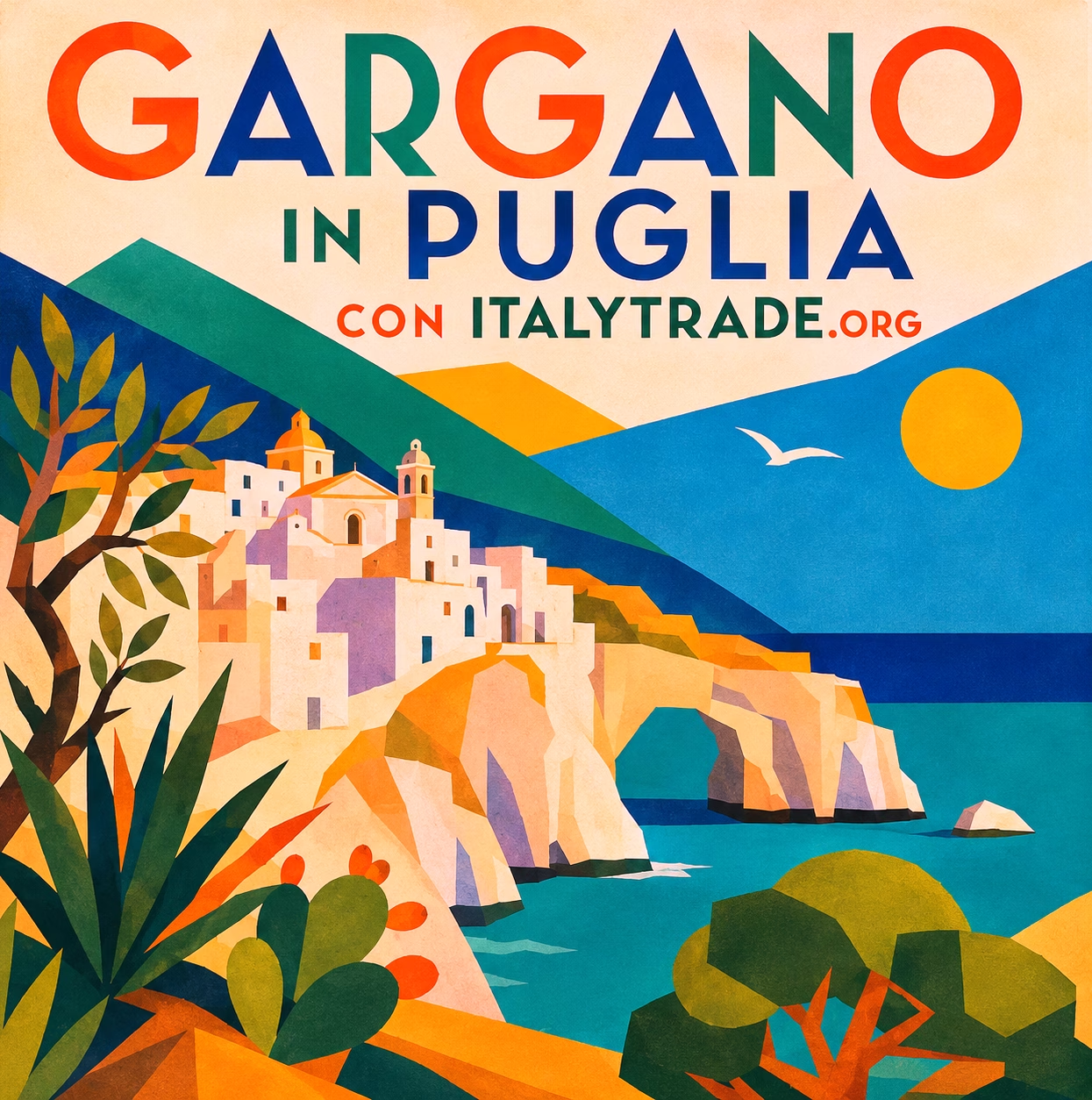
Gargano, Apulien — Panoramablick

Gargano, Apulien

Der „Sporn Italiens“: das Bergland des Nationalparks Gargano, zwischen mittelalterlichen Dörfern, dem Umbra-Wald und den Tremiti-Inseln

📈 Heute im Trend — Gargano, Apulien

2026 profitiert der Gargano weiterhin vom Tourismusboom Apuliens: Die Auslandsankünfte stiegen 2025 in der gesamten Region um 25 %. Quelle: Rete Gargano

#Gargano #Vieste #TremitiInseln #Peschici 🔥 #GarganoInLove
Instagram TikTok Facebook X / Twitter
Maßgeschneiderte Reise
Einleitung

Der Sporn Italiens

Der Gargano, bekannt als „Sporn Italiens“, ist ein gebirgiges Vorgebirge, das im äußersten Norden Apuliens in die Adria hineinragt, in einem Gebiet, das früher als „antikes Daunia“ bekannt war. Hier liegt der Nationalpark Gargano, ein Reiseziel, das sowohl Meerliebhaber als auch Naturfreunde und Besucher anspricht, die sich für jahrtausendealte Dörfer interessieren. Quelle: Turismo Puglia

Der 1991 gegründete Park erstreckt sich über rund 118.000 Hektar in der Provinz Foggia und umfasst 18 Gemeinden, von Stränden und felsigen Küsten bis hin zu Bergen, Küstenseen und den vorgelagerten Tremiti-Inseln. Quelle: GreenStyle

📍
~118.000 ha
Fläche des Nationalparks
🏘️
18
Gemeinden im Park
🐦
~170
brütende Vogelarten
✈️
~2 Std.
von Bari mit dem Auto

Daten: GreenStyle, Wikipedia, Skyscanner

Kultur und Natur

Eine biologische Insel zwischen Land und Meer

Biologisch gesehen gilt das Vorgebirge des Gargano als Insel, vom Rest der Halbinsel durch die Tavoliere-Ebene getrennt. Seine Kalksteinnatur macht es reich an Karstformen wie Höhlen und Dolinen und beherbergt sehr unterschiedliche Lebensräume, von mediterranen Pinienwäldern bis zu den Buchenwäldern des Umbra-Waldes. Quelle: Parks.it

Die inneren Feuchtgebiete — die Lagunen von Lesina und Varano — liegen an den Vogelzugrouten zwischen Afrika und Mittel-/Osteuropa und zählen zu den bedeutendsten Feuchtgebieten Italiens in Bezug auf die Vielfalt der Lebensräume. Quelle: Treccani

Einzigartigkeit

Warum der Gargano einzigartig ist

🏛️ UNESCO-Welterbe

Die langobardischen Spuren des Heiligtums des Erzengels Michael in Monte Sant’Angelo sind seit dem 25. Juni 2011 UNESCO-Welterbe, als Teil der seriellen Stätte „Die Langobarden in Italien, Orte der Macht“. Es ist das älteste dem Erzengel Michael geweihte Heiligtum Westeuropas. Quelle: Wikipedia

🌲 Italiens größter Laubwald

Der Umbra-Wald, das grüne Herz des Parks, beherbergt 61 Arten wildwachsender Orchideen — die höchste Konzentration Europas. Quelle: Vieste.it

🎣 Die Trabucchi — lebendiges Fischereierbe

An der Küste zwischen Peschici und Vieste findet man Trabucchi, alte hölzerne Fischereianlagen, die weit ins Meer hinausragen und heute von einem 2012 gegründeten Verein geschützt und gepflegt werden. Quelle: Tripea

Orte und Sehenswürdigkeiten

Die Wunder des Gargano

Südküste

Vieste

Bekannt als „Perle des Gargano“, mit einer mittelalterlichen Altstadt, die steil über dem Meer liegt, mit der romanischen Kathedrale aus dem 11. Jahrhundert und der von Friedrich II. errichteten Schwabenburg. Berühmt für den Felsen Pizzomunno. Quelle

Nordküste

Peschici

Ein Fischerdorf auf dem Felsen, am nördlichsten Punkt des Gargano gelegen; laut dem Historiker Pompeo Sarnelli reichen seine Ursprünge bis ins Jahr 970 n. Chr. zurück. Quelle

Nordküste

Rodi Garganico

Ein für den Zitrusanbau bekanntes Städtchen (Gargano-Orangen und Femminello-Zitronen, beide g.U.), mit einer mittelalterlichen Altstadt zwischen zwei feinsandigen Stränden. Quelle

Südlicher Zugang

Manfredonia

Das „Tor“ zum Gargano: eine Stadt voller Denkmäler, von der Schwaben-Anjou-Aragon-Burg, in der das archäologische Museum mit den daunischen Stelen untergebracht ist, bis zur nahegelegenen Abtei Santa Maria di Siponto. Quelle: Italia.it

Landesinneres

Umbra-Wald

Das grüne Herz des Nationalparks, bis auf etwa 830 Meter Höhe reichend, mit 61 wildwachsenden Orchideenarten — der höchsten Konzentration Europas. Quelle

Vorgelagert

Tremiti-Inseln

Ein Archipel aus fünf Inseln (San Domino, San Nicola, Capraia, Cretaccio, Pianosa), ein geschütztes Meeresgebiet innerhalb des Nationalparks Gargano. Quelle

Südküste

Baia delle Zagare

Einer der berühmtesten Strände des Gargano; Mai, Juni und September sind die empfohlenen Monate für einen Besuch mit weniger Andrang. Quelle: Skyscanner

Feuchtgebiete

Seen von Lesina und Varano

Die Küstenlagunen des Gargano liegen an wichtigen Zugrouten zwischen Afrika und Mittel-/Osteuropa und zählen zu den bedeutendsten Feuchtgebieten Italiens. Quelle: Treccani

Monte Sant’Angelo

Heiligtum des Erzengels Michael

Eine in den Fels gehauene Nebenbasilika, seit 2011 UNESCO-Welterbe, seit 490 n. Chr. verehrt und Vorbild für Heiligtümer wie den Mont-Saint-Michel in Frankreich. Quelle: Wikipedia

Vieste

Schwabenburg und Kathedrale

Die Burg Friedrichs II. und die romanische Kathedrale aus dem 11. Jahrhundert beherbergen die Holzstatue der Santa Maria di Merino, Schutzpatronin der Stadt. Quelle

Provinz Foggia

Monte Sant’Angelo

Ein Dorf, das das UNESCO-Heiligtum beherbergt; seit 2021 ist es auch unter dem Namen „Die Stadt der zwei UNESCO-Stätten“ bekannt. Quelle: Gemeinde Monte Sant’Angelo

Provinz Foggia

Vico del Gargano

Ein Dorf im nördlichen Landesinneren des Gargano, unter den „schönsten Dörfern Italiens“ gelistet und bekannt für den Zitrusanbau. Quelle

Gastronomie

Eine kulinarische Reise durch die Aromen des Gargano

Die Küche des Gargano wurzelt in bäuerlicher und maritimer Tradition: einfache Gerichte auf Basis weniger Zutaten, vom frischen Fisch der Küste bis zu Käse und hausgemachter Pasta aus dem Landesinneren. Quelle: Hotels Gargano

🍝 Gerichte, die man nicht verpassen sollte

Troccoli

Eine Pasta ähnlich dicken Spaghetti, hergestellt mit einem Werkzeug namens „Troccolaturo“; traditionell mit frischer Tomaten-Pilz-Sauce oder gefüllten Tintenfischen serviert. Quelle

Orecchiette

Ein gastronomisches Symbol Apuliens, oft mit roten Tomaten aus dem Gargano und Cacioricotta-Käse serviert. Quelle

Caciocavallo Podolico del Gargano

Ein Käse aus der Milch frei weidender Podolica-Rinder, eines der renommiertesten typischen Produkte der Region. Quelle

Dicke Bohne von Carpino

Im gesamten Gargano-Gebiet angebaut, ist sie ein Slow-Food- Presidio und Teil des lokalen wirtschaftlichen und kulturellen Erbes. Quelle

Zitrusfrüchte des Gargano

Gargano-Orangen und Femminello-Zitronen, beide mit geschützter Ursprungsbezeichnung, hauptsächlich rund um Rodi Garganico und Vico del Gargano angebaut. Quelle

Olio Dauno g.U.

Natives Olivenöl extra aus dem Gargano, das Herzstück der lokalen Küche, unter anderem im Pancotto mit dicken Bohnen. Quelle

Traditionen

Traditionen und Feste: der Kalender des Gargano

🎉 Veranstaltungskalender

Carpino in Folk — 6.–10. August 2026

Eines der prägendsten Volksmusikfestivals Italiens, im Dorf Carpino, der historischen Heimat der Cantori di Carpino: Tarantellen, Sunettë und über Generationen weitergegebene Melodien. Verifizierte Quelle: Gazzetta H24

Fest des Erzengels Michael — 29. September

In Monte Sant’Angelo, UNESCO-Welterbestätte, wird jedes Jahr das dem Erzengel Michael gewidmete Fest gefeiert — ein historisches Pilgerziel, verbunden mit dem Heiligtum des Erzengels Michael. Verifizierte Quelle: sagr.it

Fest des Heiligen Rocco in Rodi Garganico — 11.–19. August

Ein Patronatsfest, das traditionell zwischen dem 11. und 19. August an der Promenade des Gargano stattfindet. Verifizierte Quelle: Region Apulien (Veranstaltungsportal)

Kunst und Architektur

Religiöse und militärische Architektur

Das Heiligtum des Erzengels Michael hat eine zweistufige Struktur: Auf der oberen Ebene überragt ein 27 Meter hoher Turm den gesamten Ort mit dem Klang seiner Glocken. Im Inneren, auf dem Altar der Grotte, befindet sich eine Marmorstatue des Heiligen Michael aus dem Jahr 1507. Quelle: Il Giornale dell’Arte

Die zivile und militärische Architektur des Gargano trägt überall die Handschrift Friedrichs II. von Schwaben: von der Burg von Vieste bis zur Schwaben-Anjou-Aragon-Burg von Manfredonia, in der heute das archäologische Museum mit den daunischen Stelen untergebracht ist. Quelle: Italia.it

Dörfer und Routen

Die schönsten Dörfer und empfohlene Routen

Die Dörfer des Gargano — Vieste, Peschici, Rodi Garganico und Vico del Gargano — teilen dieselbe typische Struktur: mittelalterliche Altstädte, die steil über dem Meer thronen, enge, verwinkelte Gassen und Panoramaterrassen. Quelle: FoggiaToday

🗺️ Kurze Route (3 Tage): die Küste

Tag 1: Vieste, Altstadt, Kathedrale und Schwabenburg. Tag 2: Peschici und die Trabucchi der Küste. Tag 3: Rodi Garganico und seine Zitrushaine.

🗺️ Erweiterte Route (5 Tage): Küste und Landesinneres

Zu den drei Tagen an der Küste können ein Tag im Umbra-Wald und ein Tag in Monte Sant’Angelo hinzugefügt werden, um das UNESCO-Heiligtum des Erzengels Michael zu besuchen. Quelle: Vieste.it

Planung

Wie viele Tage, wo übernachten, wann fahren

⏱️ Empfohlene Aufenthaltsdauer

Um die Küste (Vieste, Peschici, Rodi Garganico) in Ruhe zu besichtigen und mindestens einen Tag dem Landesinneren (Umbra-Wald, Monte Sant’Angelo) zu widmen, werden im Allgemeinen 4 bis 7 Tage empfohlen, in denen Strände, Dörfer und das UNESCO-Heiligtum kombiniert werden.

🏨 Wo übernachten (nach Unterkunftsart)

Hotels und Resorts

Vor allem in den Küstenorten wie Vieste, Peschici und Rodi Garganico konzentriert, mit dem größten Angebot in den Sommermonaten.

Agriturismo und Masserien

Viele Unterkünfte entstehen aus restaurierten historischen Masserien, oft mit Pool mit Blick auf Olivenhaine; im Gargano liegen die Mindestpreise bei etwa 44 € pro Nacht, mit einem Durchschnitt von rund 145 € pro Nacht für Unterkünfte mit mehr Service. Quelle: CaseVacanza.it

Ferienwohnungen und Ferienhäuser

Entlang der gesamten Küste verbreitet, sind sie eine bei Familien sehr beliebte Option: 2025 verzeichnete der Sektor der Kurzzeitvermietungen in Apulien ein deutliches Wachstum, mit +28 % bei den Ankünften und +25 % bei den Übernachtungen im Vergleich zu 2024. Quelle: Rete Gargano / Observatorium Pugliapromozione

📅 Beste Reisezeit

Frühling und die erste Hälfte des Herbstes sind die empfohlenen Zeiten für mildes Klima und weniger Touristen; für einen Strandurlaub ist der ideale Zeitraum von Juni bis September, wobei die Temperaturen im August 40 °C überschreiten können. Der Winter eignet sich hingegen für den Besuch der Dörfer und Staufer-Burgen ohne Menschenmassen. Verifizierte Quelle: quando.net

Lokale Exzellenz

Made-in-Italy-Exzellenz

Der Gargano besitzt mehrere geschützte Herkunftsbezeichnungen: die Gargano-Orange und die Femminello-Zitrone des Gargano, beide mit geschützter Ursprungsbezeichnung, hauptsächlich rund um Rodi Garganico und Vico del Gargano angebaut, zusammen mit dem Caciocavallo Podolico und der dicken Bohne von Carpino, letztere ein Slow-Food-Presidio. Quelle: Pugnochiuso

Destination Wedding

Traumhafte Hochzeitslocations

Die restaurierten historischen Masserien des Gargano mit ihren Innenhöfen zwischen Olivenbäumen und Terrassen mit Meerblick sind zunehmend gefragte Hochzeitslocations in Apulien. Quelle: Agriturismo.net Entdecken Sie die Luxury-Wedding-Services von ItalyTrade.

Immobilien

Immobilien im Gargano

Die touristische Intensität der Küstenorte des Gargano zählt zu den höchsten Apuliens, übertroffen nur von den Tremiti-Inseln und einigen Gebieten des Salento, laut dem von ARPA Puglia auf Basis von ISTAT-Daten berechneten Index Ankünfte/Einwohner. Quelle: ARPA Puglia Mehr über den Luxusimmobilienmarkt erfahren.

Preise und Budget

Übernachtungspreise: Neben- und Hauptsaison

🌧️ Neben-/Zwischensaison
(Juni, September)

€40–120

Camping am Meer oder 3-Sterne-Hotel, Doppelzimmer pro Nacht.

☀️ Hauptsaison
(Juli–August)

€90–200

B&B mit Meerblick oder Halbpension, pro Person und Nacht.

Quellen: Kuriuland — Gargano-Reiseführer 2026, Fanpage Travel

🏡 Agriturismo/Masseria

€44–145

Preisspanne pro Nacht, von den einfachsten Optionen bis zu Masserien mit Pool.

🛥️ Tremiti-Inseln (B&B)

€90–150

Doppelzimmer pro Nacht in der Hauptsaison auf San Domino.

Quelle: Kuriuland — Gargano-Reiseführer 2026 · CaseVacanza.it

Wo man isst

Restaurants: die Arten im Gargano

🎣 Restaurant auf einem Trabucco

Auf einem Trabucco zu speisen, der alten, weit ins Meer hinausragenden Fischereianlage, ist ein typisches Erlebnis an der Küste zwischen Vieste und Peschici, wo der Fisch fast direkt vom Netz auf den Teller kommt. Quelle: Viaggiando Italia

🥗 Agriturismo mit Restaurant

Viele restaurierte historische Masserien bieten auch Restaurants mit traditionellen Gerichten aus eigenen landwirtschaftlichen Produkten. Quelle: Agriturismo.net

🍝 Traditionelle Trattoria

Bietet handgemachte frische Pasta wie Troccoli und Orecchiette, gewürzt mit Saucen aus lokalen Produkten; ein von Reiseführern genanntes Beispiel ist „Il Ranch“ in der Nähe von Vieste, bekannt für seine Vorspeisen mit typischen Gargano-Produkten. Quelle: Viaggiando Italia

Daten und Zahlen

Der Gargano in Zahlen

0 Ankünfte 2025, Provinz Foggia
0 Übernachtungen 2024, Gebiet Gargano
0 Übernachtungen 2024 in Vieste (über)
0 % ausländische Übernachtungen in Apulien (2025)

Quellen: Rete Gargano / BIT 2026, Drintle / BIT 2025

Herkunft der Besucher

Woher die Besucher kommen

Es wurde keine verifizierte Quelle mit einer detaillierten Aufschlüsselung nach italienischer Region oder Fremdsprache speziell für den Gargano gefunden; dieser Abschnitt wird daher nicht mit Prozentangaben ausgefüllt, um keine nicht überprüfbaren Daten einzuführen. Auf regionaler Ebene bleiben in Apulien Frankreich und Deutschland die führenden ausländischen Märkte nach Übernachtungen, wobei die USA der wichtigste außereuropäische Markt sind. Quelle: Rete Gargano / BIT 2026

Detaillierte Reiseroute

3-Tage-Reiseroute, Schritt für Schritt

Tag 1

Vieste

Mittelalterliche Altstadt hoch über dem Meer, romanische Kathedrale aus dem 11. Jahrhundert, Schwabenburg und der Felsen Pizzomunno. Quelle

Tag 2

Peschici

Ein auf dem Felsen thronendes Fischerdorf am nördlichsten Punkt des Gargano, mit den Trabucchi entlang der Küste Richtung Vieste. Quelle

Tag 3

Monte Sant’Angelo

Heiligtum des Erzengels Michael, seit 2011 UNESCO-Welterbe, ein Dorf unter den „schönsten Italiens“. Quelle: Wikipedia

Planen Sie Ihre Reiseroute mit ItalyTrade

Häufig gestellte Fragen

FAQ — Gargano, Apulien

Frühling und die erste Hälfte des Herbstes sind die empfohlensten Zeiten für mildes Klima und weniger Touristen; für einen Strandurlaub ist der ideale Zeitraum von Juni bis September, wobei der August sehr heiß ist. Der Winter eignet sich hingegen für den Besuch der Dörfer und Staufer-Burgen ohne Menschenmassen. Quelle: quando.net

Der wichtigste Flughafen ist der Flughafen Bari, von dem aus man mit dem Auto etwa zwei Stunden nach Norden weiterfährt. Alternativ stehen der Flughafen Foggia (eingeschränkte Verbindungen) und der Flughafen Pescara zur Verfügung. Quelle: Skyscanner

Das Auto ist das praktischste Verkehrsmittel, um die verschiedenen Gebiete und Strände zu erreichen. Alternativ kann man mit dem Zug bis Foggia oder San Severo fahren und dann mit lokalen Bussen zu den Küstenorten weiterfahren. Quelle: Puglia Vacanze

Die Kosten hängen von Unterkunft, Saison und gewählten Aktivitäten ab: Eine indikative durchschnittliche Schätzung für eine Woche in Apulien liegt bei etwa 800 bis 1.500 Euro pro Person, inklusive Unterkunft, Verpflegung und Freizeitaktivitäten. Quelle: LaTerradiPuglia

Zu den bekanntesten zählen die Baia delle Zagare, der Strand von Zaiana zwischen Peschici und Vieste sowie die Spiaggia del Castello in Vieste, dominiert vom Kalksteinfelsen Pizzomunno. Quelle: Skyscanner

Das Landesinnere beherbergt den Umbra-Wald und mittelalterliche Dörfer mit Staufer-Burgen, darunter Monte Sant’Angelo, Vico del Gargano, Manfredonia und Vieste. Quelle: The Wom Travel

Vor der Küste liegen die Tremiti-Inseln, Teil des Nationalparks Gargano und Heimat eines geschützten Meeresgebiets. Quelle: Turismo Puglia

Fälle organisierter Kriminalität sind selten und vereinzelt; das konkreteste Risiko für Besucher ist Diebstahl aus geparkten Fahrzeugen mit sichtbar zurückgelassenen Gegenständen an einigen Stränden. Quelle: Gargano na Tour

Fazit

Den Gargano umarmen, den Sporn Italiens

Vom UNESCO-Heiligtum in Monte Sant’Angelo über die weißen Dörfer von Vieste und Peschici bis zum Umbra-Wald und den Tremiti-Inseln vereint der Gargano auf einem einzigen Vorgebirge einen Großteil der Vielfalt, die Apulien zu einem der beliebtesten Reiseziele des Mittelmeerraums macht — mit einem internationalen Tourismuswachstum, das 2025 für die gesamte Region einen Anstieg der Auslandsankünfte um 25 % verzeichnete. Quelle: Rete Gargano / BIT 2026

Ob man sich für die Küste oder das Landesinnere, das Meer oder die jahrhundertealten Pilgerwege entscheidet — der Gargano bleibt eine der authentischsten Ecken Apuliens, die auch Erstbesucher noch immer zu überraschen weiß.

Der Sporn Italiens wartet nur darauf, entdeckt zu werden.

Redaktionelle Transparenz

Wer hat diesen Artikel geschrieben? Auf welcher Grundlage?

📋 Transparenz und Überprüfbarkeit

Wer hat ihn geschrieben: Giuseppe Baldassarri — ItalyTrade.org.
Auf welchen Belegen basiert er: Verifizierte Quellen, im Text verlinkt.
Gibt es andere Sichtweisen: Ja, wo relevant angegeben.
Mögliches verdecktes Interesse: Keines. Unabhängiger redaktioneller Inhalt.

Giuseppe Baldassarri

Sales & Account Manager · Destination & Export Digital Marketing Manager · Travel Designer · TTO

Website: ItalyTrade.org — Travel & Business | Italy: Made in Italy

„Italienische Exzellenz im Zeitalter der künstlichen Intelligenz in globale Sichtbarkeit verwandeln“

Facebook LinkedIn Instagram TikTok

ItalyTrade.org

Luxusimmobilien | Export | Luxury Wedding | Travel Design

IT | EN | NL | FR | DE | ES | ZH | AR

© 2026 — Alle Rechte vorbehalten ItalyTrade.org

Datenschutzerklärung » Cookie-Richtlinie » Nutzungsbedingungen » Bildlizenzen » Sitemap » Dienstleistungen » Bewertungen » Kontakt » Arbeiten Sie mit uns

Baldassarri Giuseppe Destination & Export Digital Marketing Manager


⭐ Top Activities
Vatican
Museums & Sistine Chapel Ticket
➔
Milan
Cathedral & Duomo's Terraces Ticket
➔
Rome
Colosseum, Roman Forum & Palatine Hill Guided Tour
➔
Rome
Rome: Colosseum Arena Floor, Palatine & Forum Guided Tour
➔
Rome
Rome: Colosseum & Forum with Audio Guide App -Optional Arena
➔
Rome
Vatican Museums, Sistine Chapel & St. Peter's Basilica Tour
➔
Rome
Rome: Colosseum, Forum, Palatine Hill Entry, and Audio Guide
➔
Venice
Venice: Waterbus and Mainland Bus Pass
➔
Rome
Vatican Museums & Sistine Chapel Skip-the-Line Entry Ticket
➔
Florence
Florence: Pasta Cooking Class with Unlimited Wine
➔
Rome
Rome: Vatican Museums, Sistine Chapel & Basilica Tour
➔
Pompei
Pompeii: Entry Ticket and Guided Tour with an Archaeologist
➔
Rome
Rome: Big Bus Hop-on, Hop-off Open-Top Sightseeing Tour
➔
Rome
Rome: Pantheon Entry Ticket and Official Audioguide
➔
Rome
Vatican, Sistine Chapel & St. Peter's Skip-the-Line Tour
➔
Rome
Rome: Colosseum, Forum, Palatine Hill Entry & Audioguide App
➔
Venice
Venice: Doge's Palace Reserved Entry Ticket
➔
Milan
From Milan: Lake Como Private Boat, Bellagio and Lugano
➔
Florence
Florence:Uffizi Gallery Ticket & Audio Guide or Tour Options
➔
Florence
Florence: Michelangelo's David Skip-the-Line Entry Ticket
➔
Rome
Fiumicino Airport (FCO): Shuttle Bus To/From Roma Termini
➔
Florence
Florence: Brunelleschi's Dome Climb Entry Ticket & Duomo
➔
Rome
Rome: Pasta & Tiramisu Class with Fine Wine by the Vatican
➔
Venice
Venice: Grand Canal Gondola Ride with App Commentary
➔
Rome
Rome: Castel Sant'Angelo Entry Ticket & Digital Audioguide
➔
Naples
Naples: Naples Underground Entry Ticket and Guided Tour
➔
Rome
Colosseum, Roman Forum & Palatine Hill Entry and Audioguide
➔
Rome
Fiumicino Airport (FCO): Bus Transfer from/to Rome Termini
➔
Venice
Murano, Burano & Torcello: Half-Day Boat Tour in Venice
➔
Venice
Venice Islands: Murano Glass & Burano Colors Guided Visit
➔
Rome
From Rome: Pompeii, Amalfi Coast, and Sorrento Day Trip
➔
Rome
Rome: Colosseum Access with Official App & Arena Option
➔
Venice
Venice: Bus Transfer between Marco Polo Airport and City
➔
Venice
Venice: Marco Polo Airport Water Taxi Transfer
➔
Bari
UNESCO Tour: Alberobello and Matera by private bus from Bari
➔
Naples
From Naples: Sorrento, Positano & Amalfi Premium Tour
➔
Pisa
Pisa: Entrance Ticket to Leaning Tower & Cathedral
➔
Florence
Florence: Pasta & Tiramisu Cooking Class with Unlimited Wine
➔
Rome
Rome: City Sightseeing Hop-on Hop-off Bus with Audioguide
➔
Florence
Florence: Chianti Wineries Tour with Wine Tasting
➔
Rome
Rome: St. Peter's Basilica, La Pietà, Papal Tombs and Dome
➔
Milan
Milan: City Sightseeing Hop-On Hop-Off Bus with Audio Guide
➔
Venice
Venice: Boat Transfer to/from Marco Polo Airport w/ 3 Routes
➔
Milan
Milan: Milan Cathedral Direct Entrance - Terrace Excluded
➔
Florence
Florence: Accademia Gallery & David Skip-the-Line Ticket
➔
Rome
Rome: St. Peter's Basilica, Dome Climb, and Underground Tour
➔
ItalyTrade.org Viaggio su misura
✈️ Pianifica il viaggio
7-Day Italy Itinerary — panorama

7-Day Italy Itinerary: What to See, Map and Stops

From Rome to Venice, via Florence and Tuscany: a practical day-by-day guide

Editorial note. This article only includes sections for which a public source was found and verified.

Itinerary index

  1. 1. Introduction
  2. 2. An unmatched heritage
  3. 3. Why this itinerary works
  4. 4. The stops: cities, nature, art, villages
  5. 5. A journey through Italian flavors
  6. 6. Traditions and event calendar
  7. 7. Art and architecture
  8. 8. The Italian lifestyle
  9. 9. Villages and alternative routes
  10. 10. How many days, where to stay, when to go
  11. 11. Made in Italy excellence
  12. 12. Dream wedding locations
  13. 13. Luxury real estate
  14. 14. Prices and budget
  15. 15. Where to eat
  16. 16. Who visits Italy
  17. 17. Statistics and figures
  18. 18. Where visitors come from
  19. 19. Day-by-day itinerary
  20. 20. FAQ
  21. 21. Conclusion

📈 Trending today — 7-Day Italy Itinerary

Autumn is driving travel searches: grape harvests in Tuscany and Piedmont, foliage and the Alba White Truffle Fair are boosting interest in road-trip itineraries across Italy.

#ItalyTrip #ItalyItinerary #VisitItaly #DolceVita 🔥 #WhiteTruffle
Instagram TikTok Facebook X / Twitter
Plan a tailor-made trip
Introduction

Seven days, an entire country to discover

A 7-day Italy itinerary is the most realistic way to cross the country without sacrificing its soul: from Rome to Venice, via Florence and the Tuscan countryside, each stop tells a different chapter of the same centuries-old story. There is no need for a complicated route: a handful of well-connected cities by train or car, plus a pace that leaves room for the unexpected, is what several travel guides dedicated to one-week tours of the country recommend. Spotahome guide — Touring Italy in 7 days

Geographically, Italy stretches over 1,200 km from the Alps to Sicily, but a one-week itinerary works best when it focuses on a North-Central axis, reducing travel time and increasing the actual time spent in each city: Rome, Florence and Venice remain the most recommended stops for travelers with only seven days available. Visititaly.eu — Italy Express, the essential 7-day itinerary

📍
61
UNESCO sites in Italy (2026)
🌡️
14–24°C
Average autumn temperatures
🗣️
Italian
Official language
✈️
Rome · Milan
Main airport hubs
Culture and nature

An unmatched artistic heritage

Italy is the country with the highest number of World Heritage Sites in the world: as of 2026 the Ministry of Culture's official count stands at 56 historic recognitions, a record no other nation holds. Ministry of Culture — Italian UNESCO World Heritage Sites

According to Wikipedia's update based on UNESCO data, by 2026 the total number of inscribed heritage sites rises to 62, of which 55 are cultural and 6 natural: a mosaic ranging from the historic centers of Rome and Florence to the Dolomites, from the Cinque Terre to the vineyard landscapes of Piedmont and Tuscany. Wikipedia — World Heritage Sites of Italy

Uniqueness

Why this itinerary works in 7 days

🏛️ The country with the most UNESCO sites in the world

No other nation can count on a similar concentration of art, history and landscapes recognized by the whole of humanity, spread across even lesser-known regions. GreenMe — UNESCO heritage sites in Italy, the complete map

🍝 A cuisine that changes from region to region

From Rome to Venice, the itinerary's food changes radically: carbonara in the capital, steak in Tuscany, sarde in saor in the Venetian lagoon. Spotahome — Touring Italy in 7 days

🎭 Centuries-old traditions, still alive

Events such as the Palio di Siena, a horse race held twice a year in Piazza del Campo since the Middle Ages, show how Italy's calendar is still shaped today by authentic historic rituals. Municipality of Siena — The Palio di Siena

Places and sites

The must-see stops of the itinerary

Lazio

Rome

The Colosseum, the Imperial Forums and the Palatine Hill make up Italy's most visited archaeological park: the standard ticket costs €18 and is valid for 24 hours. Colosseo.it — Official opening hours and tickets

Tuscany

Florence

Tuscany's Renaissance heart revolves around Piazza del Duomo, the Ponte Vecchio and the Uffizi Gallery, open Tuesday to Sunday from 8:15 am to 6:30 pm. B-ticket — Official Uffizi ticket office

Veneto

Venice

Built on 118 small islands linked by 354 bridges and crossed by 177 canals, Venice is best explored on foot and by vaporetto along the Grand Canal. Venezia-tourism.com — Tourist information

Tuscany

Siena

The medieval center that hosts the Palio, the traditional horse race run in Piazza del Campo on July 2 and August 16 every year. Municipality of Siena — The Palio

Tuscany

Val d'Orcia and Chianti

Vine-covered hills between Siena and Montalcino, best visited in September and October during the grape harvest, when the vineyards turn red and gold. Freedome — Where to go on holiday in Italy in 2026

Liguria

Cinque Terre

Five villages perched over the sea — Monterosso, Vernazza, Corniglia, Manarola and Riomaggiore — linked by scenic trails along the Ligurian coast. Spotahome — Touring Italy in 7 days

Trentino-Alto Adige

The Dolomites

A UNESCO World Heritage Site since 2009, the Dolomites offer a mountain alternative for those wishing to extend the itinerary beyond the classic seven days. Wikipedia — World Heritage Sites of Italy

Piedmont

Langhe and Roero

The hills of Piedmont, home to Barolo and Barbaresco wines, take center stage in autumn with the hunt for the white truffle. Freedome — Destinations for 2026

Florence

Uffizi Gallery

One of the most visited museums in the world, it holds the largest collection of Botticelli and Raphael works from the Florentine Renaissance. Toscana.info — Uffizi Gallery, works and information

Rome

Imperial Forums and Palatine Hill

The Palatine Hill, home to the imperial palaces after Augustus, today houses the Palatine Museum with finds from Rome's earliest history. Ministry of Culture — Roman Forum and Palatine Hill

Rome

Flavian Amphitheatre

Built in the 1st century AD under the Flavian dynasty, the Colosseum remains the largest amphitheatre ever built in the world. Ministry of Culture — Colosseum, Flavian Amphitheatre

Venice

St Mark's Basilica

The symbol of the Serenissima overlooks Venice's most famous square, an ideal starting point for exploring the city's six sestieri (districts). Venezia-tourism.com

Siena

San Gimignano

Its medieval towers dominate the Sienese countryside, recognized as a UNESCO site for the pastoral landscape of the Via Francigena. Archètravel — 10 UNESCO sites in Italy you shouldn't miss

Piedmont

Alba

The capital of the Langhe turns its medieval center into a food-and-wine hub every autumn during the White Truffle Fair. Tartufi Ratti — Guide to the Alba White Truffle Fair

Liguria

Vernazza and Manarola

Two of the five Cinque Terre villages, also reachable by train along the Ligurian coast, ideal for a stop off the beaten path. Spotahome — Touring Italy in 7 days

Marche

Gradara and the Conero Riviera

Castle villages and scenic coastline often suggested as a less crowded alternative to Central Italy's better-known destinations. Tripadvisor Italy Forum — Travel advice

Food and wine

A journey through Italian flavors

Each stop of the itinerary corresponds to a different cuisine: in Rome you eat carbonara in the Trastevere neighborhood, moving north you shift to Tuscan cuisine and finally to Venice's lagoon flavors. Spotahome — Touring Italy in 7 days

🍝 Regional dishes not to miss

Carbonara

The quintessential Roman dish, best tasted in Trastevere during the Rome stop.

Bistecca alla fiorentina

A signature cut of Tuscan cuisine, typical of trattorias in central Florence.

Pici with truffle

Handmade pasta from Siena paired with truffle, also a star in the Piedmontese Langhe.

Sarde in saor

A sweet-and-sour Venetian dish with sardines, onions and raisins, typical of Venice's bacari.

Venetian cicchetti

Traditional small bites served in the bacari of the Cannaregio and Castello districts.

Chianti DOCG

The red wine that symbolizes Tuscany, produced on the hills crossed during the itinerary.

🍷 Wines along the route

The Chianti hills between Siena and Florence remain the most popular wine destination on the central leg of the itinerary, while travelers extending the trip toward Piedmont can pair the autumn stop with Barolo and Barbaresco tastings in the Langhe. Freedome — Where to go on holiday in Italy in 2026

Traditions

Traditions and events along the itinerary

🎉 Event calendar

Palio di Siena — July 2 and August 16

The Carriera in Piazza del Campo, raced by the city's Contrade, remains one of the most authentic identity-driven events in Tuscany. Municipality of Siena — Palio ordinances and schedule

Alba International White Truffle Fair — 10 October–6 December 2026

Now in its 96th edition, the fair turns Alba into a food-and-wine hub with a world truffle market and tastings across the Langhe. Piemonte Expo — Alba White Truffle Fair 2026

Grape harvest in Tuscany and Piedmont — September-October

The grape-picking season makes the hills of Chianti and the Langhe especially picturesque, with plenty of local food-and-wine events. Freedome — Destinations for 2026

⛪ A calendar shaped by centuries-old rites

From the historic procession that precedes the Palio di Siena to the religious celebrations tied to the Assumption on August 16, many of the traditions encountered along a 7-day itinerary trace their roots back to the Middle Ages and are still managed directly by local communities. Municipality of Siena — The Palio di Siena

Art and architecture

Art and architecture: the masterpieces not to miss

The Uffizi hold the world's largest collection of Botticelli and Raphael works, alongside masterpieces by Giotto, Titian, Leonardo da Vinci and Caravaggio, inherited from the Medici family's private collection. Toscana.info — Uffizi Gallery, works and information

In Rome, the Colosseum Archaeological Park combines the Colosseum, the Roman Forum and the Palatine Hill into a single route: ticket sales open 30 days before the visit, and online booking is recommended to avoid queues. Colosseo.it — Opening hours and tickets

Everyday life

The charm of the Italian lifestyle

Strolling through Trastevere in Rome, crossing the Ponte Vecchio in Florence, or getting lost among Venice's calli means stepping into a pace of life made of piazzas, markets and coffee stops that remains the true added value of a one-week itinerary. Agoda — 7 days of Italian indulgence

In Venice, local life is inseparable from the lagoon: the city is organized into six sestieri — Cannaregio, Castello, Dorsoduro, Santa Croce, San Marco and San Polo — and is lived mainly on foot or by water. Venezia-tourism.com — Tourist information

Villages and routes

Villages and alternative itineraries

Travelers wanting to vary the classic Rome-Florence-Venice axis can turn the itinerary south, alternating Rome, Naples and the Amalfi Coast, or toward Piedmont in autumn to combine the Langhe hills with the White Truffle Fair. Spotahome — Touring Italy in 7 days

🗺️ Short itinerary (7 days): Rome – Florence – Venice

Days 1-2: Rome. Days 3-4: Florence and Siena. Days 5-6: Venice. Day 7: Verona day trip and departure.

🗺️ Extended itinerary (10-14 days): North-Central-South

By adding a few days, the route can be extended from Milan all the way to Naples and the Amalfi Coast, a route often suggested by travel guides as a complete North-South alternative. Spotahome — Touring Italy in 7 days

Planning

How many days, where to stay, when to go

⏱️ Recommended duration

Seven days are enough to realistically cover the Rome-Florence-Venice axis, allowing roughly two full days for each city plus a transition day for train travel. Visititaly.eu — Italy Express, the essential 7-day itinerary

🏨 Where to stay (by type)

Hotels and resorts

In the historic centers of Rome, Florence and Venice, mid- to high-range hotels remain the most practical option for travelers with limited time who want to walk between the main attractions.

Apartments and holiday homes

A recommended option for families or multi-night stays in the same city, often cheaper than a hotel in central areas.

Agriturismo (farm stays)

Ideal for the Tuscany leg, between Siena and San Gimignano, to experience the Chianti hills described by travel guides. Spotahome — Touring Italy in 7 days

Campsites and glamping

A more budget-friendly alternative for independent travelers, common along the coast and in the hilly areas of Central Italy.

📅 Best time to go

The best time for a 7-day itinerary runs from late April to early June, or from mid-September to mid-October, when the weather is mild, crowds are thinner, and temperatures stay between 14°C and 24°C. iRoamly — Best time to visit Italy

Local excellence

Made in Italy excellence along the route

Alba's white truffle, Tuscan Chianti DOCG and the wines of Langhe and Roero are among the most representative products encountered right along this itinerary, with the Alba fair drawing over 600,000 visitors every year across the Langhe, Monferrato and Roero. Sapori News — Alba International White Truffle Fair 2026

Destination wedding

Dream wedding locations along the itinerary

Tuscan villas between Siena and Florence, and historic Venetian palaces, are among the most sought-after locations for international weddings in Italy, thanks to a combination of landscape, art and hospitality services now well established in the luxury travel sector. Discover ItalyTrade's luxury wedding services.

Real estate

Luxury real estate along the itinerary

The areas covered by this itinerary — from the historic center of Florence to the Chianti hills, all the way to the historic palaces of Venice — remain among Italy's most sought-after luxury real estate markets for international investors. Learn more about the luxury real estate market.

Prices and budget

Accommodation prices: low and high season

🌧️ Low season
(January-March, November)

€100–350

Double room in a 3-4 star hotel in the historic centers of Rome, Florence or Venice.

☀️ High season
(June-August, December)

€350–1000

Same accommodation types, with rates in historic centers that can exceed €1,000 a night for luxury options.

🍽️ Budget restaurant

€100–200

Dinner for two at a traditional trattoria, wine included.

🦞 Gourmet restaurant

€200–1000

Tasting menu at a Michelin-starred restaurant in Rome, Florence or Venice, wine pairing included.

Where to eat

Where to eat along the itinerary

🍝 Traditional trattoria

In Rome's Trastevere, this is the most recommended option for tasting authentic carbonara in an informal setting. Spotahome — Touring Italy in 7 days

🍷 Wine bar with kitchen

Common between Siena and the Chianti hills, pairing local wine tastings with traditional Tuscan country dishes.

🥗 Agriturismo

In Tuscany, this lets you eat farm-to-table produce directly on the estate where you are staying.

🍢 Venetian bacaro

In Venice, bacari serve cicchetti and small glasses of wine standing up — a local habit not to miss in the Cannaregio and Castello districts.

Visitor analysis

Who visits Italy?

In the fourth quarter of 2025, foreign visitors accounted for 56.5% of total overnight stays in Italy, up 5.1% year-on-year, while overnight stays by Italian tourists remained broadly stable. Confcommercio — Tourism in Italy, Q4 2025 (Istat data)

Share of foreign and Italian overnight stays, Q4 2025 56.5% foreign
  • 56.5% Overnight stays by foreign tourists
  • 43.5% Overnight stays by Italian tourists

Source: Istat, Movement of clients in accommodation facilities, Q4 2025. Full source

Data and figures

Tourism statistics in Italy

0 Million visitors in 2024 (record)
0 UNESCO sites in Italy (2026)
0 Average nights, foreign tourists
0 % of overnight stays generated by foreigners

Sources: Roami, Ministry of Culture, Confcommercio/Istat.

Origins

Where do visitors come from?

According to Bank of Italy data, the inbound tourism flow is fed by both European and non-European travelers: Germany and Spain remain the leading countries of origin, while arrivals from the Gulf states and the Far East are growing rapidly. Businessonline — Official Bank of Italy data on tourism in Italy, 2025

July is confirmed as the peak month for foreign tourist arrivals, with 42.7 million overnight stays recorded in summer 2025, while Italians continue to prefer August for their own holidays. Valigiamo — Summer 2025, Istat data on tourism in Italy

Detailed itinerary

7-day itinerary, day by day

Days 1-2

Rome

Colosseum, Roman Forum and Palatine Hill in the morning with a pre-booked ticket; in the afternoon, the Trevi Fountain, the Pantheon and dinner in Trastevere.

Book the Colosseum on the official site

Day 3

Florence

Piazza del Duomo, Ponte Vecchio and the Uffizi Gallery: allow at least 2-3 hours for the museum visit.

Official Uffizi tickets

Day 4

Siena and San Gimignano

A day in Tuscany between Piazza del Campo in Siena and the medieval towers of San Gimignano, returning to Florence in the evening.

Days 5-6

Venice

St Mark's Basilica, Doge's Palace, a vaporetto ride along the Grand Canal, and a stop on the islands of Murano and Burano.

Tourist information about Venice

Day 7

Verona and departure

A half-day excursion to Verona, returning to Venice in time for your departing flight or train.

Plan your itinerary with ItalyTrade

Frequently asked questions

FAQ — 7-Day Italy Itinerary

The most recommended axis is Rome-Florence-Venice, with an optional stop in Siena or Verona. Source: Visititaly.eu

Late April to early June, or mid-September to mid-October, when temperatures stay between 14°C and 24°C and crowds are thinner. Source: iRoamly

The standard 24-hour ticket for the Colosseum, Roman Forum and Palatine Hill costs €18, with mandatory booking of the entry time slot. Source: Colosseo.it

Yes: the Uffizi Gallery is among the most visited museums in the world, and booking online significantly cuts down waiting times at the ticket office. Source: B-ticket, official Uffizi ticket office

As of 2026, Italy holds the highest number of UNESCO sites in the world, between 56 and 62 depending on the source and counting method. Source: Ministry of Culture

Yes, the City of Venice applies an Access Contribution for day visitors on certain dates; up-to-date information is published on the city's official portal. Source: City of Venice

In 2024, Italy recorded a record 65 million visitors, while in Q4 2025 foreigners generated 56.5% of total overnight stays. Source: Confcommercio/Istat

Yes: travelers visiting between October and December can extend the route to Piedmont for the Alba International White Truffle Fair, running from October 10 to December 6, 2026. Source: Piemonte Expo

Conclusion

Seven days to fall in love with Italy

A well-built 7-day Italy itinerary doesn't aim to see everything, but to leave time to truly experience every stop: the history of Rome, the Renaissance of Florence, the Tuscan hills and the canals of Venice together tell an identity no other destination can replicate.

Whether you choose spring, with its soft colors, or autumn, with the grape harvest and the Truffle Fair, the result is the same: a trip capable of staying with you long after the week on the road is over.

Italy isn't just visited: it's lived, one day at a time.

Jump back to a section

  1. 1. Introduction
  2. 2. An unmatched heritage
  3. 3. Why this itinerary works
  4. 4. The stops: cities, nature, art, villages
  5. 5. A journey through Italian flavors
  6. 6. Traditions and event calendar
  7. 7. Art and architecture
  8. 8. The Italian lifestyle
  9. 9. Villages and alternative routes
  10. 10. How many days, where to stay, when to go
  11. 11. Made in Italy excellence
  12. 12. Dream wedding locations
  13. 13. Luxury real estate
  14. 14. Prices and budget
  15. 15. Where to eat
  16. 16. Who visits Italy
  17. 17. Statistics and figures
  18. 18. Where visitors come from
  19. 19. Day-by-day itinerary
  20. 20. FAQ

Great Destinations

🏖️ Coasts, Archipelagos and Coastal Rivieras

Amalfi Coast, Cinque Terre, Costa Smeralda , Salento, Riviera Romagnola, Maremma, Gargano, Cilento, Versilia, Costa dei Trabocchi, Ulysses Riviera, Costa degli Dei, Riviera dei Fiori, Costa Viola, Costa dei Gelsomini, Coral Riviera, Riviera delle Palme, South Sardinia Coast, Golfo degli Angeli Cagliari, Tuscan Archipelago (Elba, Giglio, Capraia, Montecristo, Pianosa, Giannutri and Gorgona), Conero, Aeolian Islands, Egadi Islands, Pelagie Islands, La Maddalena Archipelago, Sardinia, Pontine Islands, Tremiti Islands, Gulf of Naples Islands (Capri, Ischia, Procida).

🏞️ Lakes and Pre-Alpine Areas

Lake Como, Lake Garda, Lake Maggiore, Lake Iseo, Lake Trasimeno, Lake Bolsena, Lake Bracciano, Lake Lugano (Italian side), Lake Orta, Lake Vico, Alimini Lakes.

🏔️ Mountains and Alpine Resorts

Dolomites, Val di Fassa, Val Gardena, Alta Badia, Val di Fiemme, Valtellina, Cadore, Val Venosta, Val Pusteria, Val d'Ayas, Val di Gressoney, Valsesia, Val di Sole, Val di Non, Val Camonica, Via Lattea, Sellaronda, Matterhorn Ski Paradise (Italian side), Gran Paradiso, Mont Blanc Massif (Italian side), Alpe di Siusi, Plan de Corones.

🍷 Hilly, Rural and Historical Areas

Chianti, Val d'Orcia, Langhe, Roero, Monferrato, Val di Noto, Tuscia, Valle d'Itria, Lunigiana, Garfagnana, Casentino, Mugello, Valdichiana, Valle Umbra, Valnerina, Murge, Sila, Aspromonte, Barbagia, Gallura, Ogliastra, Sulcis-Iglesiente, Carnia, Brianza, Oltrepò Pavese, Franciacorta, Colli Euganei, Sibillini Mountains.

🏛️ Top Italian Tourism Municipalities

Here is the single list featuring the 100 Italian municipalities consistently at the top for overall tourist arrivals and overnight stays. The order reflects official Istat data from consolidated surveys on overnight stays in accommodation facilities (hotels, campsites, and extra-hotel accommodations).

Roma (Lazio), Milano (Lombardia), Venezia (Veneto), Firenze (Toscana), Rimini (Emilia-Romagna), Cavallino-Treporti (Veneto), San Michele al Tagliamento / Bibione (Veneto), Jesolo (Veneto), Caorle (Veneto), Bologna (Emilia-Romagna), Lazise (Veneto), Napoli (Campania), Lignano Sabbiadoro (Friuli-Venezia Giulia), Riccione (Emilia-Romagna), Torino (Piemonte), Verona (Veneto), Cervia (Emilia-Romagna), Cesenatico (Emilia-Romagna), Sorrento (Campania), Peschiera del Garda (Veneto), Bardolino (Veneto), Ravenna (Emilia-Romagna), Gatteo (Emilia-Romagna), Bellaria-Igea Marina (Emilia-Romagna), Castelrotto / Kastelruth (Trentino-Alto Adige), Riva del Garda (Trentino-Alto Adige), Pisa (Toscana), Sirmione (Lombardia), Malcesine (Veneto), Comacchio (Emilia-Romagna), Genova (Liguria), Padova (Veneto), Limone sul Garda (Lombardia), Cattolica (Emilia-Romagna), Selva di Val Gardena (Trentino-Alto Adige), Desenzano del Garda (Lombardia), Vieste (Puglia), Assisi (Umbria), Garda (Veneto), Montecatini Terme (Toscana), Abano Terme (Veneto), Grado (Friuli-Venezia Giulia), Palermo (Sicilia), Arzachena / Costa Smeralda (Sardegna), Orbetello (Toscana), San Vincenzo (Toscana), Castiglione della Pescaia (Toscana), Livigno (Lombardia), Badia (Trentino-Alto Adige), Corvara in Badia (Trentino-Alto Adige), Chioggia (Veneto), Alghero (Sardegna), Olbia (Sardegna), Taormina (Sicilia), Lucca (Toscana), Siena (Toscana), Siracusa (Sicilia), Catania (Sicilia), Bari (Puglia), Lecce (Puglia), Otranto (Puglia), Gallipoli (Puglia), Ugento (Puglia), Matera (Basilicata), Cortina d'Ampezzo (Veneto), San Vito Lo Capo (Sicilia), Cefalù (Sicilia), Villasimius (Sardegna), Sanremo (Liguria), Finale Ligure (Liguria), Trieste (Friuli-Venezia Giulia), Trento (Trentino-Alto Adige), Bolzano (Trentino-Alto Adige), Bergamo (Lombardia), Brescia (Lombardia), Como (Lombardia), Stresa (Piemonte), Baveno (Piemonte), Misano Adriatico (Emilia-Romagna), Eraclea (Veneto), Arco (Trentino-Alto Adige), Nago-Torbole (Trentino-Alto Adige), Andalo (Trentino-Alto Adige), Canazei (Trentino-Alto Adige), Campitello di Fassa (Trentino-Alto Adige), Marebbe / Enneberg (Trentino-Alto Adige), Valdaora / Olang (Trentino-Alto Adige), Pinzolo / Madonna di Campiglio (Trentino-Alto Adige), Bormio (Lombardia), Courmayeur (Valle d'Aosta), Ayas (Valle d'Aosta), Molveno (Trentino-Alto Adige), Mezzana (Trentino-Alto Adige), Dobbiaco / Toblach (Trentino-Alto Adige), Sesto / Sexten (Trentino-Alto Adige), San Candido / Innichen (Trentino-Alto Adige), Positano (Campania), Amalfi (Campania), Ischia (Campania), Perugia (Umbria)

🏰 20 Most Beautiful Villages in Italy

  • Alberobello Puglia
  • Borghetto sul Mincio Veneto
  • Carloforte Sardinia
  • Castell'Arquato Emilia-Romagna
  • Castelmezzano Basilicata
  • Chianalea di Scilla Calabria
  • Chiusa / Klausen Trentino-South Tyrol
  • Cingoli Marche
  • Civita di Bagnoregio Lazio
  • Étroubles Aosta Valley
  • Gradisca d'Isonzo Friuli-Venezia Giulia
  • Manarola Liguria
  • Militello in Val di Catania Sicily
  • Orta San Giulio Piedmont
  • Sabbioneta Lombardy
  • San Gimignano Tuscany
  • Santo Stefano di Sessanio Abruzzo
  • Sepino Molise
  • Spello Umbria
  • Zungoli Campania

Top Destinations in Italy: A Comprehensive Guide: Things to do in Italy 5-days › 6-days › 7-days › 8-days › 9-days › 10-days › 12-days › 14-days › 21-days › 30-days › › January › › February › › March › › April › › May › › June › › July › › August › › September › › October › › November › › December › › Italy: A Perfect Itinerary ›

Top Destinations in Italy: A Comprehensive Guide
By Giuseppe Baldassarri ✓ Sales & Account Manager – Destination & Export Marketing in Italy
Italy’s Best Things to Do – Discover Italy’s Essence

Editorial transparency

Who wrote this article? Based on what?

📋 Transparency and Verifiability

Written by: Giuseppe Baldassarri — ItalyTrade.org.
Based on which evidence: Official, verified sources linked throughout the text (Ministry of Culture, Istat, Bank of Italy, Municipality of Siena, City of Venice, Colosseo.it, Uffizi B-ticket, Piemonte Expo).
Are there other viewpoints: Yes, noted where relevant (e.g. the exact number of UNESCO sites, which ranges from 56 to 62 depending on the source).
Possible undisclosed interest: None. Independent editorial content.

How would you rate your experience?

Click the button below to leave your review.

Write a Review

Vivi l'Italia

  • La moda italiana
  • Cibo e vino
  • Design e arredo
  • Motori & Nautica
  • Turismo esperenziale
  • Artigianato
  • Matrimoni in ville di lusso in Italia | Location esclusive

Things to do in Italy

  • Italian fashion
  • Food & Wine
  • Design & Furnishings
  • Cars & Yachts
  • Experiential tourism
  • Festivals in Italy
  • Luxury Real Estate
  • Luxury Villa Weddings in Italy | Exclusive Venues

Erleben Sie Italien

  • Italienische Mode
  • Essen und Wein
  • Design und Einrichtung
  • Yachten & Motoren
  • Erlebnistourismus
  • Luxusimmobilien
  • Luxushochzeiten in italienischen Villen

Experimenta Italia

  • Moda italiana
  • Comida y vino
  • Diseño y muebles
  • Motores y navegación
  • Turismo experiencial
  • Bodas en Italia

Découvrez l'Italie

  • Mode italienne
  • Cuisine et vins
  • Design et ameublement
  • Voitures et yachts
  • Tourisme expérientiel
  • Immobilier de luxe
  • Mariages de luxe dans des villas en Italie

Wat te doen in italië

  • Italiaanse mode
  • Eten en wijn
  • Design en meubilair
  • Auto's en jachten
  • Ervaringstoerisme
  • Luxe vastgoed
  • Luxe bruiloften in Italiaanse villa's

Giuseppe Baldassarri

CHI SONO | ABOUT ME | OVER MIJ | SUR MOI | ÜBER MICH | ACERCA DE MÍ | 关于我 | عنّي

Giuseppe Baldassarri Sales & Account Manager – Destination & Export Marketing Travel Designer | Destination Marketing | Made in Italy

Website: ItalyTrade.org — Travel & Business | Italy: Made in Italy

"Turning Italian excellence into global visibility in the age of artificial intelligence"

Facebook LinkedIn Instagram TikTok

ItalyTrade.org

Luxury Real Estate | Export | Luxury Wedding | Travel Design

IT | EN | NL | FR | DE | ES | ZH | AR

© 2026 — All rights reserved ItalyTrade.org

Privacy Policy » Cookie Policy » Terms of Service » Image Licenses » Sitemap » Services » Reviews » Contact » Work with us