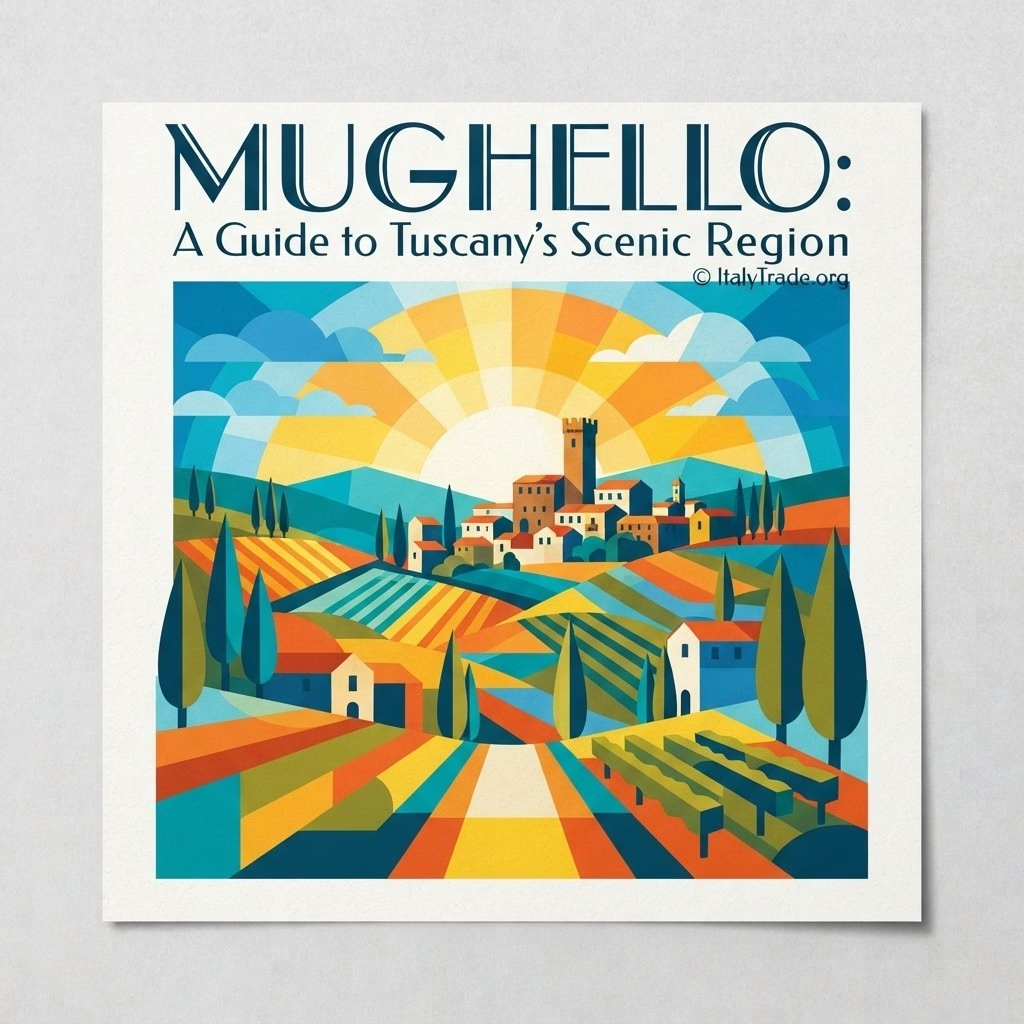
Mugello: A Guide to a Captivating Region of Tuscany
The Sieve valley north of Florence: Medici villas, villages, nature and motorsport
Mugello: the green valley north of Florence
Mugello is a wide, green valley just a few kilometres north of Florence, crossed by a stretch of the Sieve, one of the main tributaries of the Arno. Visitors find a landscape of plains, hills and mountains dotted with villages and Medici residences.
Mugello proper, also called Lower Mugello, covers the middle-upper part of the Sieve valley and includes municipalities such as Scarperia e San Piero, Barberino di Mugello, Borgo San Lorenzo, Vicchio, Dicomano and San Godenzo. It is not only home to the racetrack and a large outlet: official guides describe it as a land of Medici villas, villages and cycling routes.
Source: Discover Tuscany (in Italian) · Source: Travel365 (in Italian) · Source: Italia.it
The Medici breadbasket, between history and landscape
Mugello holds Etruscan, Roman and Lombard traces, but it was the Medici who made it a land of splendour: the area was known as the Medici’s granary, and the family built villas and castles here that can still be visited today, such as Villa di Cafaggiolo and Villa del Trebbio.
In terms of nature, Mugello is closed to the north by the Tuscan-Romagnol Apennines, to the south by Monte Giovi and Monte Senario, and to the west by the Calvana mountains. Lake Bilancino, an artificial reservoir opened in 1999 at Barberino di Mugello, is a destination for sport and relaxation and hosts the Gabbianello Nature Oasis, managed by the WWF; the chestnut woods of Marradi are famous for their chestnut production.
Source: Italia.it · Source: Discover Tuscany (in Italian) · Source: SiViaggia (in Italian)
Why Mugello is unique
🏛️ UNESCO World Heritage Medici villas
Mugello boasts two of the most famous Medici villas, Villa di Cafaggiolo and Villa del Trebbio, both recognised by UNESCO as World Heritage Sites.
🎨 Cradle of great artists
Giotto (1267) and Beato Angelico (1395) were born in Vicchio; the area is also remembered as the homeland of Andrea del Castagno.
🏁 A temple of motorsport
The Mugello Circuit, owned by Ferrari, has hosted the Italian MotoGP Grand Prix since 1991 and is one of the most loved tracks in the championship.
Source: Visit Tuscany · Source: Toscana.info · Source: Mugello Circuit
The wonders of Mugello
Borgo San Lorenzo
The largest town in the valley: it holds the Romanesque Pieve di San Lorenzo, its fourteenth-century walls and Villa Pecori Giraldi, home of the Manifattura Chini.
Scarperia e San Piero
Scarperia is the town of cutting tools and centres on the Palazzo dei Vicari, which has housed the Museo dei Ferri Taglienti since 1999. At San Piero a Sieve stands the Medici fortress.
Vicchio
Small but famous among art lovers, it is the birthplace of Giotto and Beato Angelico.
Palazzuolo sul Senio
Sparsely populated, it has been listed among the most beautiful villages in Italy since 2018.
Lake Bilancino
An artificial reservoir easily reached from the motorway exit, suited to water sports, walks and cycling.
Gabbianello Oasis
On the shores of Bilancino, a nature oasis managed by the WWF where you can observe Mugello’s flora and fauna.
Chestnut forests
The chestnut woods of Marradi are famous for their chestnuts and echo the Marrone del Mugello.
Pratolino Medici Park
Part of the Villa Demidoff estate, it is recognised by UNESCO as a World Heritage Site and is open to the public.
Giotto’s House Museum
The birthplace of Giotto di Bondone (1267-1337), restored in 2008, stands on the Vespignano hill.
Beato Angelico Museum of Sacred Art
A museum of sacred art and popular religiosity opened in 2000, dedicated to Beato Angelico.
Chini Museum
The museum is one of Mugello’s art museums and is tied to the tradition of the Manifattura Chini.
Museo dei Ferri Taglienti
Housed in the Palazzo dei Vicari, it documents the centuries-old work of Scarperia’s knife makers across five thematic areas.
Source: Travel365 (in Italian) · Source: Toscana.info · Source: Visit Tuscany (in Italian) · Source: La Nazione (in Italian) · Source: Feel Florence
Flavours of Mugello: chestnuts, tortelli and local produce
Mugello’s culinary tradition counts few dishes, but important and typical ones, with very natural flavours. From spring, village food festivals serve the best-known dish, the tortello di patate, of proudly Mugello origin.
🍝 Dishes and products not to miss
Tortello di patate
Soft, square, yellow ravioli filled with potato, cheese, garlic and parsley; at festivals it is often served with wild boar ragù.
Chestnut tortelli
Pasta filled with chestnuts, built around the Marrone del Mugello PGI.
Marroni cake
A traditional dessert made with the local marrone chestnut.
Raviggiolo
A cheese listed among the typical Mugello products recommended by Visit Tuscany.
Chestnut honey
Produced in mid-mountain areas, fairly runny and bright amber in colour.
Colline Fiorentine PGI oil
Mugello oil falls within the Tuscan Colline Fiorentine PGI: it is green and can take on golden-yellow shades with time.
🌰 The marrone, symbol of the territory
The Marrone del Mugello has been awarded PGI status; the fruit is medium-sized, with no more than 80 chestnuts per kilo, and the promotion consortium was founded in 2007. It has white flesh and a sweet, delicate flavour.
Source: Linkiesta (in Italian) · Source: Mugello Toscana · Source: Visit Tuscany · Source: Italy Segreta (in Italian)
Festivals, knives and engines: Mugello comes alive
🎉 Recurring events
Tortello festivals — spring and summer
In summer, places such as Luco di Mugello and Scarperia fill up for the Sagra del Tortello, dedicated to the valley’s signature dish.
Cutting tools exhibition — summer
Every summer the Palazzo dei Vicari hosts events on the cutting-tools craft; the most important is the knife exhibition, held in Scarperia for over 45 years.
Italian MotoGP Grand Prix
Since 1991 Mugello has been a fixture of the motorcycle world championship. Dates change every year, so check the official calendar before booking.
🏁 The circuit and its history
The current racetrack was commissioned by the Automobile Club of Florence and opened on 23 June 1974 with a Formula 5000 race. The name of Mugello has been linked to racing since the first half of the twentieth century, with the road circuit. Since 1988 the track has belonged to Ferrari.
Source: Italy Segreta (in Italian) · Source: Feel Florence · Source: MotoGP.com (in Italian) · Source: La Nazione (in Italian) · Source: Sky Sport (in Italian)
Michelozzo, Romanesque parish churches and the Palazzo dei Vicari
Villa Medicea di Cafaggiolo (1454), at Barberino di Mugello, was a favourite of Lorenzo the Magnificent, who composed the poem “Nencia da Barberino” there; at its peak it also hosted a majolica workshop. Villa del Trebbio, at San Piero a Sieve, was built by Michelozzo between 1427 and 1436, probably on the remains of a medieval fortification.
Among the civic and religious buildings stand out the Palazzo dei Vicari in Scarperia (also called Palazzo Pretorio), fourteenth-century and frescoed, with a bell tower that Italia.it attributes to Brunelleschi, and the Romanesque parish churches of Borgo San Lorenzo and Sant’Agata. The Convento di Bosco ai Frati preserves a crucifix attributed to Donatello.
Source: Visit Tuscany (in Italian) · Source: Italia.it · Source: Travel365 (in Italian) · Source: Quotidiano.net (in Italian)
How to get there, where to stay, how long to stay
🚗 Getting there
From Florence the fastest route is the A1 motorway, exiting at Barberino di Mugello; the scenic alternatives are the Faentina (SS 302) and the Bolognese (SS 65). A car is the recommended way to move between the villages. By train you can reach Vaglia, San Piero a Sieve, Borgo San Lorenzo, Vicchio and Dicomano, while places further north, away from the railway, are less convenient. Local press has reported delays and interruptions on the Faentina line, so it is wise to check timetables before you leave.
🏨 Where to stay
Those who choose Mugello as a base find B&Bs, villas and farm stays in the countryside, a short distance from Florence and its art cities.
⏱️ How long to stay
Tourism bodies propose itineraries of one, three and five days. For inspiration on the rest of the region, read Tuscany: where every hill tells a story or browse the Tuscany category on ItalyTrade.
Source: Discover Tuscany (in Italian) · Source: Visit Florence (in Italian) · Source: Mugello Toscana (in Italian) · Source: La Nazione (in Italian)
Mugello’s products of excellence
The area’s tourism body lists among its typical products milk and cheeses, beef, the Marrone del Mugello PGI, extra virgin olive oil, organic spelt, bread, honey, the potato used for tortelli, white truffle, saffron and the “zuccherini” sweets, as well as local beer, spirits and vermouth. Among craft products, Scarperia’s knives are still known today for their quality.
Source: Mugello Toscana (in Italian) · Source: SiViaggia (in Italian)
Mugello in numbers
The circuit is 5.2 km long and the race lap record belongs to Marc Márquez (2013), at 1’47″639, according to Insella.
Source: Insella (in Italian) · Source: Discover Tuscany (in Italian)
4-day itinerary, step by step
An ItalyTrade editorial proposal: each stop brings together places described by the sources indicated.
Borgo San Lorenzo
Stroll through the historic centre with the Pieve di San Lorenzo, the fourteenth-century walls and Villa Pecori Giraldi, home of the Manifattura Chini.
Scarperia e San Piero
The Palazzo dei Vicari and the Museo dei Ferri Taglienti, with the knife-maker’s workshop next to the museum; at San Piero a Sieve, the Medici Villa del Trebbio.
Barberino di Mugello: Cafaggiolo and Bilancino
An exterior visit to Villa Medicea di Cafaggiolo, then relaxation at Lake Bilancino and the Gabbianello Oasis.
Vicchio, land of Giotto
Giotto’s House Museum at Vespignano and the Beato Angelico Museum of Sacred Art in the centre of Vicchio.
FAQ — Mugello
Mugello is a green valley a few kilometres north of Florence, crossed by the Sieve river, a tributary of the Arno.
By car the fastest route is the A1 with the Barberino di Mugello exit; the Faentina (SS 302) and the Bolognese (SS 65) are more scenic. By train you can reach Vaglia, San Piero a Sieve, Borgo San Lorenzo, Vicchio and Dicomano.
A car is the recommended way to explore the villages of the valley and those in the Apennines; places in the north not served by the railway are hard to reach without one.
Villa di Cafaggiolo at Barberino di Mugello and Villa del Trebbio at San Piero a Sieve, both recognised by UNESCO.
Giotto (1267) and Beato Angelico (1395) were born in Vicchio; Andrea del Castagno is also remembered as a Mugello native.
The signature dish is the tortello di patate; chestnut tortelli and marroni cake, made with the Marrone del Mugello PGI, are also very common, along with cheeses such as raviggiolo and Colline Fiorentine PGI oil.
The track is 5.2 km long with 15 corners; the Italian MotoGP Grand Prix has been held there since 1991.
Guides point to B&Bs, villas and farm stays in the Tuscan countryside, which are also convenient for visiting Florence.
Source: Discover Tuscany (in Italian) · Source: Visit Tuscany · Source: Toscana.info · Source: MotoGP.com (in Italian)
Mugello, an Italy to enjoy without hurry
Between Medici villas, knife-making villages, chestnut woods and a racetrack famous worldwide, Mugello combines history, art and nature a stone’s throw from Florence.
If you want to continue your journey in Tuscany, also discover Casentino and Chianti, or explore the Tuscany section of ItalyTrade.
Mugello is waiting for you: arrive slowly and let yourself be surprised.
Who wrote this article? On what basis?
📋 Transparency and verifiability
Who wrote it:
Giuseppe Baldassarri — ItalyTrade.org.
What it is based on: Verified sources linked in the text.
Are there other points of view: Yes, indicated where relevant.
Possible hidden interest: None. Independent editorial content.
Giuseppe Baldassarri
Giuseppe Baldassarri — Senior Revenue Manager & AI Search Specialist (AEO/GEO) | Sales & Account Manager | Destination & Export Marketing | Travel Designer | Vivi l’Italia – italytrade.org
Website: ItalyTrade.org — Travel & Business | Italy: Made in Italy
“Turning Italian excellence into global visibility in the age of artificial intelligence”
Luxury Real Estate | Export | Luxury Wedding | Travel Design
Privacy Policy » Cookie Policy » Terms of Service » Image Licenses » Sitemap » Services » Reviews » Contact » Work with us
