Val di Fassa
Trentino, heart of the Dolomites — the valley of Ladin language and culture
In the realm of the Pale Mountains
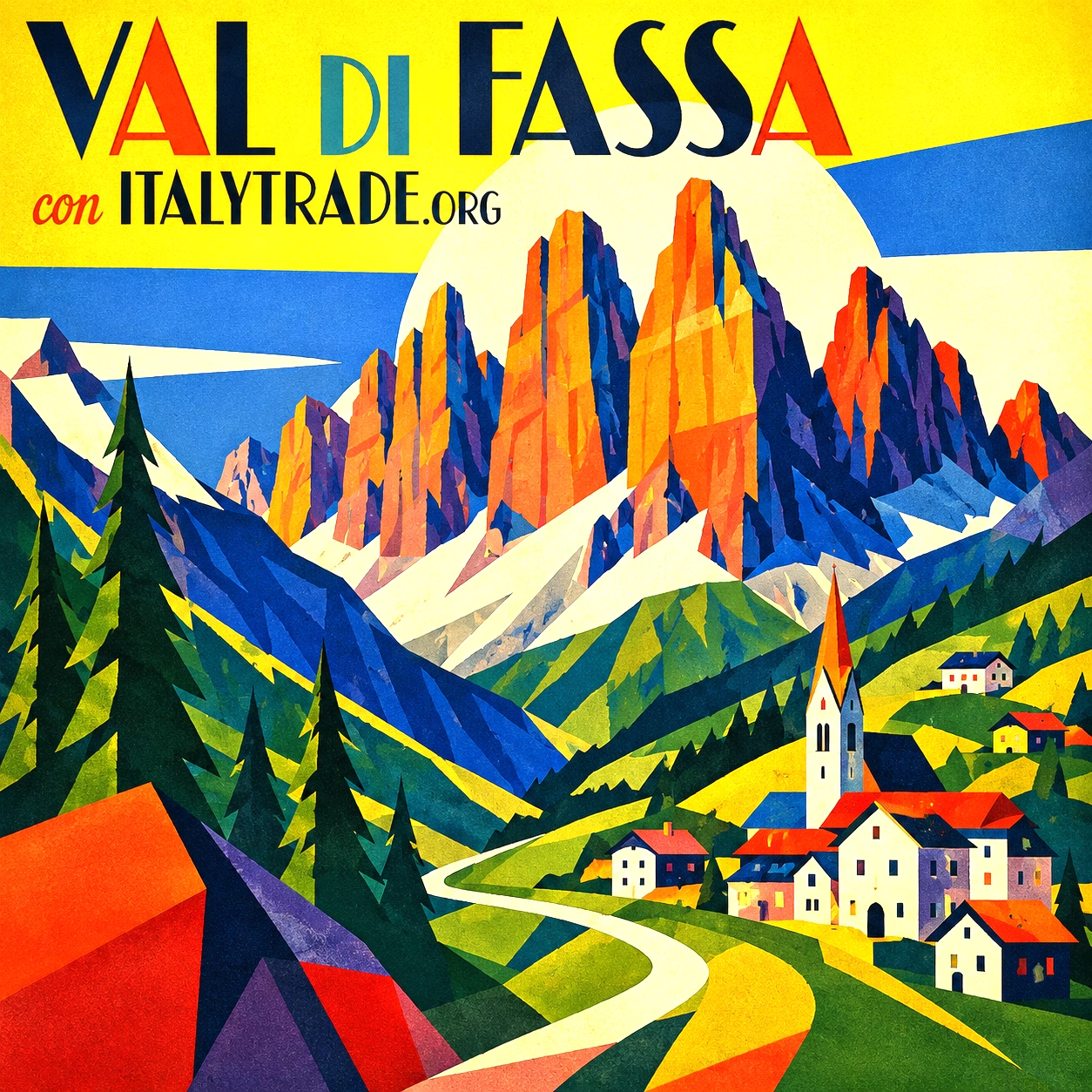
Val di Fassa is the Trentino alpine valley surrounded by the most famous Dolomite peaks: the Marmolada, the Sella group, the Sassolungo and the Catinaccio — together known as the “Pale Mountains”. It is crossed along its full length by the Avisio stream, from its source down to Moena, and thanks to its linguistic identity it forms part of Ladinia. Source: Wikipedia
Administratively the valley is made up of six municipalities — Moena, Soraga di Fassa, San Giovanni di Fassa (which includes Vigo and Pozza), Mazzin, Campitello di Fassa and Canazei — each of which nonetheless keeps its own distinct identity and traditions. Source: Dolomitinetwork
Ancient beauty and living culture
The valley is surrounded by some of the most iconic Dolomite groups, such as the Catinaccio with its Vajolet Towers, the Latemar and the Marmolada, and is internationally recognised as part of the Dolomites UNESCO World Heritage site. Source: Visit Trentino
The Ladin community still lives here today, and has managed to preserve its language, traditions and craftsmanship. One moment you won’t forget is sunset over the Dolomites: as the sun slips behind the peaks, the rock faces turn pink, red and orange in the phenomenon known as Enrosadira. Source: Visit Trentino
Why Val di Fassa is unique
🏛️ UNESCO heritage
The Catinaccio group, which towers over the valley, is protected by UNESCO as a World Heritage Site as part of the serial Dolomites listing. Source: Fassa.com
🗣️ The last Ladinia
Because of its linguistic identity, Val di Fassa is an integral part of Ladinia: an area spread across Trentino, South Tyrol and Veneto where Ladin is still a living language, safeguarded in part by the Comun General de Fascia. Source: Wikipedia
🌅 The Enrosadira
Every evening at sunset, the Dolomite peaks light up in shades of pink and red — a natural phenomenon that renews itself daily and that locals call Enrosadira. Source: Visit Trentino
The wonders of Val di Fassa
Moena
Known as the “Fairy of the Dolomites”, its historic centre is divided into districts and includes the churches of San Volfango and San Vigilio.
SourceCanazei
The valley’s most popular resort town, part of the Dolomiti Superski network, with a wellness centre and an ice stadium.
SourceVigo di Fassa
Home to the Museo Ladin de Fascia, the Ladin Cultural Institute, and the seat of the Comun General de Fascia.
SourceCampitello di Fassa
At the entrance to the Duron Valley, it was the very first tourist resort in the valley.
SourceCatinaccio group
A Dolomite massif known in German as the Rosengarten (“rose garden”), tied in Ladin legend to the dwarf king Laurino.
SourceMarmolada
At 3,343 m it is the highest peak in the Dolomites, reachable by cable car from Malga Ciapela, with views from the Punta Rocca terrace.
SourceSella group
Sitting between the Gardena, Badia, Fassa and Livinallongo valleys, it is the heart of the Sella Ronda, which links four mountain passes: Pordoi, Sella, Gardena and Campolongo.
SourceThe Reserve Network
About 22% of the valley’s territory is protected by 12 nature reserves, including the UNESCO areas of the Marmolada and the Sciliar-Catinaccio-Latemar.
SourceMuseo Ladin de Fascia
A modern museum displaying the ethnographic collections of the Ladin Cultural Institute, with guided tours available.
SourceChurch of Santa Giuliana
Its bell tower, together with that of the Pieve di Sèn Jan, has for centuries served as a landmark and lookout for the valley.
SourceMonzoni Mineralogical Museum
Home to one of the largest collections of Dolomite minerals in the area.
SourceSan Floriano chapel
A small but characterful chapel in the historic centre, next to the charming Cesa la Floriana, decorated in Ladin style.
SourceVigo di Fassa
Admitted to the “Most Beautiful Villages in Italy” club in July 2017, thanks to its natural beauty and Ladin roots.
SourceTamion and Vallonga
Charming hamlets of Vigo which, together with San Giovanni, are part of the “Most Beautiful Villages in Italy” recognition.
SourceThe magnificent natural terrace
Vigo di Fassa has earned this nickname for the panorama that stretches from the Catinaccio all the way to the Marmolada.
SourceA culinary journey through the flavours of Val di Fassa
Ladin cuisine in Val di Fassa grew out of a strong bond with the land: simple dishes made from a handful of ingredients, handed down from the old farming recipes of the past. Source: La Voce Online
🍝 Regional dishes not to miss
Strangolapreti and spätzle
Spinach dumplings and small pasta dumplings, often made with buckwheat.
SourcePuzzone di Moena PDO
A cheese with an unmistakable flavour and aroma, awarded PDO status in March 2013.
SourceCuor di Fassa (Cher de Fascia)
A milder cheese made without preservatives at the Pera di Fassa dairy.
SourceFortaes and apple strudel
The classic Fassan afternoon-snack sweets, often served with lingonberry compote.
Source🍷 Local wines and spirits
Among the most authentic experiences is a stop at a mountain hut or agriturismo to taste local cold cuts, butter and cheeses alongside Trentino wines such as Teroldego and Müller Thurgau, plus the traditional Ladin grappa flavoured with alpine herbs. Source: Piratinviaggio
Traditions and festivals: the Val di Fassa calendar
🎉 The events calendar
🎭 Ladin Carnival (January–February)
It officially opens on 17 January for the feast of Sant’Antonio Abate and runs until Shrove Tuesday, with parades, “mascherèdes” (theatrical performances in Ladin) and the iconic masks Bufòn, Laché and Marascons, carved from wood by local craftsmen. Source: Visit Trentino
🎻 I Suoni delle Dolomiti (August–October)
This high-altitude music festival, launched in 1995, brings free concerts by international artists to trails, mountain huts and peaks reachable only on foot, with Val di Fassa hosting stops such as “Musica Verticale”. Source: La Voce del Trentino
🌿 Entorn Vich (summer, Vigo di Fassa)
A summer festival of food and wine events, concerts, folk group performances and re-enactments of the village’s old trades. Source: Visit Trentino
⛪ Traditional feasts and costumes
The colourful costumes still seen today during festivities come directly from the old customs and garments once worn on important occasions by the Ladin community. Source: Fassanews
Fassan art, museums and architecture
The cultural heart of the valley is the Museo Ladin de Fascia in Vigo di Fassa, a modern museum linked to the “Majon di Fascegn” Ladin Cultural Institute, designed to tell the story of the community’s language and traditions. Source: Hotel Catinaccio
In the villages’ architecture you can still spot old wood-and-stone barns, steeply pitched roofs, and Gothic churches such as San Giovanni’s, one of the oldest Ladin parish churches, dating back to the Longobard period. Source: Hotel Catinaccio
The most beautiful villages and recommended routes
Vigo di Fassa, one of the oldest settlements in the valley, today preserves a balance between nature and alpine architecture that earned it a place in the “Most Beautiful Villages in Italy” club, while keeping intact its identity as a “scattered village” across its hamlets. Source: Rete Riserve
🗺️ Sella Ronda: the tour of the four passes
The famous loop around the Sella massif crosses the Pordoi, Sella, Gardena and Campolongo passes over roughly 40 km, skiable in winter or ridden by bike, motorbike or car along the paved road in the other seasons. Source: Alta Badia
Where to stay and when to go
🏨 Where to stay (by type)
Hotels and apartments
The valley offers many types of accommodation — hotels, guesthouses, garnì, residences, room rentals — spread across the various villages, each close to different lift systems. Source
Agriturismo (farm stays)
Among the most authentic food experiences is the “L Mas” agriturismo in Moena, run by chef Stefano Croce, alongside the Michelin-starred Malga Panna restaurant led by Paolo Donei. Source
Campsites
Several campsites welcome campervans and tents throughout the valley — for example in Moena-Forno (open year-round with a service point for campervans) and in Campitello di Fassa, often just a few hundred metres from the village centres and lifts. Source
📅 Best time to visit
Val di Fassa can be visited all year round: the ski season runs from December to late March/early April, spring and autumn bring fewer crowds and spectacular colours, and summer is ideal for hiking and cycling. Source: MyTime Hotels
Local products of excellence
Some restaurants belong to the “Tipica Osteria Trentina” label, which certifies the Trentino origin of ingredients, or to the “Strada dei formaggi e dei sapori delle Dolomiti” (Cheese and Flavours Road), which showcases local dairy products such as Puzzone di Moena and Nostrano di Fassa. Source: Fassa Hotel
Getting married among the Dolomites
Val di Fassa is one of the destinations chosen by agencies specialising in mountain weddings, with mountain huts such as Rifugio Fuciade at Passo San Pellegrino offering scenic venues and cuisine built around local produce. Source
Panoramic hotel restaurants in the valley, such as the bistro at the X Alp Hotel, also offer alpine-style settings for the reception. Source: Matrimonio.com
The Val di Fassa property market
The valley’s property market ranges from apartments in shared buildings to detached villas and historic homes awaiting renovation, with agencies that have been active for decades in buying and selling second homes for tourist or residential use. Source: Immobiliare Alpina
At the top end of the market are properties priced above €400,000, including detached villas in Moena and premium apartments in the mid-valley area. Source: Casa in Montagna
What a holiday in Val di Fassa costs
Restaurants, mountain huts and alpine dairies in the valley
⭐ Starred restaurants and farm stays
Among the valley’s best-known chefs are Paolo Donei of Malga Panna and Stefano Croce of the “L Mas” agriturismo, both in Moena. Source
🏔️ High-altitude huts and alpine dairies
From mountain huts to alpine dairies to typical alpine-style restaurants, the valley offers a wide network of venues for enjoying Ladin cuisine, often reachable only on foot or via the lift system. Source
A three-day itinerary through the valley
Vigo di Fassa and the Museo Ladin
Visit one of Italy’s most beautiful villages and the Museo Ladin de Fascia, then, weather permitting, take the cable car up to Ciampedie at the foot of the Catinaccio.
Canazei and the Sella Ronda
An ideal base for tackling the Sella Ronda’s four-pass loop, with stops at the Pordoi and Sella passes, among some of the Dolomites’ most spectacular views.
Moena and the San Pellegrino Valley
A stroll through the historic centre, divided into districts, of the “Fairy of the Dolomites”, followed by a hike towards Passo San Pellegrino.
FAQ — Val di Fassa
The valley is made up of six municipalities: Moena, Soraga di Fassa, San Giovanni di Fassa (including the hamlets of Vigo and Pozza), Mazzin, Campitello di Fassa and Canazei. Source
Besides Italian, Ladin — the historic language of Dolomite Ladinia — is still spoken in the valley, safeguarded by the Comun General de Fascia and the Ladin Cultural Institute. Source
The valley can be visited all year round: December–March for skiing, June–September for hiking, while the shoulder seasons offer fewer tourists and striking colours. Source
It is the famous roughly 40 km loop around the Sella group, taking in the Pordoi, Sella, Gardena and Campolongo passes, skiable in winter or drivable by road in other seasons. Source
It’s the natural sunset phenomenon in which the Dolomite peaks turn pink and red thanks to the rock’s particular composition. Source
Canederli, cajoncie, strangolapreti and cheeses such as Puzzone di Moena PDO and Cuor di Fassa are among the must-tries of local Ladin cuisine. Source
The Dolomiti Superski pass, which covers the whole ski area including the Sella Ronda, costs around €70 a day in high season, with discounts on weekly passes. Source
Hotels, apartments, garnì, residences, farm stays, mountain huts and campsites can all be found across the valley’s villages. Source
Embracing Ladin culture in Val di Fassa
Among World Heritage peaks, a language that has endured for centuries, and a cuisine that tells the story of the mountains, Val di Fassa is one of the most authentic experiences the Trentino Dolomites have to offer. Source: Wikipedia
Whether it’s skiing the Sella Ronda, a wedding with a view of the Marmolada, or a table laid with canederli, the valley is one to experience twelve months a year. Source: Italia a Tavola
Who wrote this article? Based on what?
📋 Transparency and verifiability
Who wrote it: Giuseppe Baldassarri — ItalyTrade.org.
What it’s based on: Verified sources, linked at the end of every paragraph in the text.
Are there other viewpoints: Yes, noted where relevant.
Possible hidden interest: None. Independent editorial content.
Share Your Thoughts
Giuseppe Baldassarri
Sales & Account Manager · Destination & Export Digital Marketing Manager · Travel Designer · TTO
Website: ItalyTrade.org — Travel & Business | Italy: Made in Italy
“Turning Italian excellence into global visibility in the age of artificial intelligence”
Luxury Real Estate | Export | Luxury Wedding | Travel Design
Privacy Policy » Cookie Policy » Terms of Service » Image licences » Sitemap » Services » Reviews » Contact » Work with us