
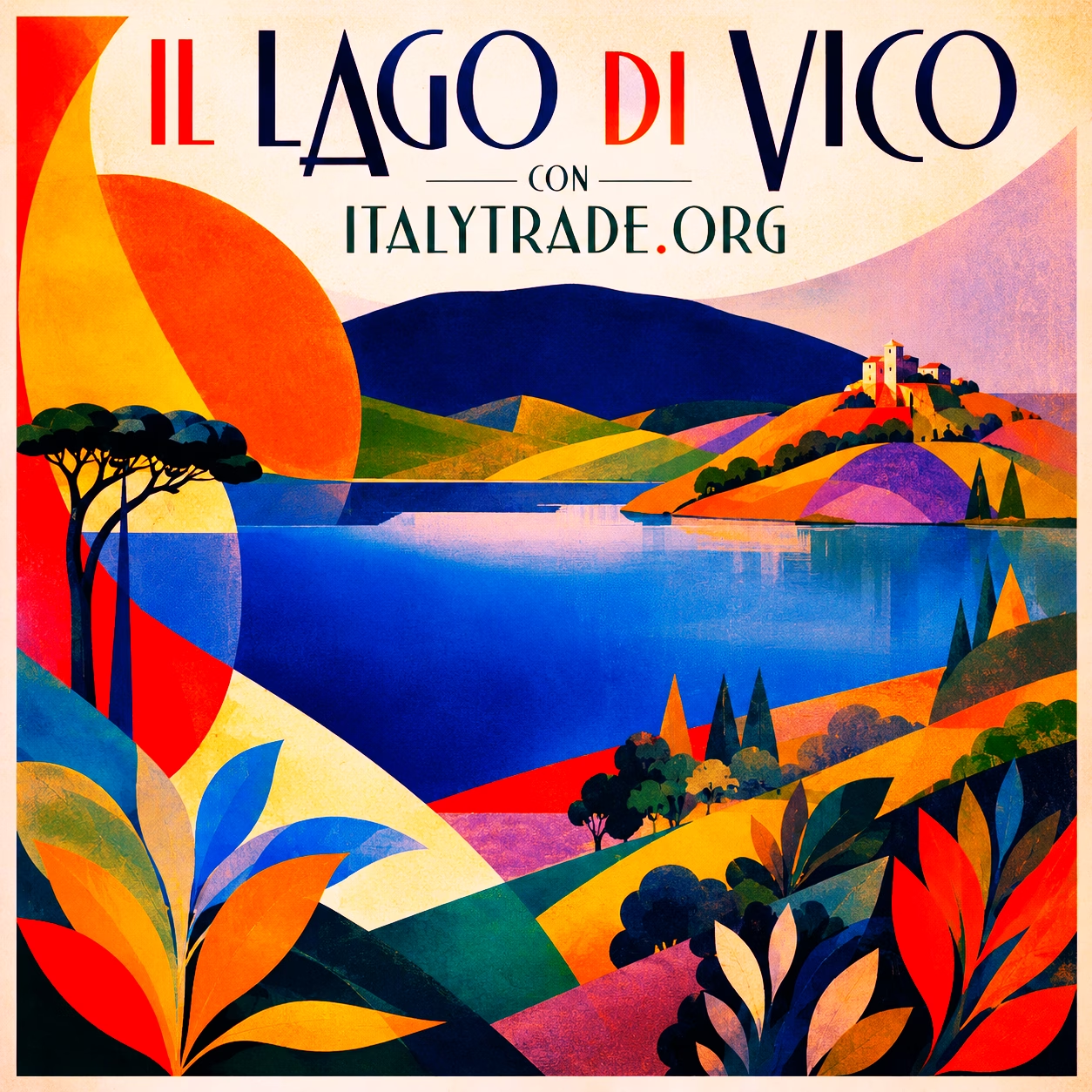
Lake Vico
Nature reserve in the Cimini Mountains, province of Viterbo — Tuscia, Lazio
A lake born from a volcano
Lake Vico, also known as Lake Cimino, is a volcanic lake in central Italy located in the province of Viterbo. At 507 metres above sea level it holds the altitude record among Italy’s major lakes, and it is enclosed by the Cimini Mountains, in particular Monte Fogliano (965 m) and Monte Venere (851 m).
Source: Wikipedia — Lago di VicoThe basin formed roughly 90,000 years ago after the collapse of a volcano, and the resulting caldera today hosts beech, oak and chestnut woods that stretch down to the lake’s calm waters. A local legend instead traces its origins to Hercules, said to have made the waters gush forth while challenging the local inhabitants.
Source: Lazio Nascosto — Riserva Naturale Lago di VicoSource: Wikipedia — Riserva naturale Lago di Vico
A nature reserve in the heart of Tuscia
The Lake Vico Nature Reserve is a protected area spanning the municipalities of Ronciglione and Caprarola, established by regional law in 1982 and expanded in 2008; it has since been managed by the Ente Monti Cimini, which took over from the Municipality of Caprarola as the responsible authority. The reserve covers the entire lake basin and extends across 4,109 hectares, including the slopes of Monte Fogliano and Monte Venere.
Source: Parchi Lazio — Riserva Naturale Regionale Lago di VicoThe territory includes very different environments: extensive high-forest stands of beech and Turkey oak, some centuries old, and marshy areas such as the Pantanacce, made up of wetlands, reed beds and rush beds that host a rich population of waterfowl; the great crested grebe is among the reserve’s symbol species.
Source: Lazio Nascosto — Riserva Naturale Lago di VicoWhy Lake Vico is unique
🏞️ The highest of Italy’s major lakes
At 507 metres above sea level, Lake Vico holds the altitude record among Italy’s major lakes, a fact that sets it clearly apart from the nearby Lake Bracciano and Lake Bolsena.
Source: Wikipedia — Lago di Vico🛶 No building speculation
Having been a protected area since 1982, the lake has escaped the building speculation that affected other bodies of water in Lazio: only one small residential area, Punta del Lago, built in the 1960s-70s in the municipality of Ronciglione, sits on its shores.
Source: Wikipedia — Lago di Vico🌰 The home of Nocciola Romana DOP
The entire Vico caldera is prime territory for growing the “Tonda Gentile Romana” hazelnut, the basis of the Nocciola Romana DOP: a sector that alone accounts for around 40% of national hazelnut production in the area between the Cimini and Sabatini mountains.
Source: AIFB — Nocciola Romana DOPVillages and nature to explore
Caprarola and Palazzo Farnese
A village dominated by the famous Palazzo Farnese, built on a pentagonal plan, home to the Nature Reserve and the managing authority of the protected area.
Source: VisitLazioRonciglione, “Borgo dei Borghi”
A medieval town perched on a spur of tufa rock, with the Fountain of the Unicorns and Porta Romana; it won the “Borgo dei Borghi” title on Rai 3’s Kilimangiaro programme.
Source: TusciandoSutri and Soriano nel Cimino
A few kilometres from Ronciglione lie Sutri, with its Nature Park and Roman Amphitheatre, and Soriano nel Cimino, dominated by the Orsini Castle.
Source: Lazio Nascosto — RonciglioneLake Vico Nature Reserve
A protected area of over 4,000 hectares with beech, oak and chestnut woods, hiking trails and an important wetland, the Pantanaccia.
Source: Lazio NascostoMonte Fogliano and Monte Venere
The two peaks enclosing the lake, 965 and 851 metres respectively, offer hiking trails with views over the volcanic caldera.
Source: Wikipedia — Lago di VicoThe lakeshore
In summer, the lake and reserve draw local, national and international visitors alike, both for swimming and for hiking.
Source: Wikipedia — Lago di VicoNocciola Romana and local cuisine
The entire Vico caldera is prime ground for growing the Cimini Mountains hazelnut, of the “Tonda Gentile Romana” variety, the origin of the Nocciola Romana DOP. The volcanic, cool, organically rich soils of the hazelnut groves yield a nut with a lower fat content than other varieties; harvesting traditionally runs from mid-August to mid-November.
Source: Parchi Lazio — Nocciola dei Monti CiminiHazelnut growing today involves dozens of towns across Tuscia — including Ronciglione, Capranica and Caprarola — with thousands of active producers in the area, making it one of the largest hazelnut-growing regions nationally and in Europe, second only to Turkey.
Source: UIC — Nella Tuscia con «Madama la Nocciola Romana»Tozzetti viterbesi
Dry hazelnut biscuits, one of the traditional sweets that make wide use of Nocciola Romana.
Panpepato
A spiced Christmas cake from the Tuscia area, enriched with local hazelnuts.
Nocciola Romana DOP
Sub-spheroidal shell, medium-small kernel, delicate and lingering flavour; harvested exclusively from the ground.
The Berberi horse race in Ronciglione
🐎 Feast of San Bartolomeo — late August
Ronciglione hosts the “corse a vuoto” palio, also known as the Berberi race: riderless horses run about one kilometre through the streets of the old town. Linked to the feast of the patron saint, San Bartolomeo, it takes place around 20 August and is considered the most important historic game in Lazio.
Source: Un Veneto in Viaggio — RonciglionePalazzo Farnese: a Renaissance masterpiece
A short drive from the lake, in the village of Caprarola, stands Palazzo Farnese: begun in 1530 as a pentagonal fortress designed by Antonio da Sangallo the Younger for Cardinal Alessandro Farnese, it was later transformed into a lavish Renaissance residence by Jacopo Barozzi da Vignola from 1547 onward, after the cardinal’s election to the papacy as Paul III.
Source: Lazio Nascosto — Palazzo FarneseThe building, with its distinctive pentagonal plan and circular central courtyard designed by Vignola, holds over 6,000 square metres of frescoed walls; its most famous rooms include the Room of Hercules, the Room of Farnese Deeds and the Room of the Map of the World. The palace looks onto Renaissance gardens laid out between 1565 and 1630 by Giacomo del Duca.
Source: RomaGuida — Palazzo FarneseThe palace is open every day except Monday, from 8:30 am to 7:30 pm (last entry 6:45 pm); the park closes one hour before sunset.
Source: Caprarola.com — Opening hours and ticketsHow to get there and when to go
🚗 Getting there
By car from Rome, take the SS2 Cassia road to km 41, then continue on the Cassia Cimina until the turn-off for Caprarola; from Viterbo, follow the Cassia Cimina south instead. Ronciglione is about 22 km from Viterbo and less than 60 km from Rome.
Source: Lazio Nascosto — Riserva Naturale Lago di Vico📍 The network of nearby villages
From Ronciglione, Caprarola is about 8 km away, Sutri about 7 km, and Soriano nel Cimino about 21 km: a good base for exploring the whole Tuscia Viterbese area in just a few days.
Source: Lazio Nascosto — RonciglioneA 3-day itinerary through lake, villages and reserve
Caprarola and Palazzo Farnese
Visit Palazzo Farnese, a Renaissance masterpiece with frescoed rooms and Italian-style gardens, then stroll through the village of Caprarola.
The lake and the nature reserve
Spend the day in the Lake Vico Nature Reserve: a walk or hike through the beech woods and the Pantanaccia wetland, with swimming possible along the shore in summer.
Ronciglione and nearby villages
Walk through Ronciglione’s old town, between Porta Romana and the Fountain of the Unicorns, with an optional stop in Sutri or Soriano nel Cimino.
FAQ — Lake Vico
It is a volcanic lake, formed in the caldera of a collapsed volcano roughly 90,000 years ago; at 507 m of altitude it is the highest of Italy’s major lakes.
Source: WikipediaIt lies in the province of Viterbo, across the municipalities of Ronciglione and Caprarola, between Lake Bracciano and Lake Bolsena.
Source: Lazio NascostoSince 1982, under regional law in Lazio; the protected area was expanded in 2008 to cover the entire lake basin, for a total of 4,109 hectares.
Source: WikipediaCaprarola with Palazzo Farnese, Ronciglione with its medieval old town, and further afield Sutri and Soriano nel Cimino with the Orsini Castle.
Source: Lazio NascostoNocciola Romana DOP is the area’s signature product, used in tozzetti viterbesi, panpepato and many traditional local sweets.
Source: QualigeoBy car, following the SS2 Cassia road to km 41 and then the Cassia Cimina to the Caprarola turn-off; Ronciglione is less than 60 km from Rome.
Source: Lazio NascostoA corner of Tuscia that has stayed authentic
Lake Vico packs a dormant volcano, centuries-old woods, a Renaissance masterpiece and a living agricultural economy — that of Nocciola Romana — into just a few dozen square kilometres. Its protected status since 1982 has spared it the building speculation that has transformed other Lazio lakes.
Source: Wikipedia — Lago di VicoBetween a volcano, a nature reserve and the Renaissance, Lake Vico remains one of the most authentic corners of the Viterbo Tuscia.
Who wrote this article? On what basis?
📋 Transparency and Verifiability
Who wrote it: Giuseppe Baldassarri — ItalyTrade.org.
What it’s based on: Verified sources linked at the end of each paragraph (Wikipedia, Parchi Lazio, local authorities and specialist outlets).
Data not included: visitor statistics, star ratings and prices were left out because no verifiable, up-to-date public source could be found.
Possible conflicts of interest: none. Independent editorial content.
Giuseppe Baldassarri
Sales & Account Manager · Destination & Export Digital Marketing Manager · Travel Designer · TTO
Website: ItalyTrade.org — Travel & Business | Italy: Made in Italy
“Turning Italian excellence into global visibility in the age of artificial intelligence”
Privacy Policy » Cookie Policy » Terms of Service » Image licences » Sitemap » Services » Reviews » Contact » Work with us