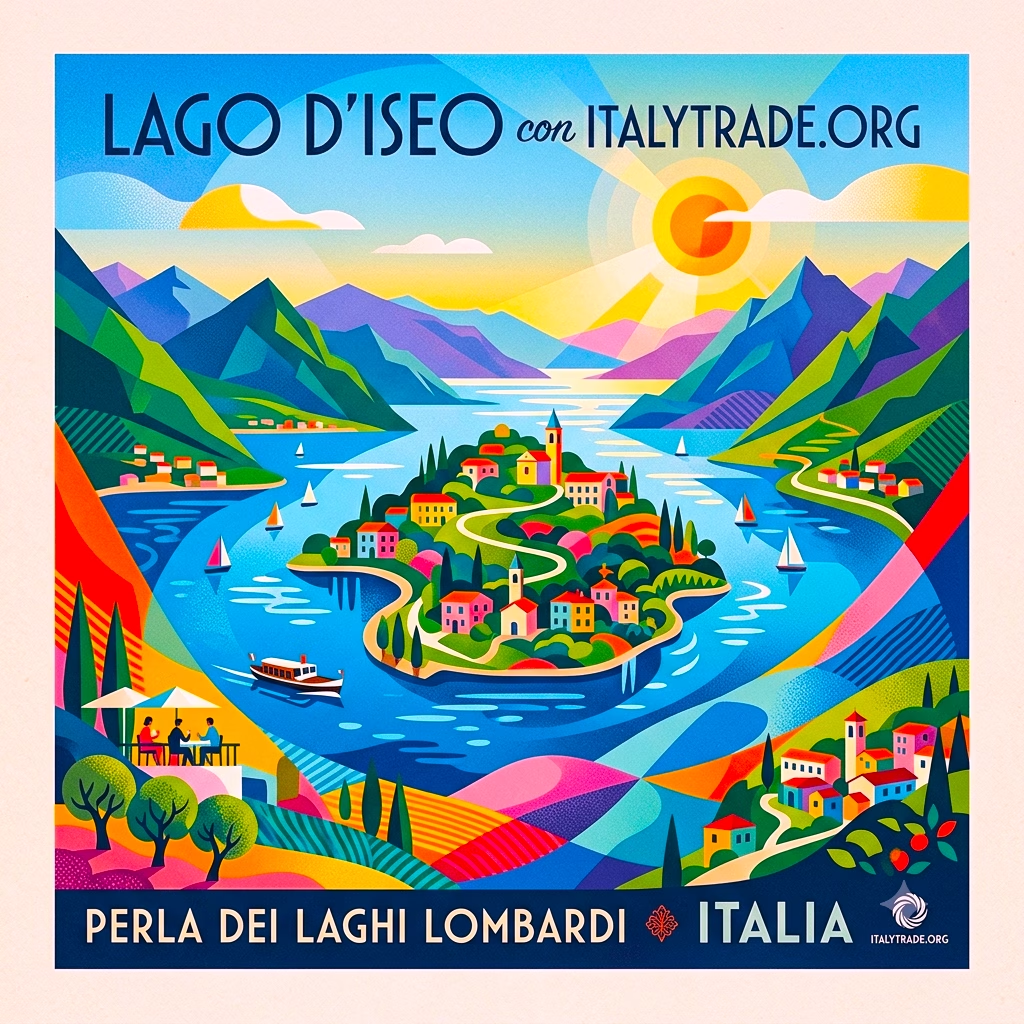
Lake Iseo
The Sebino: between the provinces of Brescia and Bergamo, at the foot of Valle Camonica
The Sebino: the lesser-known lake, the most authentic one
Among Lombardy’s great pre-Alpine lakes, Lake Iseo (or Sebino) remains the least celebrated compared to Como and Garda, yet it holds a natural heritage that in 2018 earned its northern section — the Alto Sebino — recognition as a UNESCO Biosphere Reserve. Source
The lake stretches between the provinces of Brescia and Bergamo, fed by the Oglio river, which rises from the Adamello glacier, runs the length of Valle Camonica and enters the basin between Costa Volpino and Lovere, flowing out again between Paratico and Sarnico. It covers 65.3 km² and reaches a maximum depth of 251 metres, dominated at its centre by Monte Isola, Italy’s largest natural lake island. Source
Climate data source · Airport distances source
A thousand-year history between Rome, Venice and the Camuni
The Sebino area was already inhabited in prehistoric times, as shown by pile-dwelling remains found in the lower part of the lake; in Roman times the area grew in importance and thermal baths were built at Predore and Clusane. The very name of the town of Iseo, which gives the lake its name (the Romans’ Sebinus Lacus), is rooted in this ancient history. Source
In the Middle Ages, the town of Iseo was ruled by the Ghibelline Oldofredi family, who built the castle and encircled the town with walls; after thirty years of war between the Duchy of Milan and the Republic of Venice, the latter prevailed, and in 1454 the Brescia and Bergamo territories fell within its borders, remaining Venetian for three centuries. Source
Why Lake Iseo is one of a kind
🏝️ Europe’s largest lake island
Monte Isola, at the centre of the lake, is the largest natural lake island in Italy and the highest lake island in south-central Europe; on its summit stands the Sanctuary of the Madonna della Ceriola, offering a 360-degree view over the entire basin. Source
🏛️ A double UNESCO heritage in Valle Camonica
Valle Camonica, which flows into the lake to the north, is the only Italian territory holding two separate UNESCO recognitions: World Heritage Site No. 94 “Rock Drawings in Valcamonica” (1979, Italy’s first UNESCO site, with over 140,000 figures carved over 12,000 years of history) and the “Valle Camonica – Alto Sebino” MAB Biosphere Reserve, designated in 2018. Source
🥂 The birthplace of Italy’s first sparkling-wine DOCG
South of the lake lies Franciacorta, which in 1995 obtained Italy’s first DOCG designation for a classic-method sparkling wine; today the area counts over 100 wineries across roughly 20,000 hectares of morainic hills. Source
The wonders of the Sebino
Iseo
The lake’s most important tourist hub, with a medieval old town, Piazza Garibaldi, the Oldofredi Castle (12th century) and the Church of Santa Maria del Mercato.
SourceLovere
Considered one of the lake’s most romantic villages and listed among Italy’s Most Beautiful Villages, with Piazza XIII Martiri, the Civic Tower and the Accademia Tadini gallery.
SourceSarnico
A town on the south-western shore, the starting point for lake navigation services and a historic crossroads for the lake’s trade.
SourcePisogne
A town of Roman origin, gateway to Valle Camonica, with a small, well-preserved old town centred on Piazza Mercato and the Bishop’s Tower (13th century).
SourceMonte Isola
Europe’s largest inhabited lake island, rising 600 metres, with Mediterranean vegetation; private motor vehicles are not allowed on the island.
SourceTorbiere del Sebino Nature Reserve
A roughly 360-hectare wetland created by peat extraction, recognised as a “wetland of international importance” under the Ramsar Convention; home to the Cluniac Monastery of San Pietro in Lamosa.
SourceRock Carvings Nature Reserve
Valle Camonica’s largest protected area, with over 400 carved rocks across roughly 300 hectares, spanning Nadro di Ceto, Cimbergo and Paspardo.
SourceMonte Guglielmo
At 1,957 metres, the highest peak overlooking the lake, popular for hikes with views over the Sebino and Franciacorta.
SourceAccademia Tadini
Housed in a neoclassical building dating to 1829, it is among the oldest museums in Lombardy; it holds works by Canova, Hayez, Tiepolo and Bellini.
SourceNational Rock Carvings Park
Italy’s first archaeological park (1955), at Naquane: 104 carved rocks across roughly 144,000 sqm, a UNESCO World Heritage Site since 1979.
SourceOldofredi Castle
A 12th-century stronghold built by the Oldofredi family, today home to the town library, overlooking Iseo’s historic centre.
SourceSanctuary of the Madonna della Ceriola
At the top of the island, offering a 360-degree panorama over the lake, from Sulzano and Marone in the east to Tavernola Bergamasca in the west.
SourceLovere
Listed among Italy’s “Most Beautiful Villages”, with a lakeside promenade, marina and the Basilica of Santa Maria in Valvendra (15th century).
SourceClusane d’Iseo
A hamlet of Iseo overlooking the lake, famous for its baked tench with polenta recipe, celebrated every summer with a dedicated festival.
SourcePredore and Riva di Solto
Villages on the Bergamo shore, marked by “orridi” — sheer rock walls plunging into the water between Riva di Solto and Castro.
SourcePeschiera Maraglio and Carzano
Fishing hamlets on Monte Isola; Carzano is decorated with paper flowers every five years, drawing thousands of visitors.
SourceA culinary journey through the flavours of the Sebino
Lake Iseo’s cuisine combines the lake’s freshwater fish (agoni/shad, tench, whitefish, chub, perch) with meat dishes and mountain cheeses from Valle Camonica; lake fish is often paired with a Franciacorta Brut. Source
🍝 Not-to-miss regional dishes
Clusane’s baked tench
Stuffed with cheese, bread and parsley and oven-baked in a terracotta dish, served with polenta; Clusane dedicates an annual “Baked Tench Week” to it every July, now in its 40th-plus edition.
SourceCasoncelli (Brescia/Bergamo style)
Stuffed pasta with a tradition spanning more than six centuries; the filling ranges from bread and cheese (Brescia style) to beef, amaretti biscuits and lemon zest (Bergamo style).
SourceMonte Isola salami
The island’s signature cured meat, which gained wider fame in 2016 during the “The Floating Piers” art installation.
SourceDried shad (agoni)
A Monte Isola speciality: the shad are sun-dried and then air-dried for about a month, typical of Sensole, Carzano and Peschiera Maraglio.
SourceSilter PDO
A raw-milk cheese produced in Valle Camonica and the Alto Sebino, aged for at least 100 days in mountain huts; PDO-certified since 2015.
SourceFranciacorta DOCG
A classic-method sparkling wine, Italy’s first sparkling-wine DOCG (1995), produced on the morainic hills south of the lake.
Source🍷 Local wines
Besides Franciacorta DOCG, the area produces Curtefranca DOC (white and red) and, on the Bergamo shore, Valcalepio DOC, made as white, red and passito (raisin wine). Source
Traditions and festivals: the Sebino’s calendar
🎉 A few summer highlights
Baked Tench Week — Clusane d’Iseo, July
Restaurateurs from the O.T.C. association (Clusane Tourism Operators) serve baked tench following the official De.Co. (municipal designation) recipe, stuffed with Grana Padano PDO, bread, spices and parsley, oven-baked in terracotta dishes. The event typically runs for about 10 days in mid-to-late July each year — check the exact dates of the current edition on the official website before booking.
Source (historical dates and editions)Sardine Festival — Tavernola Bergamasca, July
A food festival dedicated to dried lake fish, held along the town’s lakefront; nearby, Riva di Solto also holds its own fish festival.
SourceCasunsei Festival — Castro, June
A food festival dedicated to the local casoncello (Casunsei), a typical village event on the lake’s summer calendar.
Source🐄 Open Silter PDO mountain huts
Every summer, the Silter PDO Protection Consortium organises “Malghe Aperte” (Open Mountain Huts), opening 14 huts across Valle Camonica and the Alto Sebino to the public, with visits to the cheese-making process and tastings. Source
From rock carvings to neoclassical palaces
Valle Camonica holds one of the largest collections of rock art in the world: more than 140,000 figures carved into the rock over roughly 8,000 years, depicting themes of agriculture, navigation, warfare and hunting. It is the first Italian site inscribed on the UNESCO World Heritage List, in 1979. Source
On the architectural side, the Cluniac Monastery of San Pietro in Lamosa in Provaglio d’Iseo, overlooking the Torbiere del Sebino, bears witness to the influence of French monks in the area, while the Accademia Tadini in Lovere, housed in a neoclassical building from 1829, is among the oldest museums in Lombardy. Source
The Sebino’s slow pace
Life on the lake still follows local winds: at night, a breeze called the “Vet” blows from Valle Camonica towards the lake, while in the afternoon the “Ora” arrives from the plain; since 1906, a navigation service has connected the lake’s towns with Monte Isola, and in spring it is extended to every lakeside town for the traditional boat “tour of the lake”. Source
On Monte Isola, the municipality on the island at the centre of the lake, private motor vehicles are not allowed: people get around on foot, by bicycle or by the island’s public transport, keeping the pace of life in fishing villages such as Peschiera Maraglio unchanged. Source
The most beautiful villages and recommended itineraries
Lovere, on the Bergamo shore, is listed among Italy’s Most Beautiful Villages and is described as an ideal destination for a romantic getaway thanks to its lakefront setting framed by the Pre-Alps. Source
🗺️ Short itinerary (3 days): Iseo, Monte Isola, Lovere
Day 1: Iseo, old town and the Torbiere del Sebino. Day 2: ferry to Monte Isola and the Sanctuary of the Madonna della Ceriola. Day 3: up towards Lovere along the Bergamo shore, stopping at Predore and Riva di Solto.
🗺️ Extended itinerary (5-6 days): lake and Franciacorta
To the three days on the lake, you can add a day among the Franciacorta wineries with Franciacorta DOCG tastings and a day in Valle Camonica to visit the rock-art parks in Capo di Ponte and the Ceto, Cimbergo and Paspardo reserve.
SourceHow many days, where to stay, when to go
⏱️ Recommended length of stay
The Sebino’s tourist season runs from May to September, the period that draws the largest number of visitors, particularly fans of water sports such as rowing, windsurfing and sailing. Source
🏨 Where to stay (by type)
Hotels, relais and resorts
Numerous lakeside properties, often set in former fortresses or villas, also offer wedding and spa services, concentrated mostly in Iseo, Lovere and Sale Marasino.
SourceFarm stays in Franciacorta
Bed-and-breakfast style farm stays combined with winery visits, Franciacorta DOCG tastings and dinners featuring local products.
SourceCampsites
The lake has well-equipped campsites with seasonal opening, typically from early April to early October.
Source📅 Best time to visit
May to September remains the classic season for the lake, but autumn is particularly popular for nature and photography walks in the Torbiere del Sebino Reserve, when the marsh vegetation changes colour. Source
Excellence products of the territory
Among the area’s PDO/DOCG-certified products are Franciacorta DOCG, Silter PDO (mountain cheese aged at least 100 days), Marone olive oil and Monte Isola salami; Silter bears the fire-branded image of a man pushing a plough on its rind, inspired by Valle Camonica’s rock carvings. Source
Wedding venues on Lake Iseo
Compared to the better-known Lake Como, industry operators describe the Sebino as a more intimate and authentic wedding alternative, with venues ranging from restored Franciacorta farmhouses to castles such as the Oldofredi on Monte Isola or the Carmagnola-Rosmunda Castle in Clusane, where civil ceremonies have been possible since 2018. Learn more
The Lake Iseo real estate market
According to the “Market Report Italia 2025” by Engel & Völkers, produced with Nomisma, in Lake Iseo’s most sought-after areas average prices for new or renovated homes stand at around €2,700 per sqm — more affordable than Lake Como (€4,000-10,000/sqm) but still on the rise. Source
In the municipality of Iseo, the average asking price for residential properties was around €2,893/sqm in September 2024, up 12.79% year-on-year and above the provincial average of €2,159/sqm. Source Explore the luxury real estate market.
Restaurants: types of venues on Lake Iseo
🐟 Lake-fish trattoria
In Clusane d’Iseo, the Antica Trattoria del Gallo — originally a post house — is a historic landmark for baked tench with polenta.
Source🍷 Wineries with tastings in Franciacorta
Wineries such as Mosnel, Ricci Curbastro and Tallarini offer tours of their vineyards and historic cellars paired with Franciacorta DOCG tastings.
Source🥗 Farm restaurants (agriturismo)
Numerous farm restaurants across the hills of Franciacorta and above Iseo offer local, farm-to-table cuisine combined with accommodation and walks among the vines.
Source🍦 Monte Isola trattorias
On the island, venues such as Locanda della Foresta and Osteria Al Campel serve lake-fish specialities with panoramic views, reachable only on foot.
SourceA 3-day itinerary, step by step
Iseo and the Torbiere del Sebino
A walk through Iseo’s old town, taking in Piazza Garibaldi and the Oldofredi Castle, followed by a walking or cycling route through the Torbiere del Sebino Nature Reserve, with a stop at the Monastery of San Pietro in Lamosa.
Monte Isola
Ferry from Sulzano or Iseo to Monte Isola: climb up to the Sanctuary of the Madonna della Ceriola, stroll through the fishing hamlets of Peschiera Maraglio and Carzano, and lunch on Monte Isola salami and dried shad.
Lovere and Franciacorta
Head up to Lovere, one of Italy’s Most Beautiful Villages, to visit the Civic Tower and the Accademia Tadini gallery; return through Franciacorta with a winery tasting.
FAQ — Lake Iseo
It lies in Lombardy, between the provinces of Brescia and Bergamo, at the foot of Valle Camonica. Source
It’s Monte Isola, Italy’s largest natural lake island and the highest lake island in south-central Europe. Source
No: private motor vehicles are not allowed, except for public-utility vehicles; the island is reached by ferry from Sulzano, Iseo and other lakeside towns. Source
The tourist season runs from May to September, while autumn is ideal for nature walks in the Torbiere Reserve. Source
Baked tench with polenta, a speciality of Clusane d’Iseo, celebrated every July with the “Baked Tench Week”. Source
It’s the hilly area south of the lake, known for Franciacorta DOCG, the first Italian sparkling wine to obtain DOCG status, in 1995. Source
The closest are Bergamo-Orio al Serio (around 90 km) and Verona airport (around 110 km); Milan Linate and Malpensa are further away. Source
A regional nature reserve of about 360 hectares created by peat extraction, recognised as a wetland of international importance under the Ramsar Convention. Source
Embracing the authenticity of the Sebino
Lake Iseo doesn’t chase the glamour of Como or Garda: its strength lies precisely in having remained a lake of fishermen, vineyards and medieval villages, where Monte Isola, the Torbiere del Sebino and the rock art of Valle Camonica coexist just a few kilometres apart.
Whether it’s a day trip or a longer stay across the lake, Franciacorta and Valle Camonica, the Sebino offers a less crowded Italy that is no less rich in history, art and flavour.
A lake to discover slowly, one step at a time.
Who wrote this article? On what basis?
📋 Transparency and verifiability
Who wrote it: Giuseppe Baldassarri — ItalyTrade.org.
What evidence it’s based on: every paragraph ends with a green link to the source that was checked; content has been verified online, and sections for which no verified data could be found (visitor origin percentages, exact arrival statistics, precise accommodation and restaurant price ranges, aggregate ratings, the exact 2026 date of some events) have been omitted or flagged as needing verification.
Are there other viewpoints: yes, noted where relevant.
Possible hidden interest: none. Independent editorial content.
Giuseppe Baldassarri
Sales & Account Manager · Destination & Export Digital Marketing Manager · Travel Designer · TTO
Website: ItalyTrade.org — Travel & Business | Italy: Made in Italy
“Turning Italian excellence into global visibility in the age of artificial intelligence”
Luxury Real Estate | Export | Luxury Wedding | Travel Design
Privacy Policy » Cookie Policy » Terms of Service » Image Licences » Sitemap » Services » Reviews » Contact » Work with us